

An article from August popped up on my online New York Times feed: “My Beloved Italian City Has Turned into Tourist Hell. Must We Really Travel Like This?” Ilaria Maria Salas, an Italian journalist, voices a familiar complaint about the over-touristing of Italy, particularly the must-see destinations like Venice, Florence, and Rome.
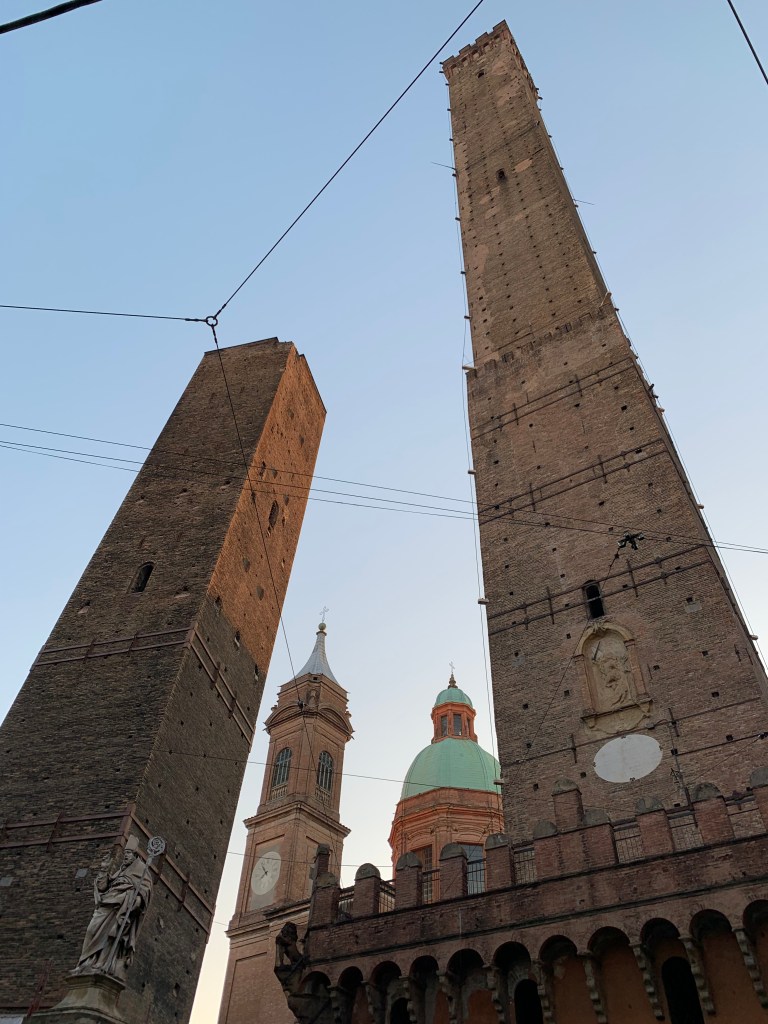
I get that. Florence, a city of about 350,000, hosted 1.5 million day-trippers and 9 million overnight visitors in 2023. The sheer magic of Venice’s architecture and canals is diminished by gigantic cruise ships in its lagoon, looming King Kong-like over the horizon, and disgorging thousands of visitors at a pop, to march through the narrow streets in an endless stream. Not only does this have an impact on the experience of being there, but there are knock-on effects as well, like fewer businesses that cater to residents, and a declining stock of affordable permanent housing, resulting in a decrease in actual Florentines and Venetians able to live in their hometowns.
Cities are starting to fight back, delicately of course, as tourism makes up more than 10% of Italy’s annual GDP. Venice has imposed an entry fee for individual visitors and has prohibited supersize cruise ships from docking in the lagoon. Florence has changed short-term rental rules to make it a little less convenient and a little more accountable for hosts and guests, and has prohibited microphones and “atypical vehicles” like golf carts in its historic center.
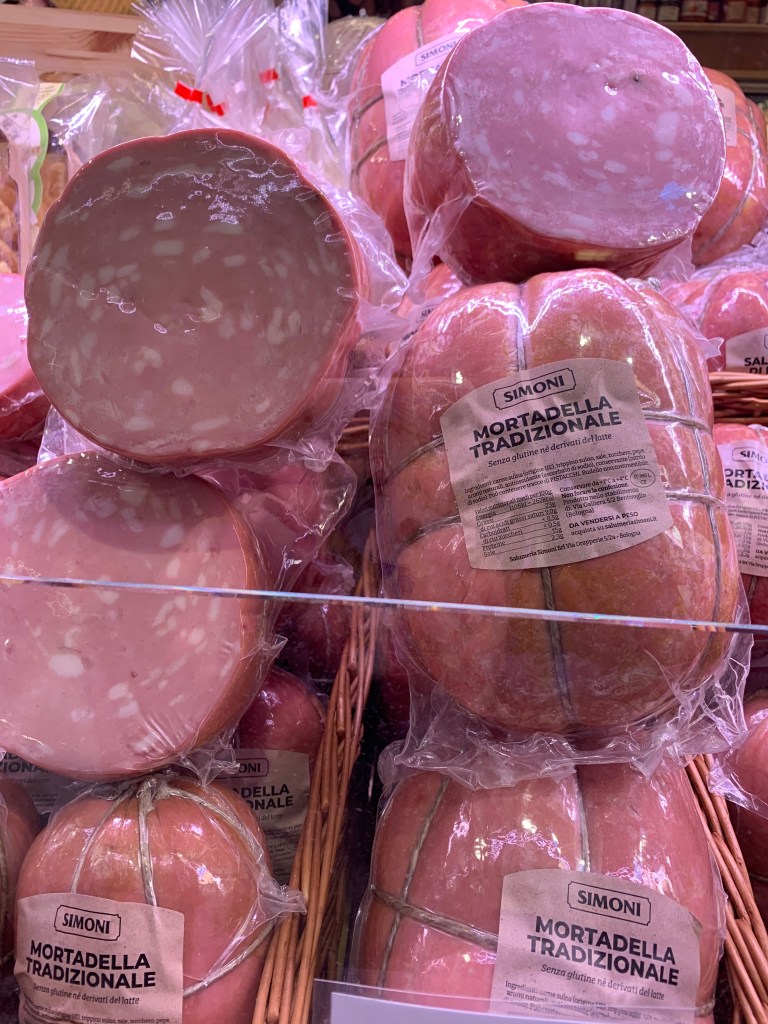
In her piece in the Times, Ms. Sala goes through all that, but she has a particular beef — or should I say “pork” — with the situation in Bologna, her hometown. Many consider the city to have the best food in Italy, high praise indeed, and in particular, it is famous for originating the cold-cut bologna, which we know as “baloney.” In particular, Bologna is known for its mortadella variety, which is dotted with white chunks of fat,and sometimes pistachios. The writer’s particular concern is that her city is clogged with food tours and with tourists come wanting the authentic mortadella experience, and to cater to that, many of the local shops that sold a variety of products have been replaced by mortadella vendors, often advertising their presence with signage featuring representations of pigs. Pigs everywhere, she laments.
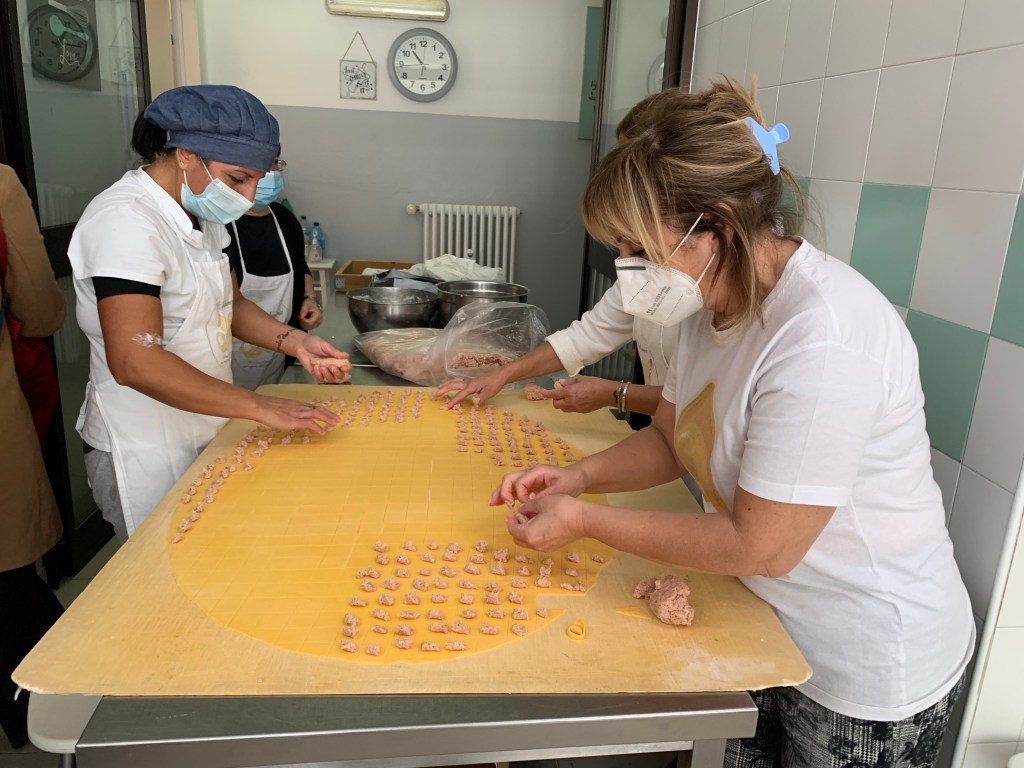
Right on! Those tourists are ruining everything! But then, in a moment of clarity and insight, I realized that those tourists are me. I loved the time I spent wandering the ancient streets of Bologna, living in an Airbnb, and in particular, I loved the food tour we did there. We learned just the right amount of history and culture, saw tortellini being made, and got to sample some of the local specialties, including, yes, mortadella.
So, one tries to leave a small footprint. One tries to quiet our big loud voices and our American sense of entitlement. Italy’s economy relies on us, after all, so I’m sure they wouldn’t want us to stop coming. And I know I won’t stop; I love traveling too much. But I wish I knew the “right way” to do it.

A personal note: on the occasion of my 200th (!!) post, I wanted to thank all who subscribe, read, comment, and like, and to thank Ben, my tech guru. Thinking and writing about all things Italian is a great joy, and I am grateful for your support and interest.
 Gigi's Italia