

My father always said that at times of great emotion — joy, disappointment, worry, celebration — he turned to food.
It would be impossible to argue that food is not the central feature of Italian life. Community, family, tradition, history, the economy: they all have a major food component. World-wide, it is no surprise that Italian food, albeit a fairly limited pizza-pasta version of it, always scores high on the list of favorite cuisines.
When you’re there, it’s obvious that Italians take their food very seriously. They are very particular about their preparation methods; speed and convenience are not the most important factors, if they are factors at all. Their ingredients are first rate — local, pure, not filled with the additives and chemicals that we just accept in everything here. My diet in the U.S. consists of cardboard-like low-cal this and low-fat that; in Italy I eat full-fat everything — cheese and meat and pizza — plus plenty of pasta and bread, and I still always lose a few pounds. It may be a crackpot theory, but I contend it’s not just all the walking, but the food quality as well.
I was amused that we rented four different Airbnbs on our recent trip, and in three of them, the kitchen and dining area were large and fully-equipped, but the living room was tiny or nonexistent. The heart of these homes was the food-related area; no need for anything else.
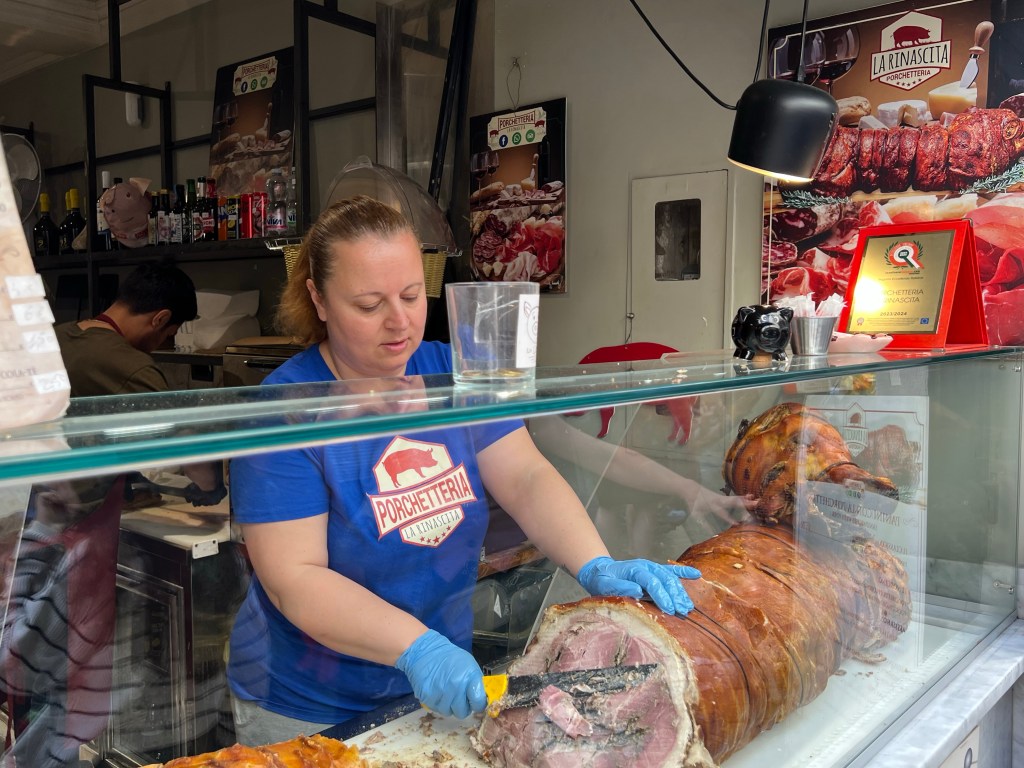
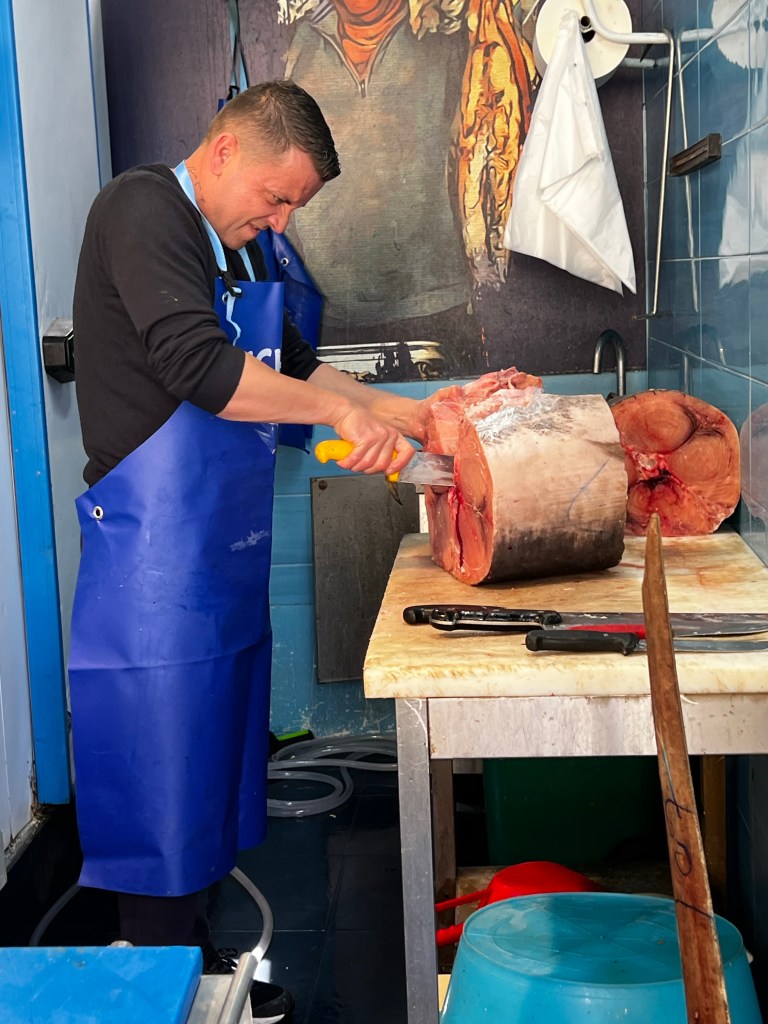
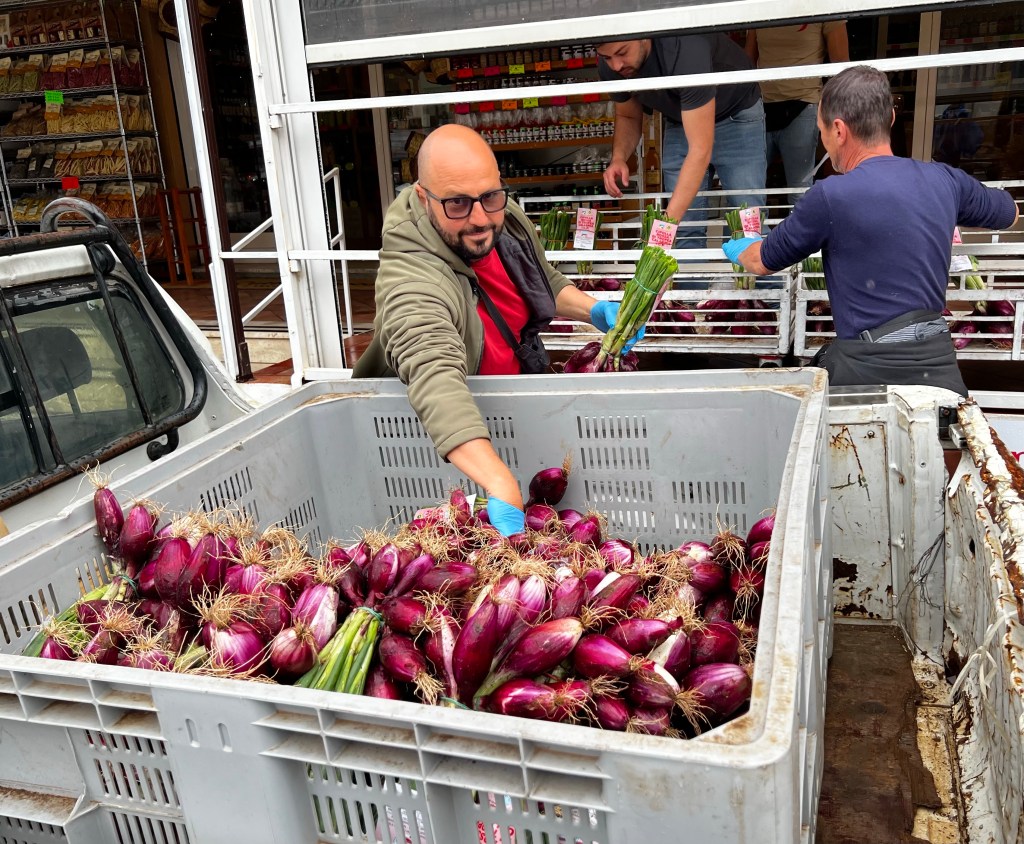
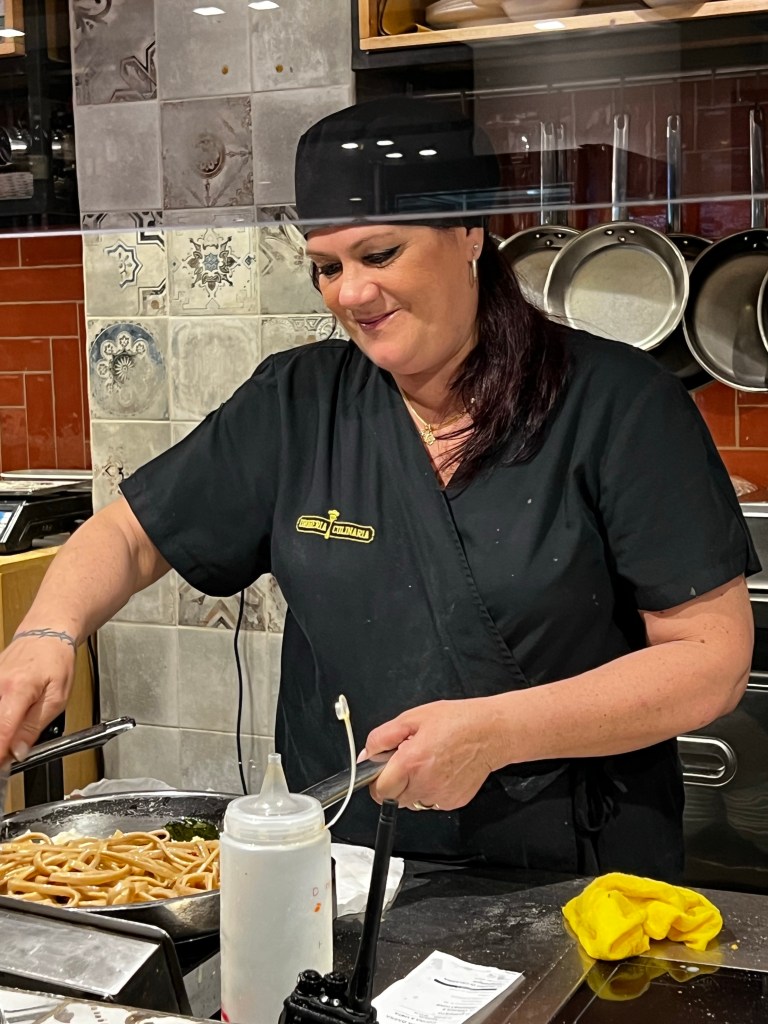
I can honestly say I’ve never had a bad meal in Italy. From the humble roadside stand to the occasional fancy place we treated ourselves to, it was so much better than what we’re used to here. And while I took photos of everything we ate, I thought it would be more interesting to show photos of some of the people responsible for it.


In the U.S., our food tends to come to us all packaged, nice, and clean. In Italy, you see the steps of the process right in front of you. In fact, they distrust food that they can’t witness at least some of the process of delivering it to them.

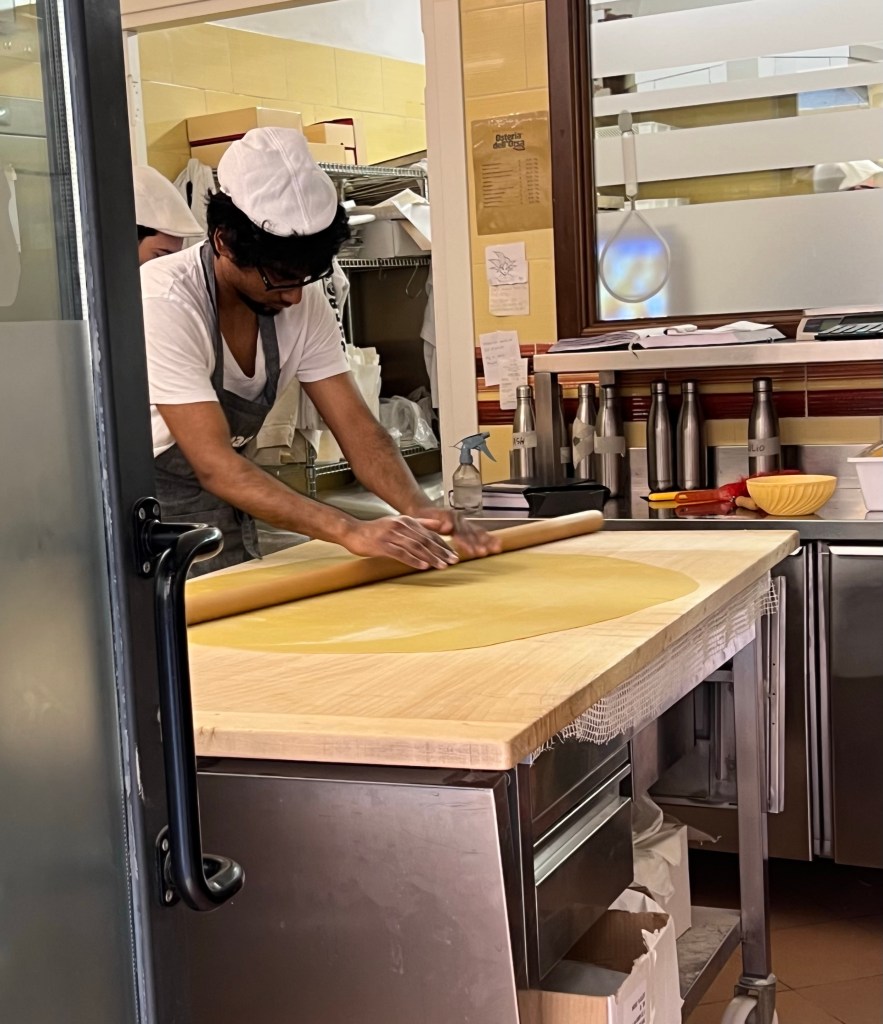
We made a day trip to Rimini, Fellini’s birthplace, and found they had a local specialty, the classone, a stuffed and enclosed hot sandwich similar to what we would call a calzone, or in its worst version, a Hot Pocket. As is often the case, we found this particular item in that particular town, and nowhere else. We sat at the counter and watched the staff run the dough through a pressing machine to make a thin sheet that could then be filled and grilled.

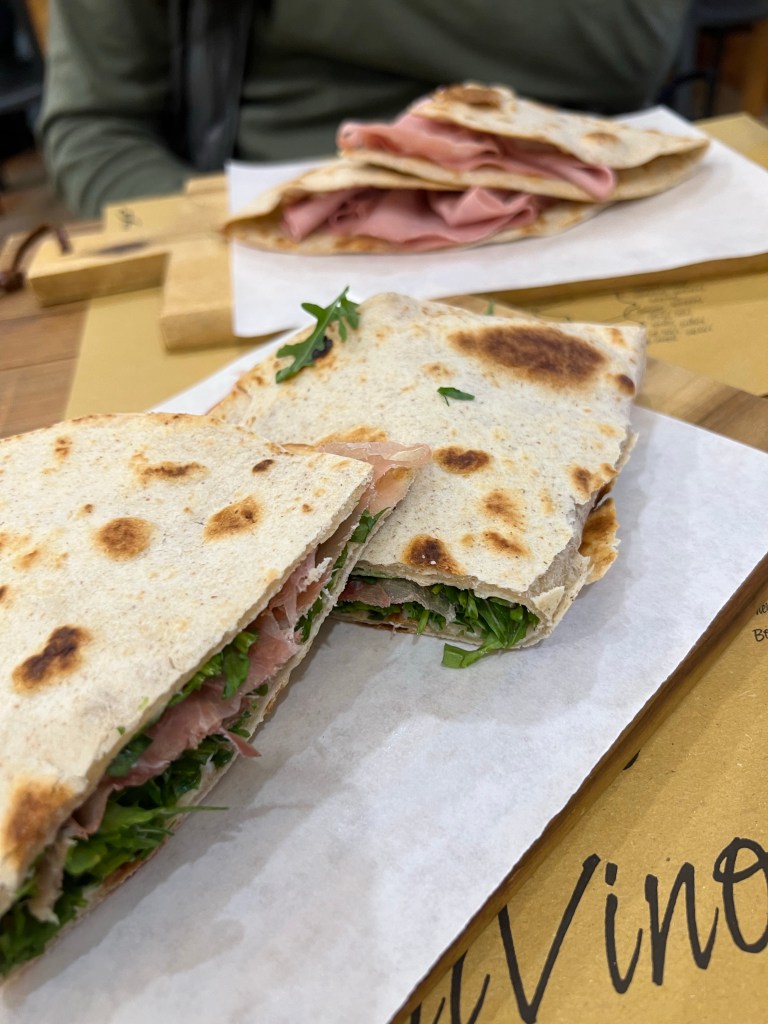
As someone who makes bacala, or salted dried cod, for our Seven Fishes dinner, I was eager to try the Calabrian version, stocco, which is dried cod but unsalted. We found a restaurant in Reggio Calabria that specialized in it, and had two versions: raw and with pasta, both great.
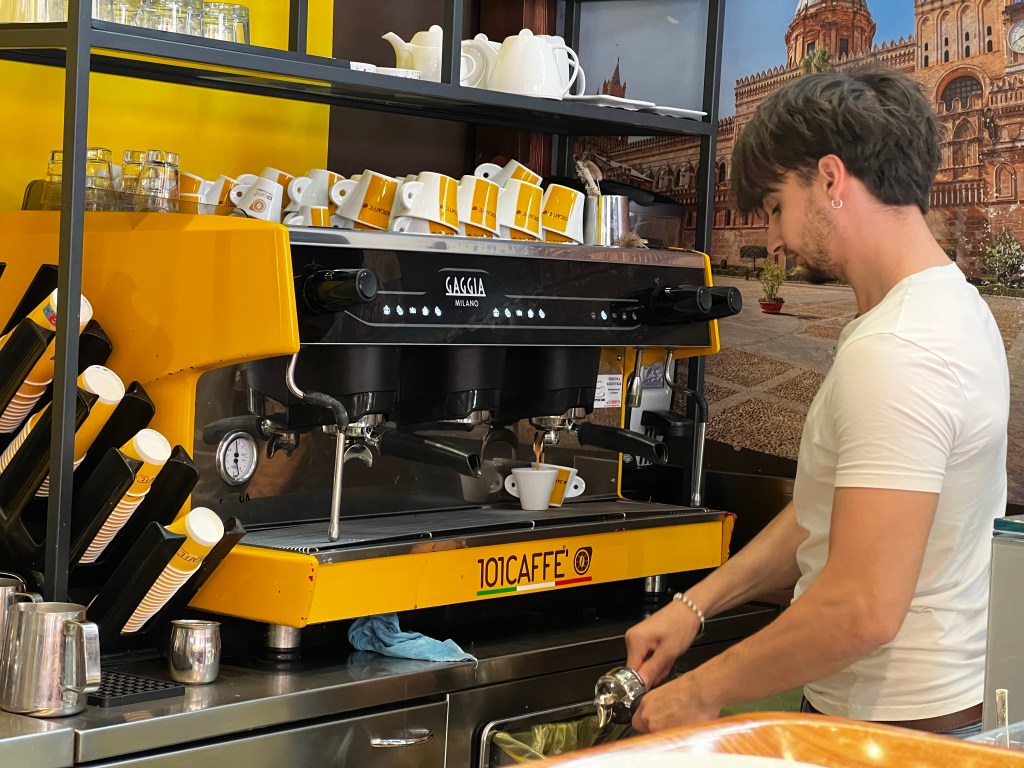
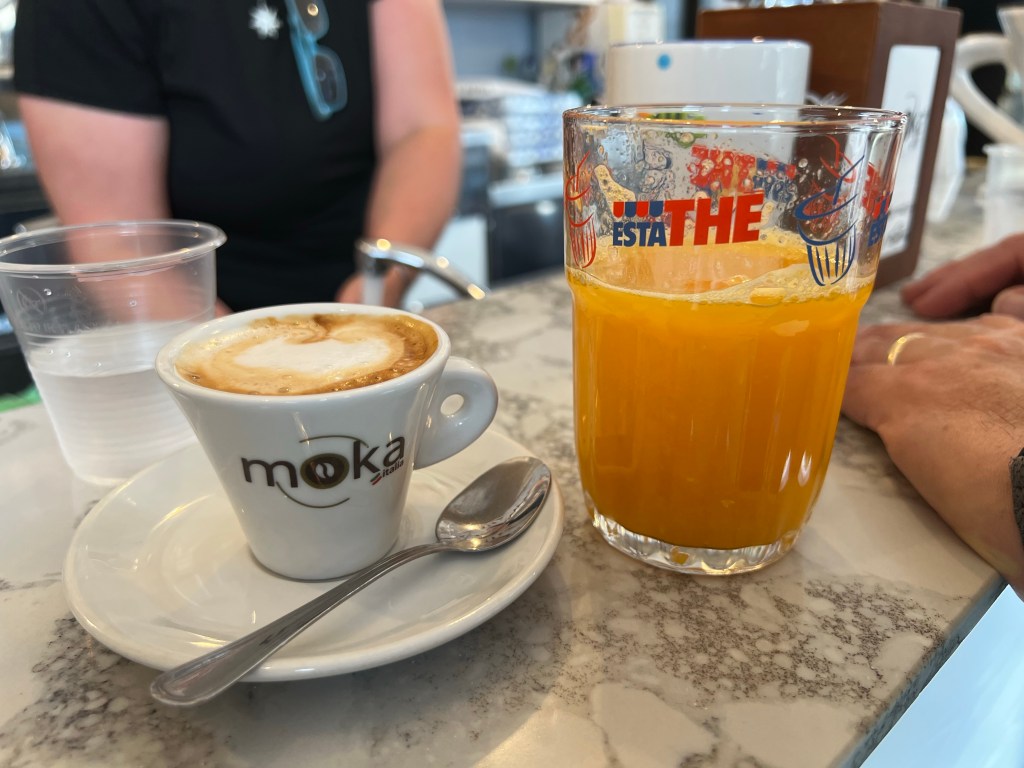
Every bar, no matter how humble, has a big gleaming coffee machine, and the staff runs through the multiple steps of turning out a caffé with an awesome speed and precision. I have become addicted to the macchiato, an espresso with a “stain” of milk.
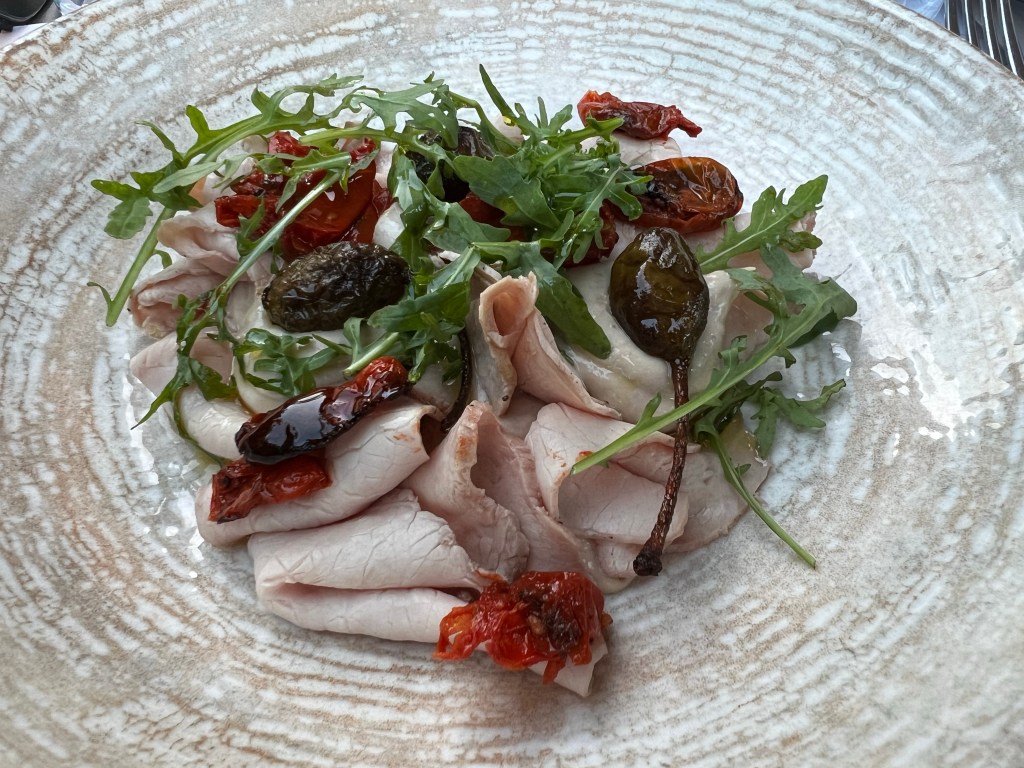
When I’m in Italy, I always vow to up my game, cooking- and eating-wise, when I’m back home. Typically, that lasts about a day. Maybe this year will be different. I don’t imagine I’ll be making any veal with tuna sauce, but I can surely invest more time and money in food that tastes and is better.
 Gigi's Italia