

A recent article in the New York Times described Italians’ dismay at the price of going to the beach.
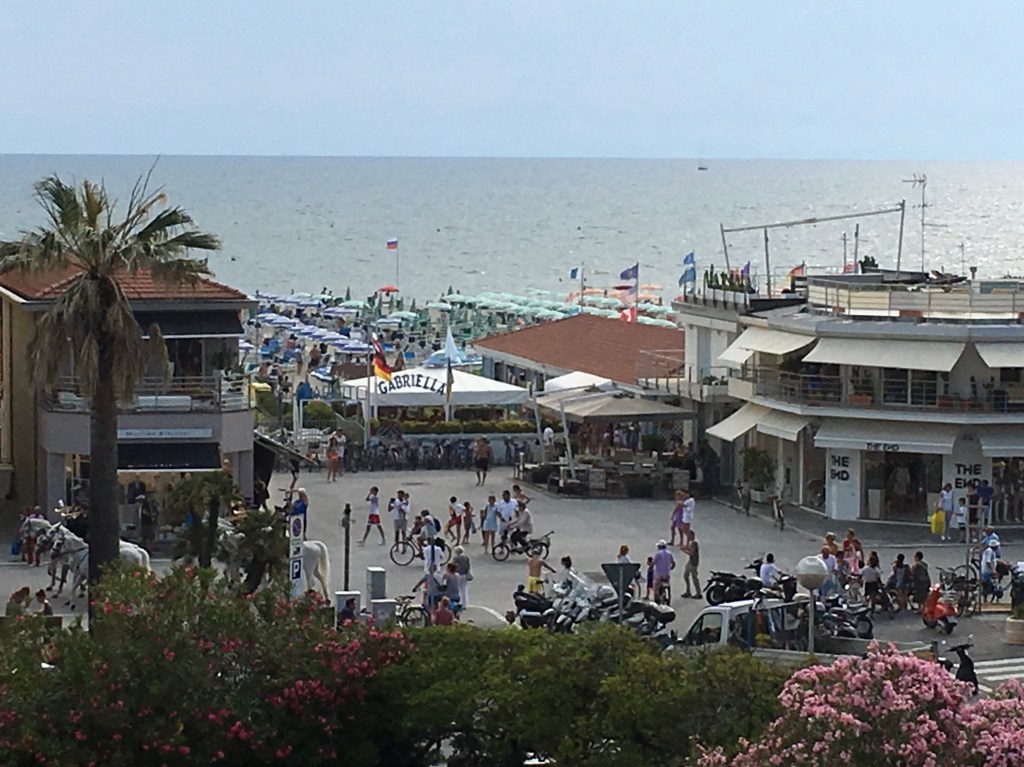
In the weeks surrounding the August 15 Farragosto national holiday, when cities and towns clear out and Italians head for the sea, prices for an umbrella and two chairs have gone as high as $100 a day. So a family going for two weeks can easily spend the equivalent of a few thousand dollars in beach fees alone, before even adding lodging, meals, and transportation. With wages and the economy stagnating, it is harder for families to afford this bedrock of an Italian summer.
“So just skip the umbrella and chairs,” would be the American response. After all, we’re accustomed to paying a parking fee, and then lugging chairs, blankets, umbrellas, cabanas, and lunch several blocks to just the right spot, joining our fellow beachgoers in a hodgepodge of stuff and humanity. But in Italy, only a very small portion of the beach is reserved for this sort of free, open access.
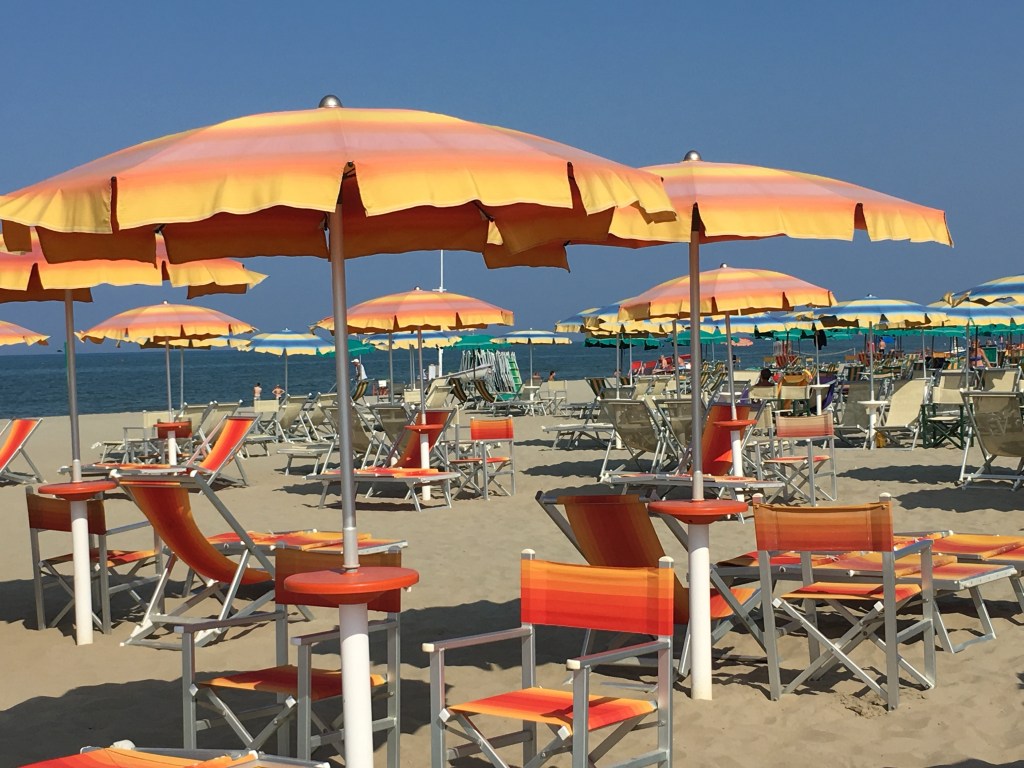
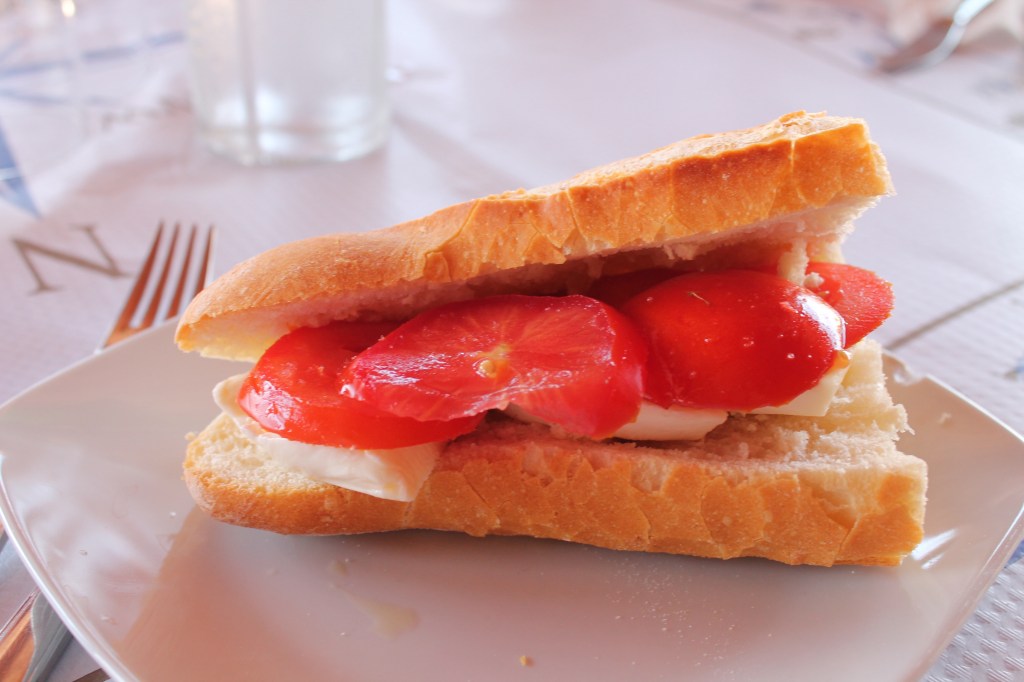
The major part of an Italian beach is divided among private beach clubs, demarcated by the color of their umbrellas and chairs. Some have elaborate restaurants; others have snack bars with sandwiches as good as any you would find in America, anywhere.
Most have changing rooms and toilets and at least an outdoor shower. I checked out the pricing at one of the clubs at Serapo beach in my father’s hometown of Gaeta, where the Simeones have gone for more than a century. It was frankly dizzying, with variations by high season/low season, sunbed or deckchair, number of rows back from the water, convenience of parking and time of day. I’ve had American friends traveling through Italy actually contact me asking whether being asked to pay these beach fees meant that they were being ripped off. No, it’s just the way it’s done there.
There are other things on Italian beaches that look odd to American eyes. Over the course of just a few hours, it is not unusual to see people, women in particular, change their bathing suits at least once. It doesn’t seem to be because they’ve gone in the water and feel sticky and sandy, but more because they find it unpleasant, and maybe even unhealthy, to be sweaty. When my father was a boy, if his mother caught him red-faced and hot from playing soccer with his friends, he was made to sit quietly until he cooled down. Like the Italian fear of drafts, I think health concerns are what’s at play here.
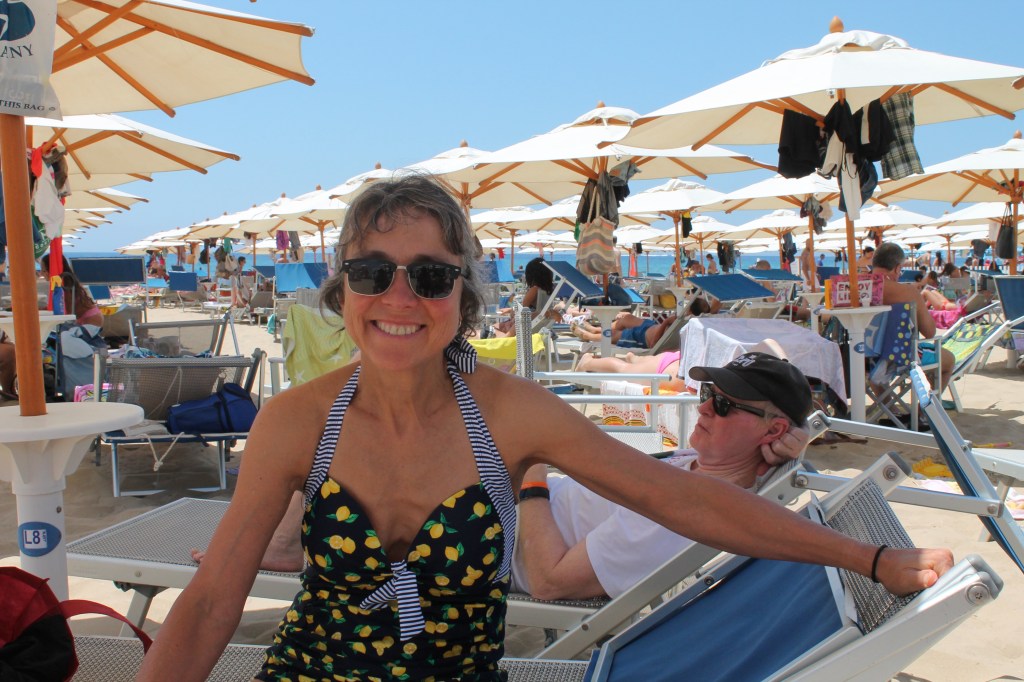
Perhaps related to this fear of overheating is the fact that the beaches empty out for the day at 1 PM, when everyone goes home for dinner and rest, avoiding the heat of the sun. Some of the beach clubs even have reduced pricing after 2 PM, for those few, probably foreigners, who would want to be there then. In Gaeta, they say that only crazy people and Englishmen go to the beach in the afternoon. In the U.S., skin cancer worries notwithstanding, we tend to want to be waterside in the peak heat of the day, not to avoid it.
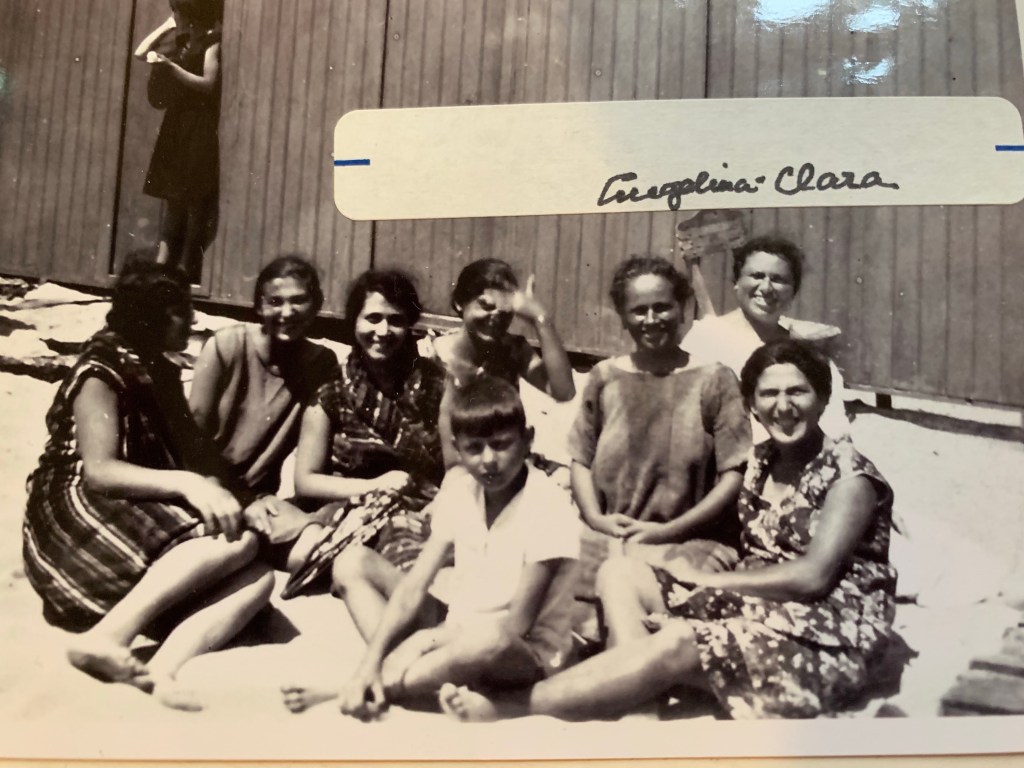
It would be a shame for Italy to migrate to our beach system, as the current distinctive rows of brightly-colored umbrellas and chairs are iconic symbols of an Italian summer. And in the U.S., I’m exhausted by the effort of schlepping all my stuff and setting up my beach-site, only to have to turn around and schlepp it all back a few hours later. Once at the beach, I’m not likely to find myself sitting near anyone familiar on the vast expanse of the Jersey Shore, while in Italy, the same people at the same beach clubs have spent their summers sitting at adjacent umbrellas throughout their entire lifetimes. Like most other things in Italy, it’s about continuity and community, and it’s just so much more civilized.

 Gigi's Italia