

It was one of those things that was highly anticipated, far beyond what might be expected on the face of it. After all, it was just another Italian restaurant, in a city filled with them. But its prominent location in the long-vacant Barnes and Noble on Philadelphia’s Rittenhouse Square, and its proprietor, the famed restauranteur Stephen Starr, made Borromini the hottest ticket in town.
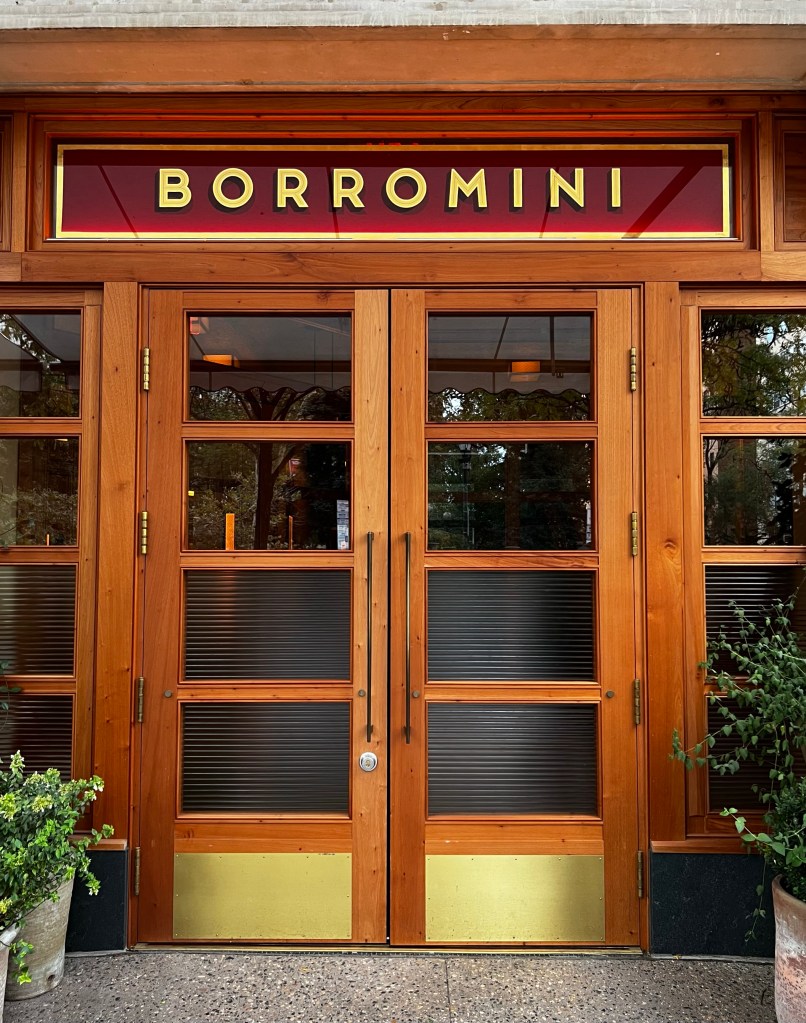
It opened August 25, and snagging a reservation turned out to be impossible, unless one was willing to eat at 3:30 or 9:00. On each day, they released another day’s worth of tables, exactly one month hence. Finally, having old-lady insomnia worked in my favor, as I was up and able to log in at 12:01 and had my choice of times for that date, the following month.
Was it worth the hype? Sure. The food was good — I had a giant meatball on polenta — and the service friendly, although maybe I’m biased because the hostess exclaimed “I love your outfit!” when I walked in, something I don’t hear too often. It had the look and feel of a nice Roman restaurant, and the ambiance, too, with lively conversation echoing off the tiles and the clatter of silverware and dishes, one of my favorite sounds. Maybe everyone was just so pleased to have scored a table at the hottest joint in town, but there was a celebratory vibe and Borromini will no doubt be at the top of everyone’s special occasion lists.

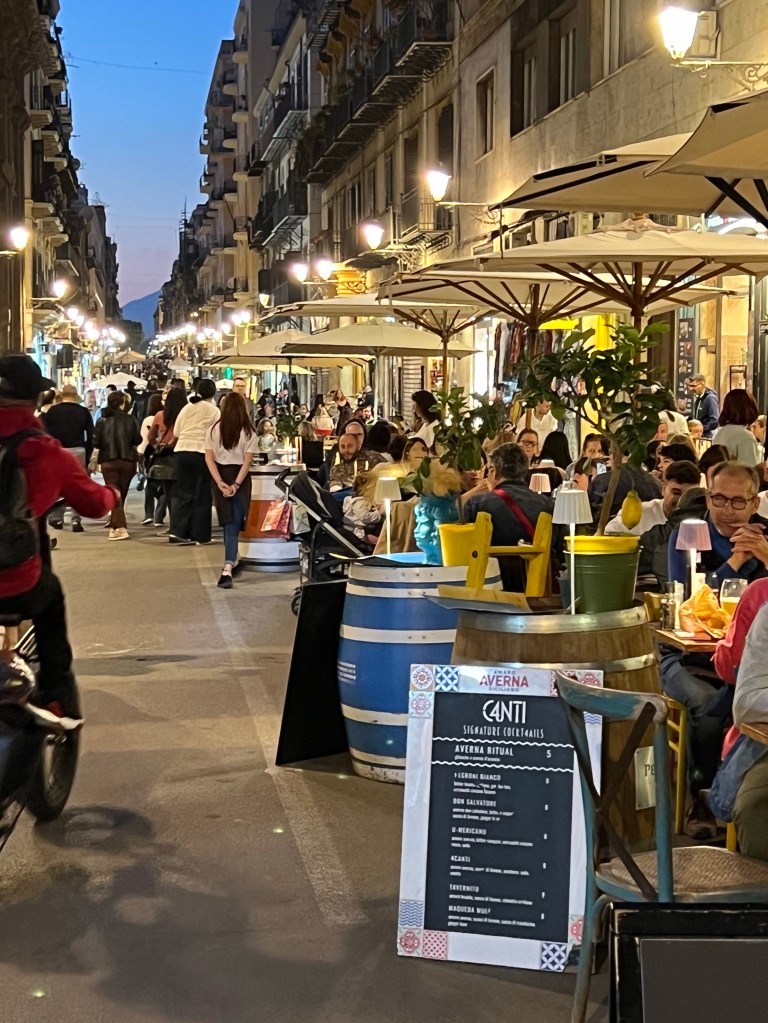
It is ironic, perhaps, that while Americans strive to recreate an authentic Italian dining experience over here, Italians would accuse us of spoiling exactly that over there. A recent front page New York Times article wrote about the glut of restaurants in Palermo, Sicily and other high-tourist destinations, all serving the expected local specialties — like arancine rice balls and Aperol spritzes — that the tourists love and seek out. Sure, they appreciate the business, but these places threaten to choke off both innovation and more traditional but less-well-known local cuisines. They are hollowing out residential city centers, and forcing out local enterprises that the residents would want to patronize.
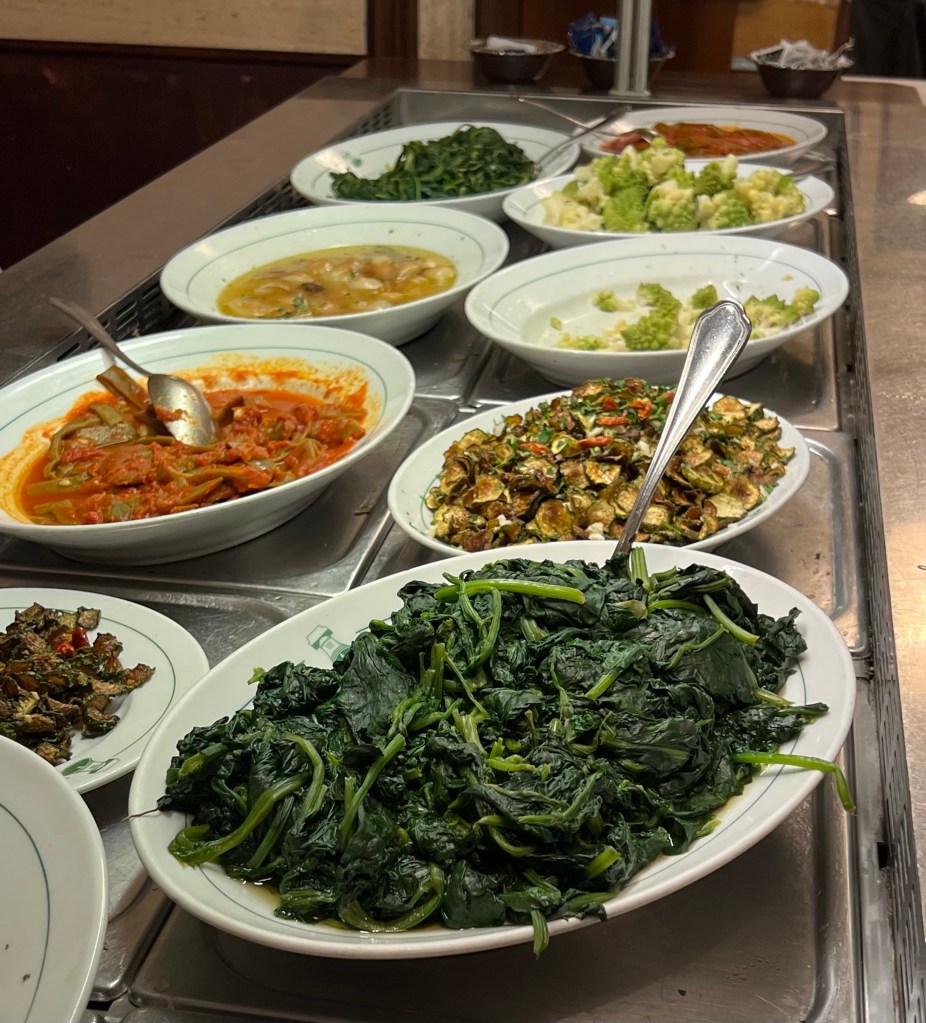
My favorite restaurant in Italy is La Campana, which claims to be the oldest in Rome, dating back to 1518 and reputed to be Caravaggio’s favorite. While the door is festooned with Michelin Guide stickers to encourage the tourists to try it, once inside you know you are in the presence of the real deal, from the buffet of contorni when you walk in the door to the menu of genuine Roman specialties.
But mostly, you are instantly hit by the noise of happy Italians enjoying the place, the food and each other. While there are some tourists like us there, it is mostly filled with groups of Romans. I once encountered what seemed to be an office party, where the co-workers, perhaps after a little too much vino, kept singing the same song over and over at the top of their lungs. My favorite is when there are large families of three and even four generations. No one would dream of leaving 90-year-old Nonna at home, or thinks twice about the four-year-old who is happily eating his pasta, even though it is 10 PM and he will soon fall asleep with his head on his mother’s lap.
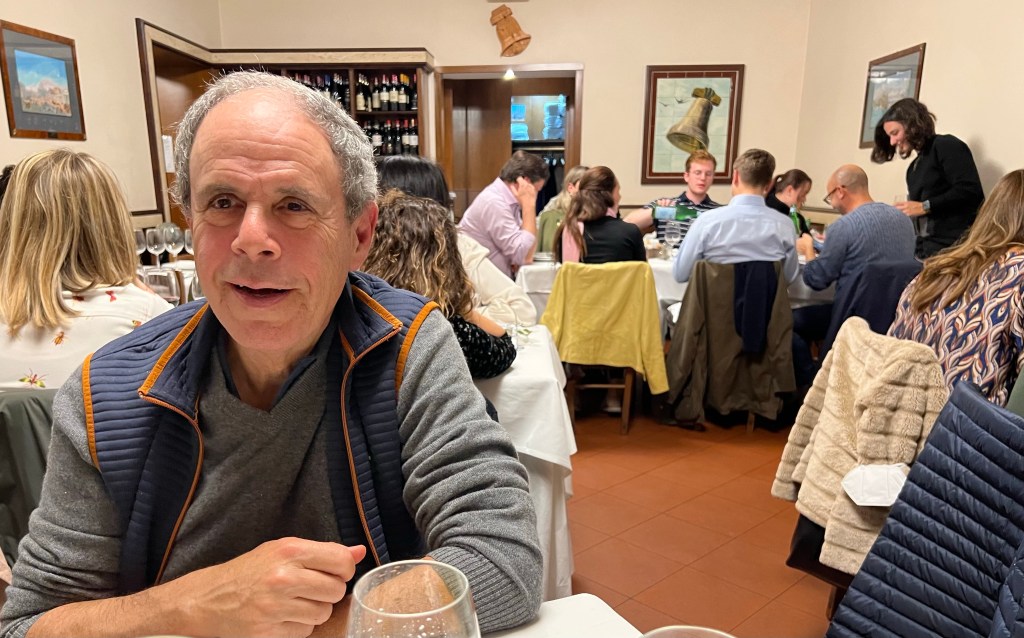
This is what Borromini aspires to, both food-wise and vibe-wise. Will it get there? We shall see.
 Gigi's Italia
Hope to check it out one day! The lighting is always top notch in his restaurants. And I hope its just as gluten-free friendly as Parc is.
LikeLike