

Everyone loves Elena Ferrante. When someone learns of my interest in Italy, my love of reading and my preference for writing by and about women, they assume I love her, too.

For those unfamiliar, Elena Ferrante is the nom de plume of the author of a four-volume series about two girls growing up in poverty in Naples, beginning in the 1950s. They face the constraints of their gender and their economic status, and particularly for one of them, the oppression and violence of the roles of women within the family and within Naples society in that period. It’s bleak, it’s depressing, and clocking in at a total of nearly 1700 pages, it’s a very long haul. I read every word out of a sense of obligation, but it was not my cup of tea. I don’t like to rain on others’ enthusiasm, but my dirty little secret is: I didn’t like Elena Ferrante at all.
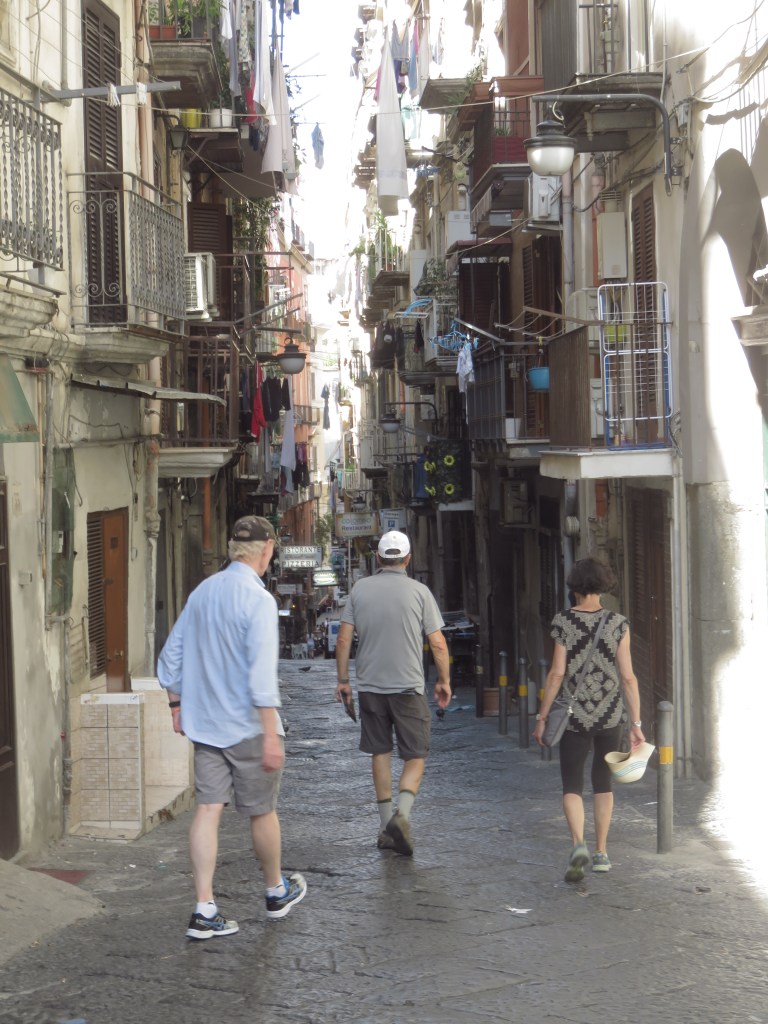
The same thing happened all over again when HBO turned the books into a series of four eight-episode seasons (the fourth expected to be released later in 2024). People asked me how excited I was to watch them and what I thought of the adaptation, assuming I’d been glued to my TV. In truth, I could only make it through one episode. The violence towards the female characters was just too much to take.
The New York Times has just published a list of the 100 best books of the 21st century so far, voted by 500 prose and poetry writers, poets, critics and others in the literary field. And what should be numero uno? My Brilliant Friend, by Elena Ferrante, the first book in the series, with the fourth book, The Story of the Lost Child, coming in at eightieth. (A novella by Ferrante, The Days of Abandonment, was #92.) There were a handful of other writers with two books on the list, but only Ferrante had three.
Some have suggested that perhaps my problem with Ferrante is that I am defensive about Italy, especially the South, and don’t like to see it depicted as a violent, primitive place, where women are abused, even if that was the reality in hard-scrapple sections of places like Naples.
That may be true, but I found another author who mines similar material, and whom I love, Domenico Starnone. His Strega Prize-winning novel,The House on Via Gemito, takes place at the same time and place as the Ferrante books, and God knows the women characters have violently difficult family lives, so it’s not because he paints a prettier picture that I like his work better. Perhaps it’s because we do not know his female characters as children and adolescents, as in the Ferrante books, so they don’t seem quite so painfully vulnerable, that I can tolerate his work. It seems to me that somehow, the female characters seem to have more power and agency, even within the terrible constraints of their culture and time and the way they are treated. Further, I also prefer his shorter novels set in current time to Ferrante’s, including her short present-day novella that also made the Times‘ list. I just find his characters more compelling and his plots more absorbing.

But here’s the kicker. The Times included a little story about the fact that after all these years, the mystery of the true identity of Elena Ferrante has never been solved. There has been all sorts of speculation, of course, but the prime suspect is … Domenico Starnone himself! Is it possible that he could have tweaked his style under his pen name to a degree that I liked it less, but the rest of the world liked it more? If it’s true, how did he have the time and energy to be so prolific, not just under one name, but two?
I would love to hear others’ reactions to the Ferrante series. Do two of them merit being named among the best hundred books of the century, so far? Let me know what you think.
 Gigi's Italia
The NY Times list has both many great books that I have been fortunate to read and, at least for me, some oddities I never heard of. Among those I HAVE heard of but never read is Elena Ferrante’s My Brilliant Friend–and your well written analysis has convinced me to not pick her books up.
Also, there actually is another author who has three books on the list and I cannot recommend them highly enough: Jesmyn Ward’s nonfiction Men We Reap (97th) and her two National Book Award-winning novels: Salvage the Bones (33rd) and Sing, Unburied Sing (30th). I view her as Toni Morrison’s successor.
Of course, such lists always generate discussion about both the books listed and those that weren’t. I cannot figure why Abraham Verghese’s Cutting for Stone, Anthony Doerr’s All the Light We Cannot See and Maggie O’Farrell’s Hamnet didn’t get any love. And if I thought about it some more, I’m sure I would come up with some other much deserving titles.
LikeLike
Don’t just go by me, Bruce, millions love her! I’m the outlier, for sure.
I wished the Times had done the list in the paper paper. I had such a hard time working with it on-line. I tried to count over and over, but clearly missed one. Gigi
LikeLike
I’m with you…did not connect with either the book(s) or the HBO show.
LikeLike
I love the Elena Ferrante series, both the book version and the TV series. My (adult) daughter and I read them together and watched the show together.
I find the writing and the characters to be compelling, and the story of their lives, how they connect and disconnect from each other, and yes, the suffering and sexism they both endure and find ways to cope with, to be equally compelling. The tv series is brilliantly cast, written and acted – I very rarely watch television but I wait for these seasons to be completed so I can see them.
And I do think these books deserve a place on the list.
and you and I know well from book group that we often have diametrically opposed views of a number of the books that we read. I’m always curious about why that is.
LikeLike
I saw that girl being taken away in a car by those boys at the end of episode 1 and immediately said “That’s it. I’m out!” Gigi
LikeLike