

I have always been curious about Trieste, a city on the Adriatic Sea a mere 63 miles from Slovenia. Like the Dolomites, it was annexed from Austria at the end of World War I, but it is nonetheless very Italian in feel, despite its history.

The weather was hot, the food was (thankfully!) Mediterranean-style, Italian rather than German was spoken, and it had the ambiance of a fashionable, tidy northern Italian city.
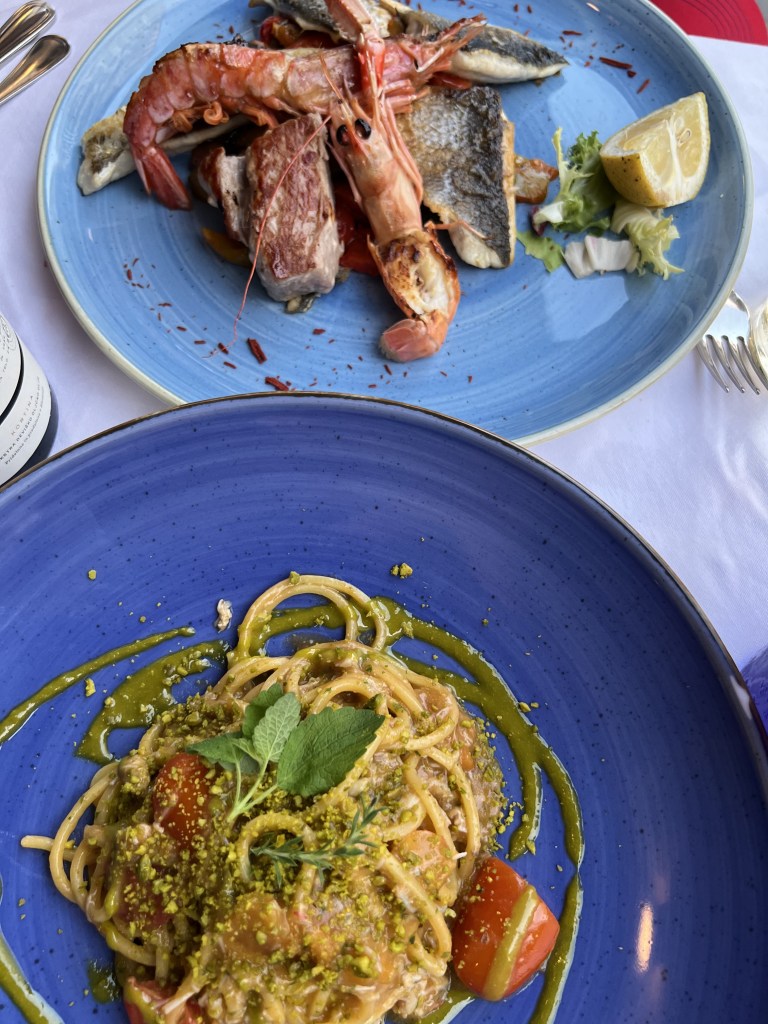
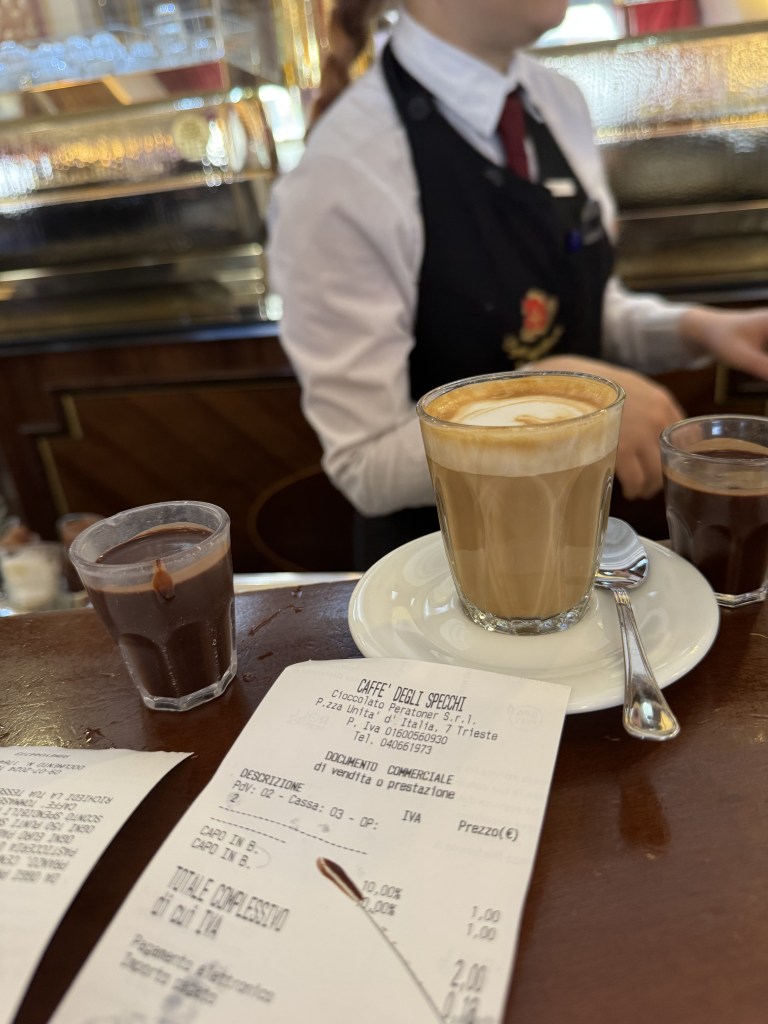
In fact, it reminded me very much of Torino, another northern Italian city, further west: the same orderly elegance, the same vibe, and the same focus on caffé culture. It turns out that while Torino is the home of Lavazza coffee, Trieste is the home of Illy, and boasts its own Coffee University, where one can take a course called “Espresso and Cappuccino to Perfection,” or get a master’s degree in Coffee Economics and Science. As in Torino, one often gets a little glass of pure melted chocolate to add to your espresso.
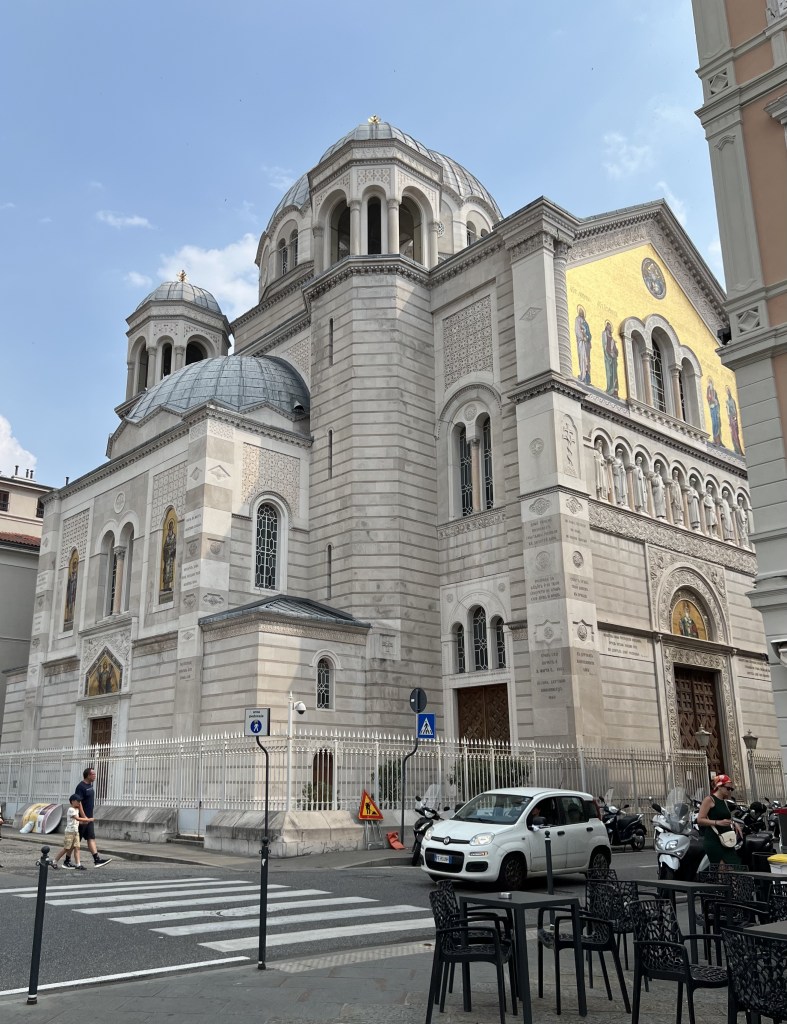
Perhaps because it is so close to Slovenia, religious diversity was far more apparent than usual. While Italy is only 85 percent Roman Catholic by birth if not practice, one could be forgiven for assuming it’s 110 percent, judging from the prominence of Catholic churches in the landscape. Trieste, though, has two very prominent non-Catholic churches in its center: San Nicolo Greek Orthodox and San Spiridone Serbian Orthodox, as well as a mosque and synagogue nearby.
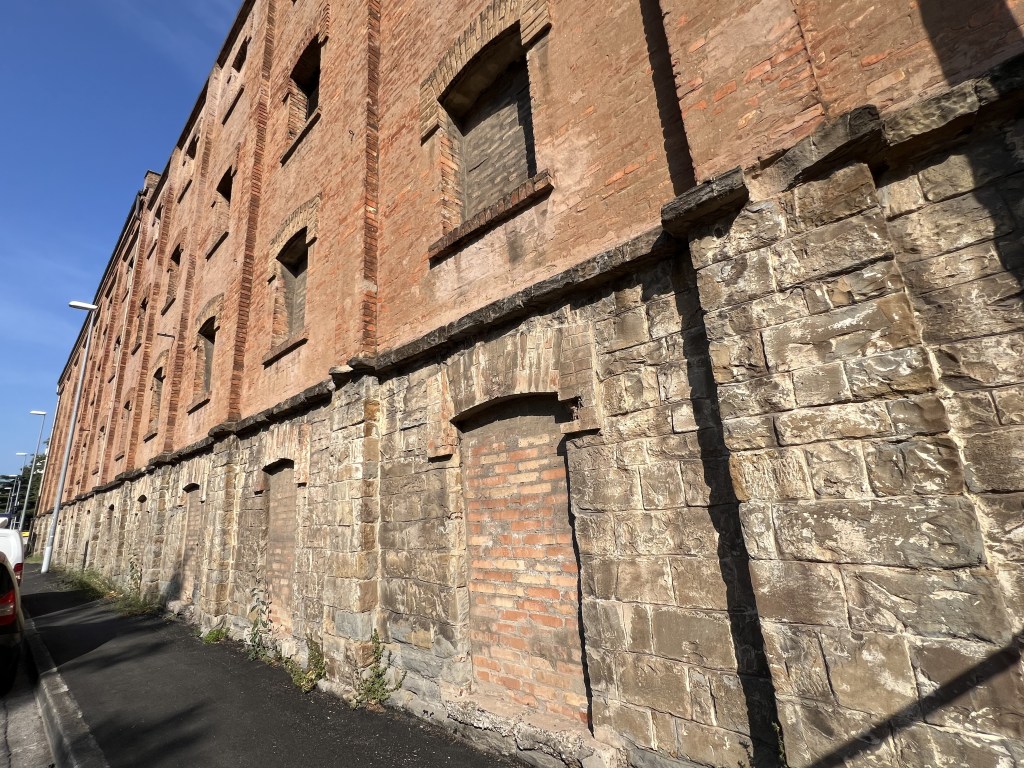
Lest one think that everyone always coexisted in harmony, however, a visit to Risiera di San Sabba on the outskirts of town will disabuse you of that notion. A former rice-husking facility, San Sabba is the site of the only crematorium that existed in Italy in World War II. It was run by the SS, and it is estimated that 3000-5000 Italian Jews, political dissidents, and Croats and Slovenes from Yugoslavia were murdered there. Many thousands more were held and transported to the camps elsewhere.
It is now a museum that we attempted to visit, but it was closed for repair. But one got chills just seeing the outer walls, knowing what went on inside.


Great perspective. And…I want to visit!
LikeLike
I visited 5 years ago for 2 days and throughly enjoyed it and it’s a nice train ride from Venice
LikeLike