

“They’re eating the dogs.”
“So, my mother was 19 when she crossed the world alone, traveling from India to California with an unshakeable dream to be the scientist who would cure breast cancer.”

Two candidates for president; two entirely different portrayal of immigrants. And therein lies the American story. We pride ourselves as a country of immigrants, descendants of those who left everything familiar to travel halfway across the world to melt into the American pot of opportunity. (Native Americans and those forced to come from Africa would of course have a different story.) Equally American is a long and violent history of hatred towards those immigrants, a desire to slam down the gate the moment we make it inside.
At this stage in our history, we barely remember that Italian Americans were a feared and denigrated group; only a century ago, they were viewed with suspicion and disdain. That most of them were Catholic in a Protestant country didn’t help. The Emergency Quota Act of 1921 and the Immigration Act of 1924 were directed specifically to limit the immigration of Italians, along with other groups considered undesirable. Lynchings of Italians were not unheard of, with a mass lynching of eleven in New Orleans in 1891 one of the largest mass lynchings in US history. The case of Sacco and Vanzetti, two immigrants executed for murder but later exonerated, is notorious as a case study of the impact of bigotry on the miscarriage of justice. There is no doubt that Italy would have made a certain President’s list of “shithole countries.”
This anti-immigrant sentiment — strong enough to form the basis of entire political campaigns — is not just mean-spirited but pure craziness to me. Nearly everyone that I know, love and admire is only a generation or two away from somewhere else. Even in just the past month, I have had reason to be exposed to several examples of American greatness that first had its roots in Italy.
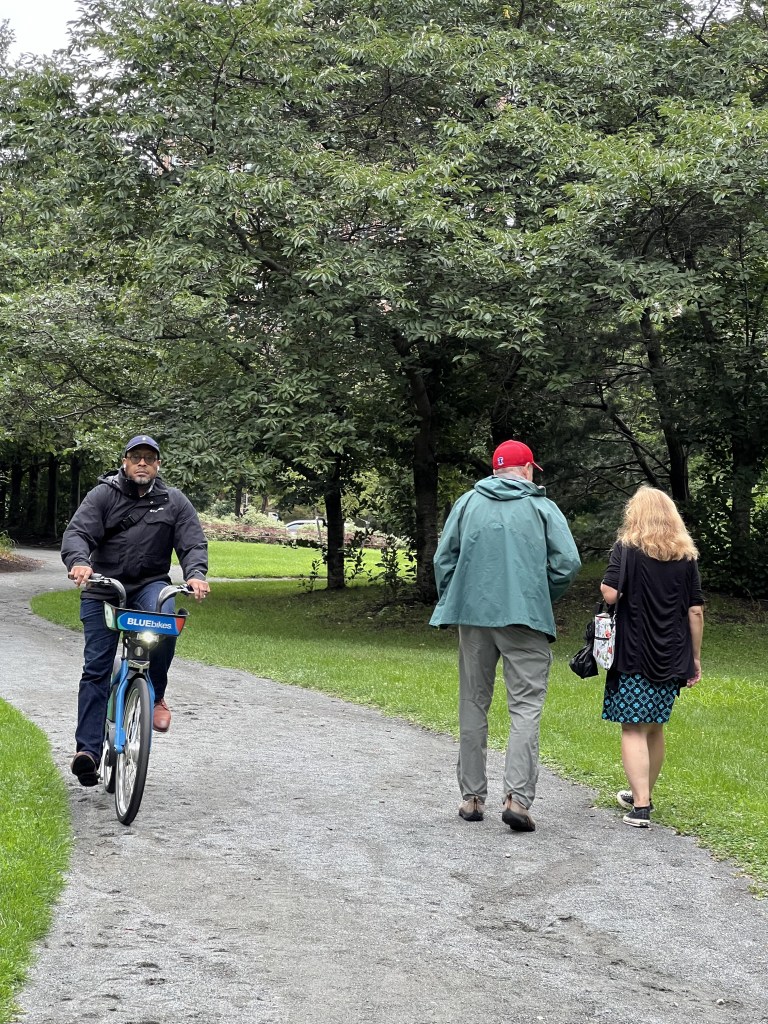
Case 1: On a recent road trip, I listened to the compelling nine-part podcast, “The Big Dig,” about the long travails of the massive endeavor of burying underground the “Central Artery” expressway that cut through central Boston, to not just to ease traffic flow, but to enhance the life of the affected communities and the city in general. The project was notorious for cost and time overruns, or the perception of them, but that seems forgotten now as one strolls through the lovely Rose Fitzgerald Kennedy Greenway that snakes through the city where the highway had been. The whole project was the brainchild of a Fred Salvucci, an MIT-trained civil engineer, whose Italian grandmother was compensated $1 and forced out of her home by eminent domain for the building of the Massachusetts Turnpike. Not only did he have the creative vision and the leadership to make it reality, but he vowed that not one person would be displaced from their homes — and he followed through on the pledge.
Case 2: As we drove our rental car through Italy this summer, we listened to Dr. Anthony Fauci’s reading of his recently-published memoir, On Call, focusing on his half-century career as a physician and researcher, but most prominently, as the director of the National Institute of Allergy and Infectious Diseases, where he was the leader in the fight against both AIDS and COVID-19. Both sets of his grandparents came from the South — Sicily and Naples — considered to be the shithole end of Italy. As a society, would we have been better off if they hadn’t come?
Case 3: And in August for the umpteenth time, I saw Bruce Springsteen, with whom I have carried on an unrequited, one-sided love affair for the past fifty years. Despite the Dutch name from some long-ago great-grandfather, Bruce is entirely Italian on his mother’s Zerilli side. Here is what he wrote in his recent memoir, Born to Run:
“There is strength, fear and desperate joy in all this hard spirit and soul that naturally found its way into my work. We the Italians push until we can go no further; stand strong until out bones give way; reach and hold until muscles fatigue; twist shout and laugh until we can no more, until the end.”
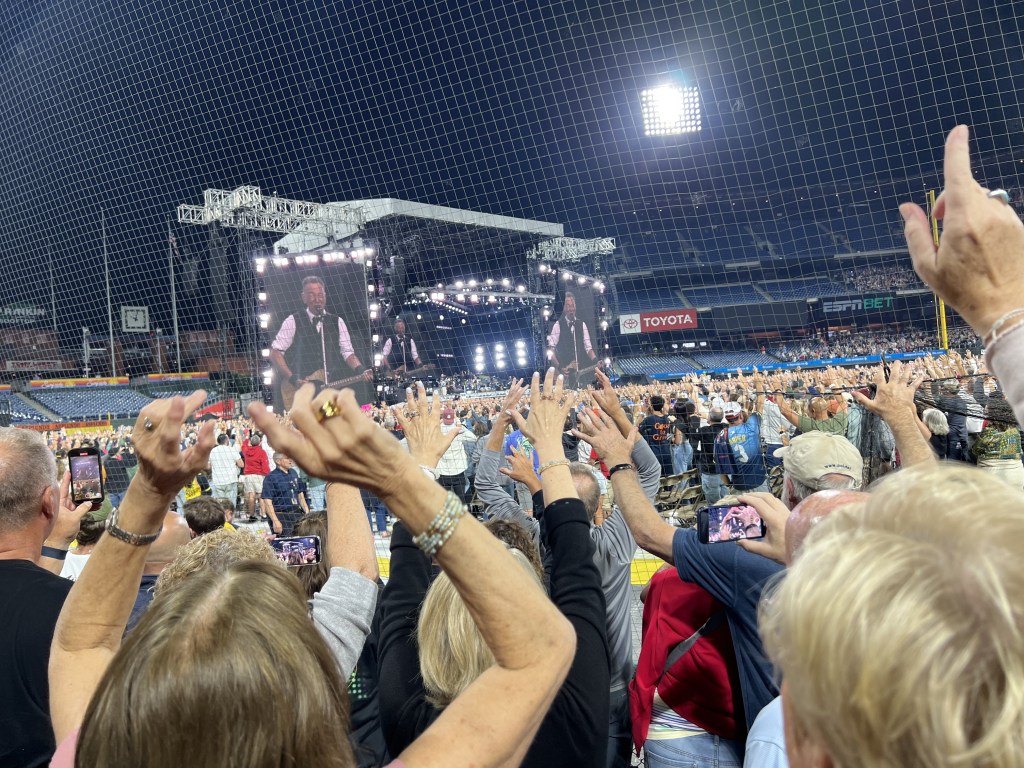
These are but three examples which have come across my radar in the last month alone of Italians who have made immeasurable contributions, from humble beginnings in this country just a generation or two beforehand. Does anyone really think we Americans would have been better off if their grandparents had just stayed put in the old country?
It’s personal for me. I recently came across my father’s first American passport, issued in 1939 from the embassy in Rome when he was just 19. He thankfully was born an American citizen because his father had come to the U.S. before he was born, so he was able to quickly leave the country when World War II was declared and avoided being drafted into Mussolini’s navy, which he surely would not have survived with his poor eyesight. A few weeks ago, I received a note from my cousin Anna Abbruzzese, with whose family he lived in the old Yankee New England village of Cohasset, Massachusetts, when he first arrived. She wrote: “Did you know that when your Dad arrived in Cohasset, he was enrolled in the elementary school to learn English? He was amazing!” And indeed, he would sometimes talk about what it was like at age 19, to be placed in a classroom of second-graders.
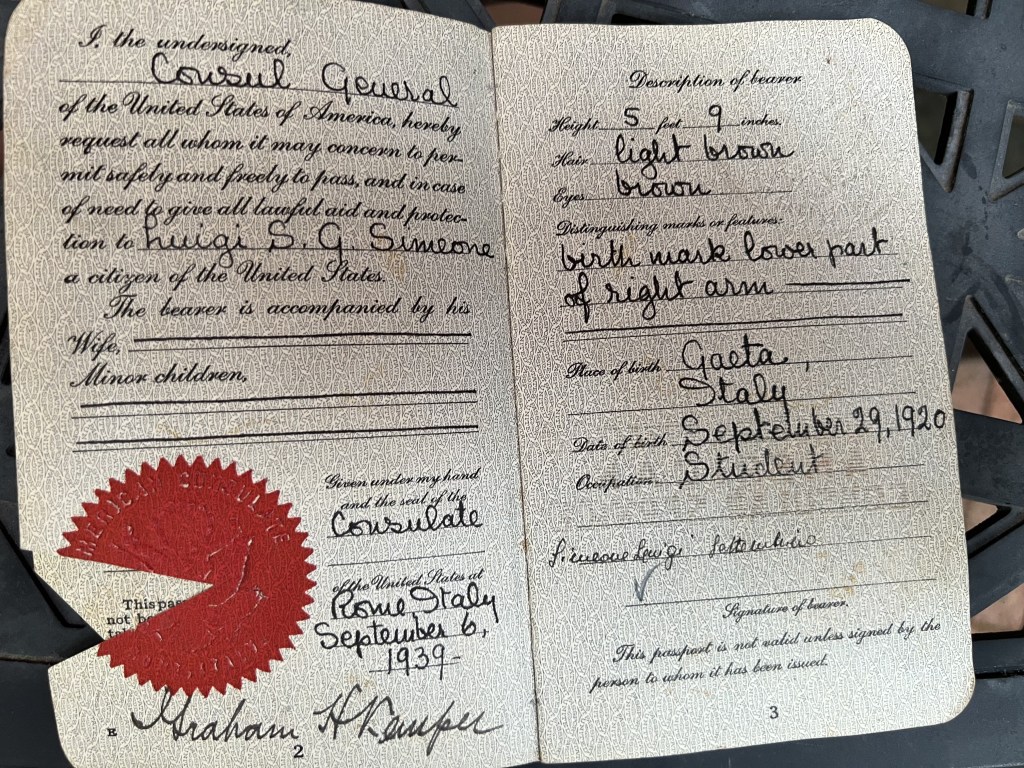
But here’s the next chapter of his American story, told through his subsequent passport, issued in 1948. His profession is listed as “teacher,” and indeed, just nine years later, he had gone from that second-grade classroom to graduating from Northeastern University and teaching high school math on Martha’s Vineyard. In another two years, he would finish graduate school at Boston University and begin his 37-year career as a revered professor at the college that eventually became UMass-Dartmouth.

So when I hear all that nonsense about immigrants pouring in from insane asylums and prisons and eating our dogs and cats, it makes my blood boil. Today’s Haitians and Central Americans would have been yesterday’s Italians and Irish and Portuguese and Jews. India, Italy, everywhere — we are all enriched by their presence here, and we all owe a debt of gratitude to them for their “unshakeable dreams” and fortitude in triumphing over our American bullshit.


Great write-up, Gigi. So very true. And your father was amazing (and pretty handsome when he was young). Thanks!
Kathleen
LikeLike
Fantastic, per usual, Gigi. Your father’s story couldn’t be more American and uplifting. Somehow I failed to know that your father was a college professor at UMass-Dartmouth for nearly four decades. Hard to believe he once was a 19-year-old stuck in second grade in order to learn English. Bravo!
LikeLike