

September will mark my 55th year of trying to learn the Italian language, starting with two resentful years in college to fulfill the language requirement, and continuing to today: the past twenty years or so, I’ve met every Monday evening with a group of friends for Italian conversation.
One might think I’m being modest when I say my Italian is terrible, particularly in view of the years I’ve put into it, but one would be wrong. But I decided that this would be the year I’d finally get serious, and devote at least a portion of the six weeks I’m spending in Italy to improving, if not gaining actual fluency.
It turns out, I’m not alone in this desire. There are hundreds of programs throughout Italy for those who have a serious or casual desire to speak the language. After going through a paradox of choice, I settled on Bologna, a non-touristy city which happens to be home of the oldest university in continuous operation in the world. Even though I wouldn’t actually be attending the university, I felt it would be good to be in a college town, where people were there for serious study, not to find the best Aperol spritz.
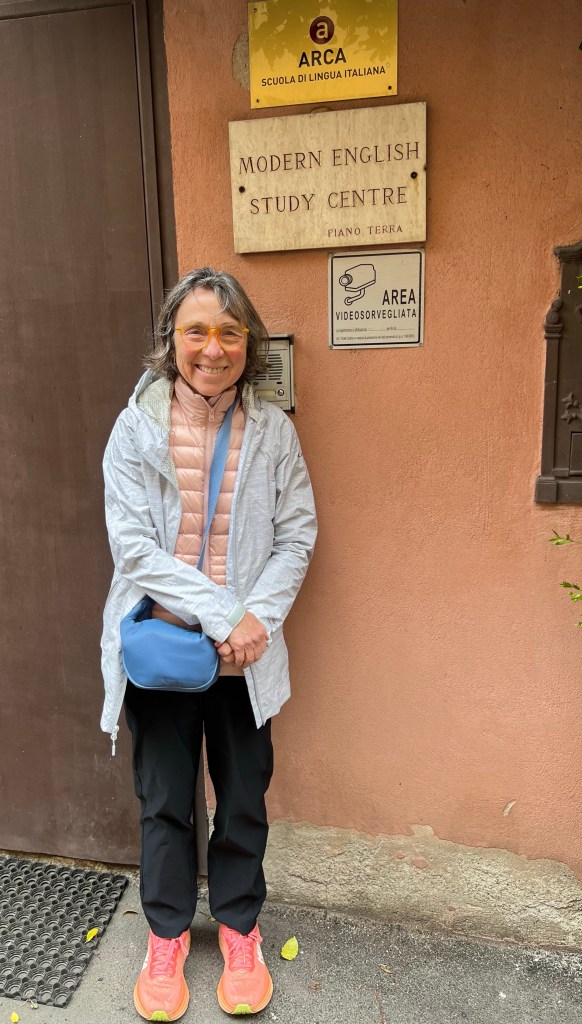
It turns out there are sixteen different Italian language programs in Bologna alone. More paradox of choice! I ended up picking one with good reviews, ARCA Bologna, and made a leap of faith. If it turned out to be a bust, so be it.

My first task was taking two placement exams, written and oral, a prospect I found terrifying. I would be mortified after all these years to be put in the group learning, “Hello, my name is…” But miraculously, I managed to get 60%. I’ve never been so happy to get a D!
It turns out, the whole experience has been fantastic. Every morning, we begin with two hours of grammar lesson with one teacher.
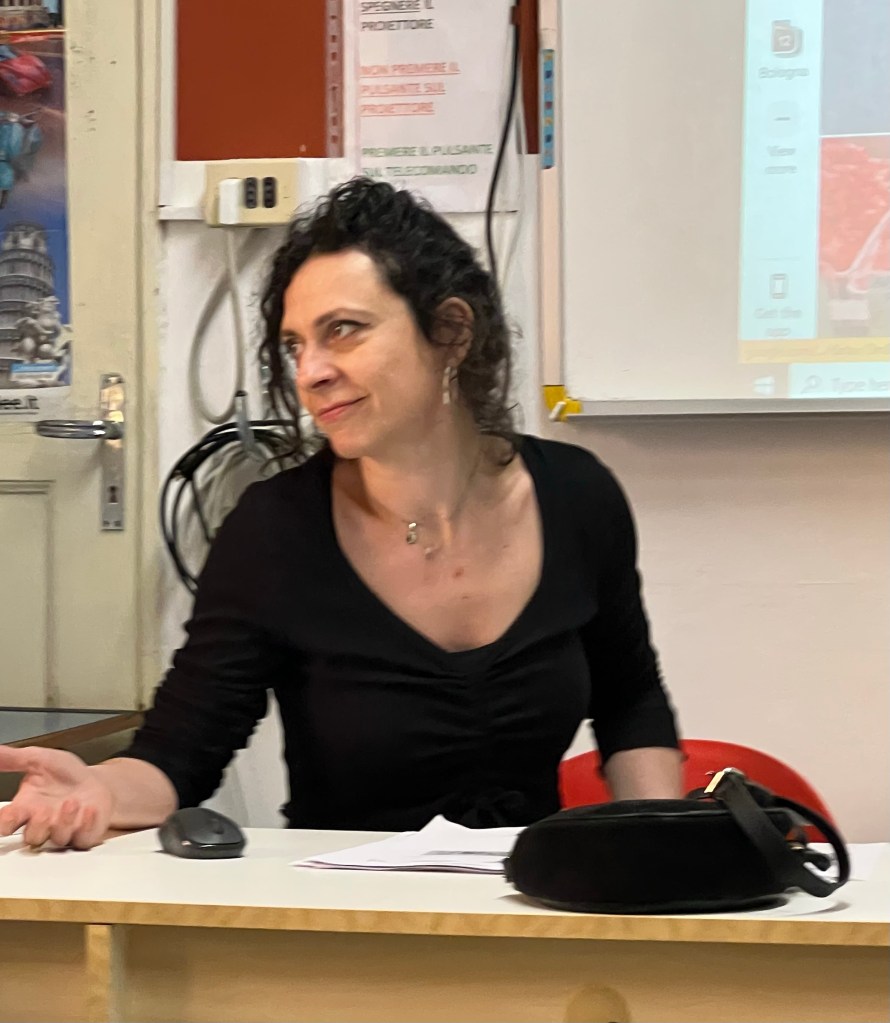
Then we all head to the bar for a half-hour coffee break, and then back for 90 minutes of conversation with another teacher.
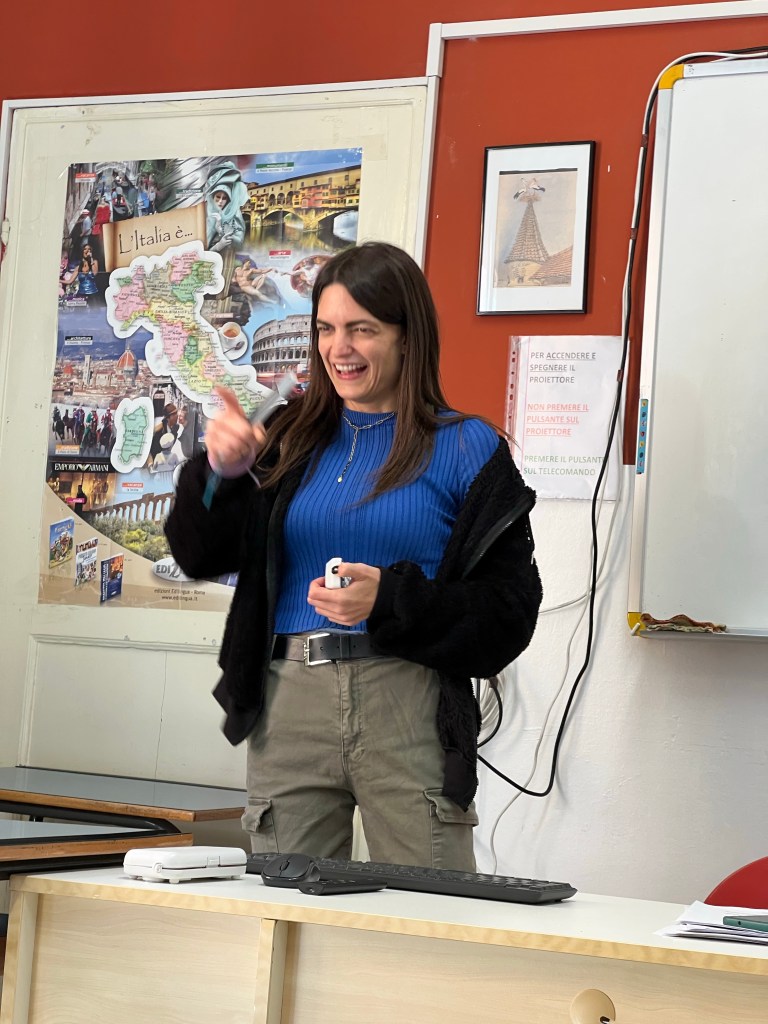
I find the time just zips by. There are eight in my group of all ages, hailing from Germany, the Netherlands, Australia, and Brazil; there are two other Americans. They are there for various professional and personal reasons, the most common being that they love Italy, and want to enrich their experience here. Sound familiar?
Italian is a very easy language to pronounce, and a very difficult language to master grammatically. This week, we have been learning the imperfetto, what one uses for continuing actions in the past, which I’ve always avoided. I think I’ve finally almost mastered it.
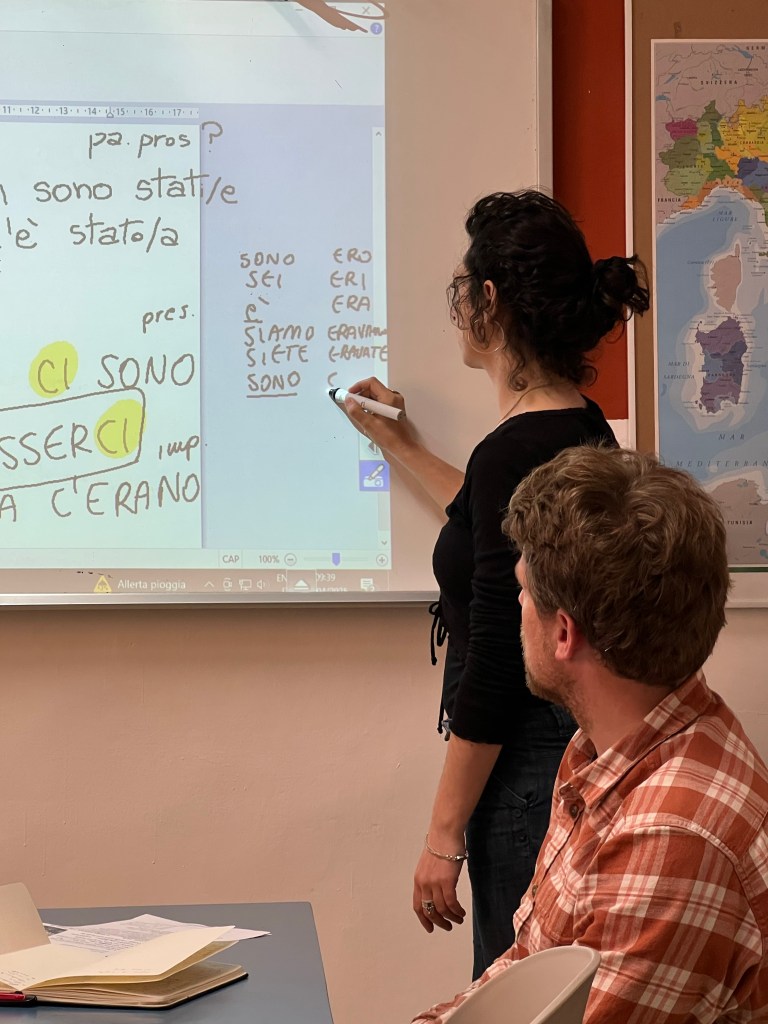
My two teachers have been excellent. They are both serious and fun, and have the right balance of encouragement and gentle correction.
In addition to the nuts and bolts I’ve learned of the language, here are some random things they’ve taught me that I will probably never forget:
- All over Italy, young people wear olive wreaths when they graduate from university. In the North, however, they take it less seriously than in the South, and their friends supply them with silly costumes and require them to sing a particular song with dirty lyrics, that includes reference to a cow’s butt.

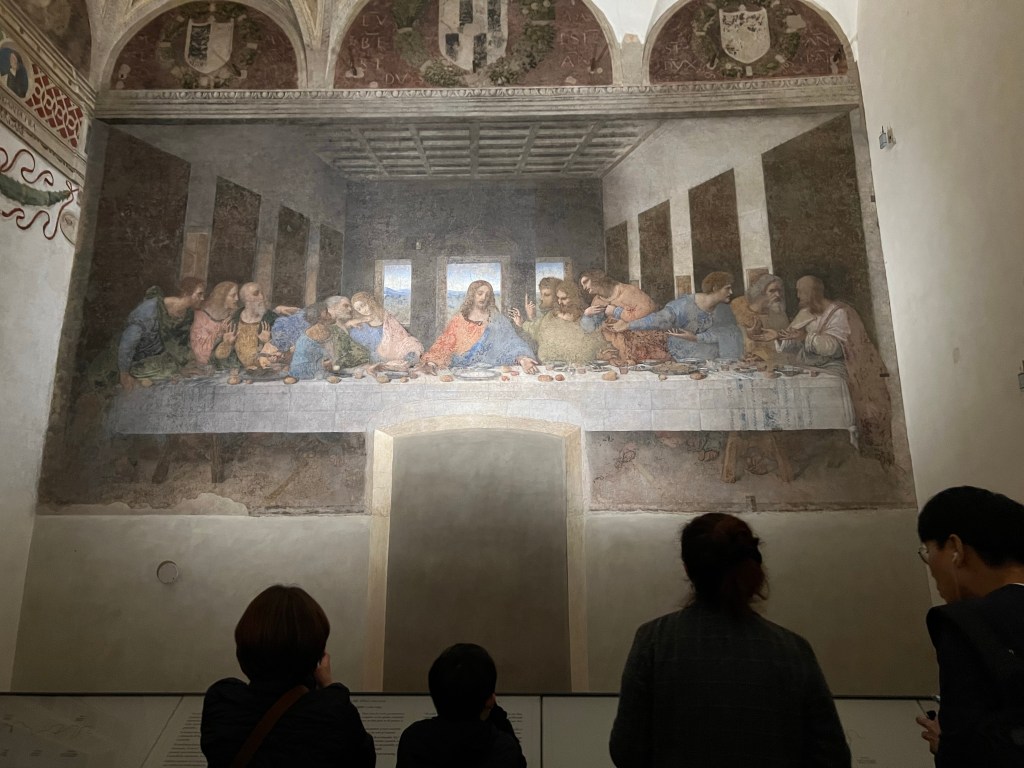
- Friday the 17th is considered an unlucky day in Italy, but it would be bad luck to have a dinner group of thirteen, because of The Last Supper of Jesus and the twelve apostles
- My nose shape, with its big round tip, would be considered a naso a patata, a potato nose.
- Like we call tissues Kleenex, they call paper towels Scottex.
- Italians have a genetic predisposition towards gluten intolerance, which is why you see gluten-free products featured so prominently in restaurants and grocery stores.
- When you want to say someone is in good health, you say they are come un pesce, or like a fish, which in ancient times, were considered immune to certain illnesses.
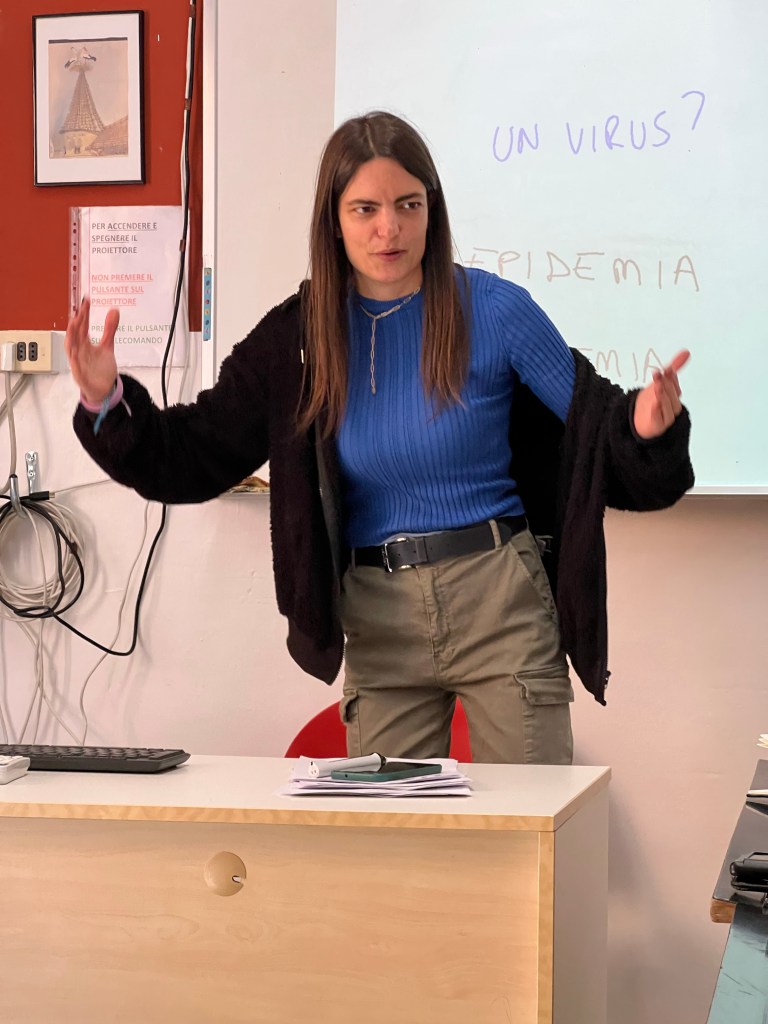
The program is organized by week, so next week, I will have new teachers and some new classmates, as students come and go for varied lengths of time. I’m sure they’ll be good too, but even if they’re not, I will finish in three weeks with a basic understanding of the imperfetto, and the knowledge that I have a potato nose.
 Gigi's Italia
So many questions raised by this post! How did the topic of your nose shape come up? Isn’t pasta a gluteny food? How did Italians develop this gluten sensitivity, then? And where did you get that cool vest? (I love your outfit!)
LikeLike
(This is from Gigi.) I self-identified as a potato nose. Apparently, the most valued nose here is the French nose. Because high gluten food is so fundamental to the Italian diet (pasta, pizza, bread, etc.) there are a huge number of gluten-free options everywhere. I don’t know how people survived before this was true, or before it was even recognized as a need.
Vest from Land’s End, from one of their sales they’re always haranguing me about.
LikeLike
I love you posts! Keep ’em coming!
LikeLike
Love reading this as I head to Italy for my first time! It seems we’ll miss each other based on region, but I’m cheering you on from (slightly less) afar.
LikeLike
Parlerai così bene quando tornerai!
LikeLike