

I had the great good fortune to be in Bologna for 25 Aprile, a national holiday that marks the anniversary of the day that Italy was liberated from Nazi occupation and the remnants of Fascism.
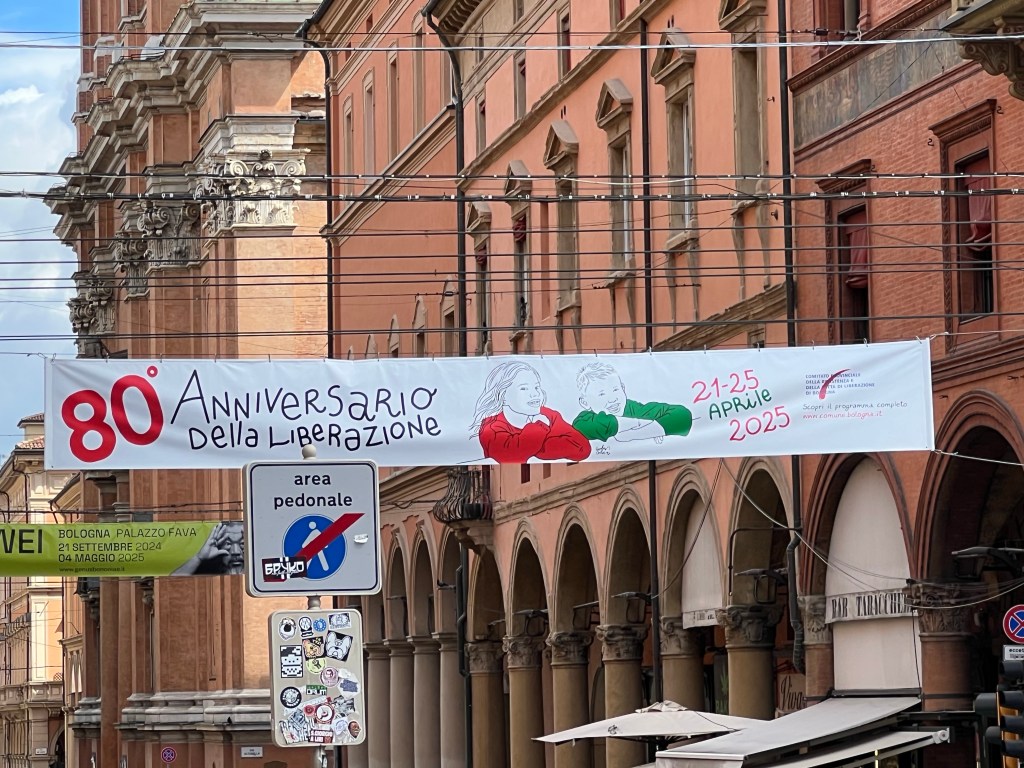
This day is especially resonant in Bologna, the last Fascist stronghold liberated by the partigiani, or partisans. It took the Allies and partigiani two years to make their way from Sicily up to Bologna, but after Bologna fell on April 21, 1945, the rest of the country followed four days later. Mussolini was shot by the partigiani four days after that, with his body then hung in a square in Milan for the citizenry to mock and abuse.
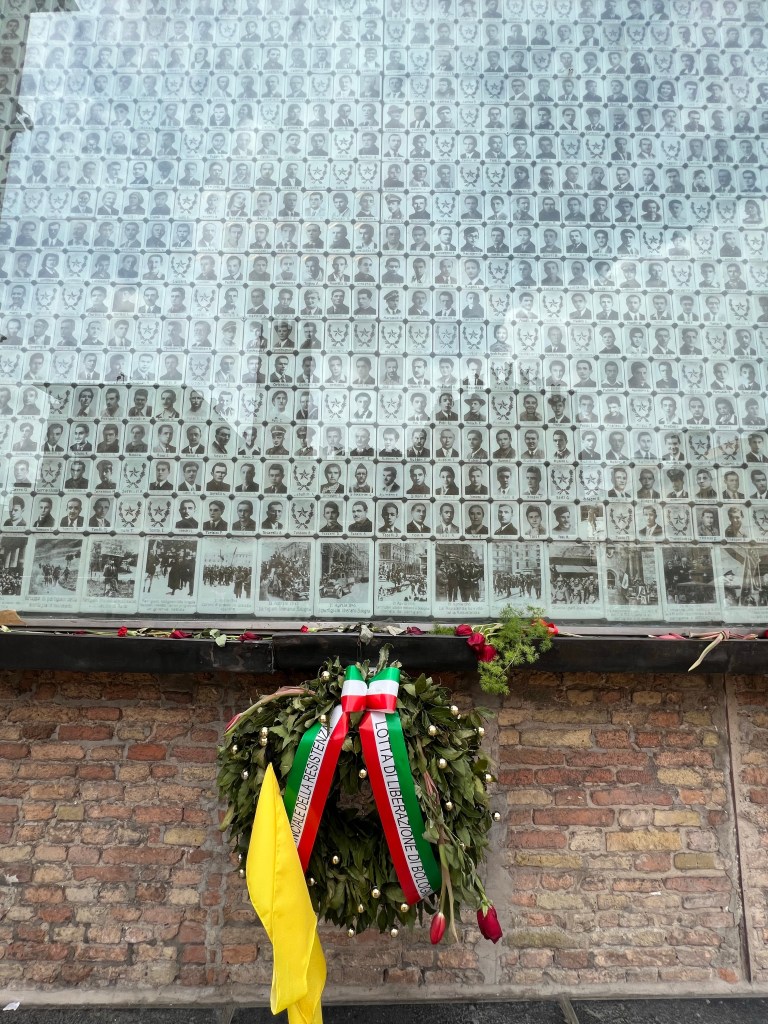
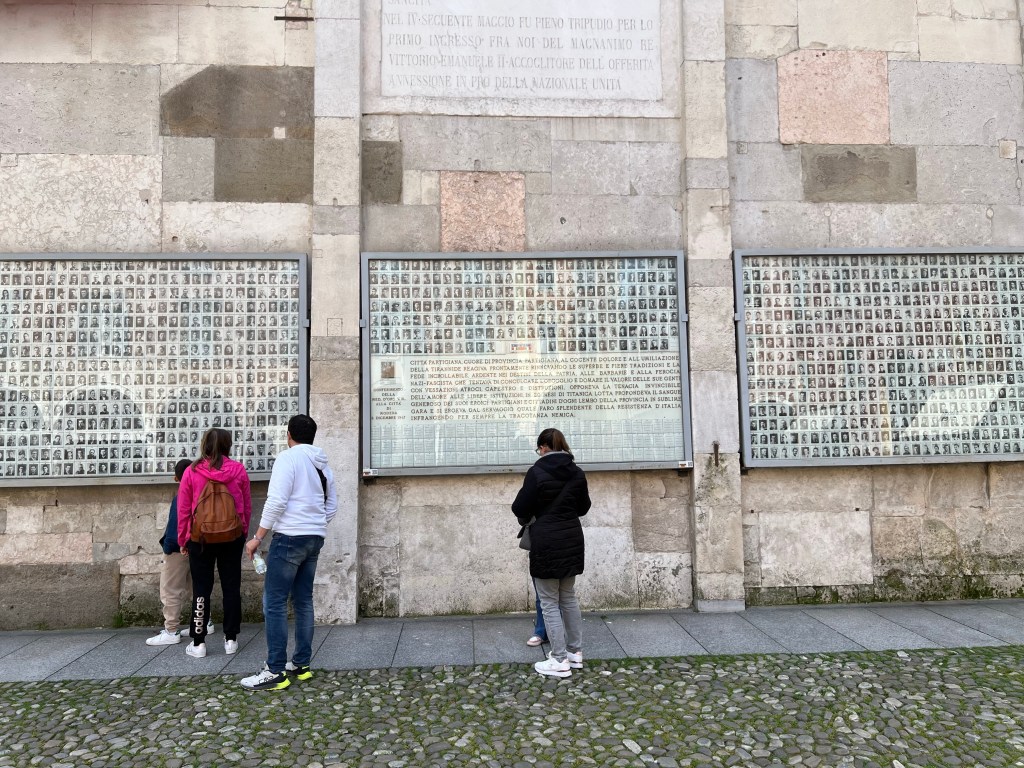
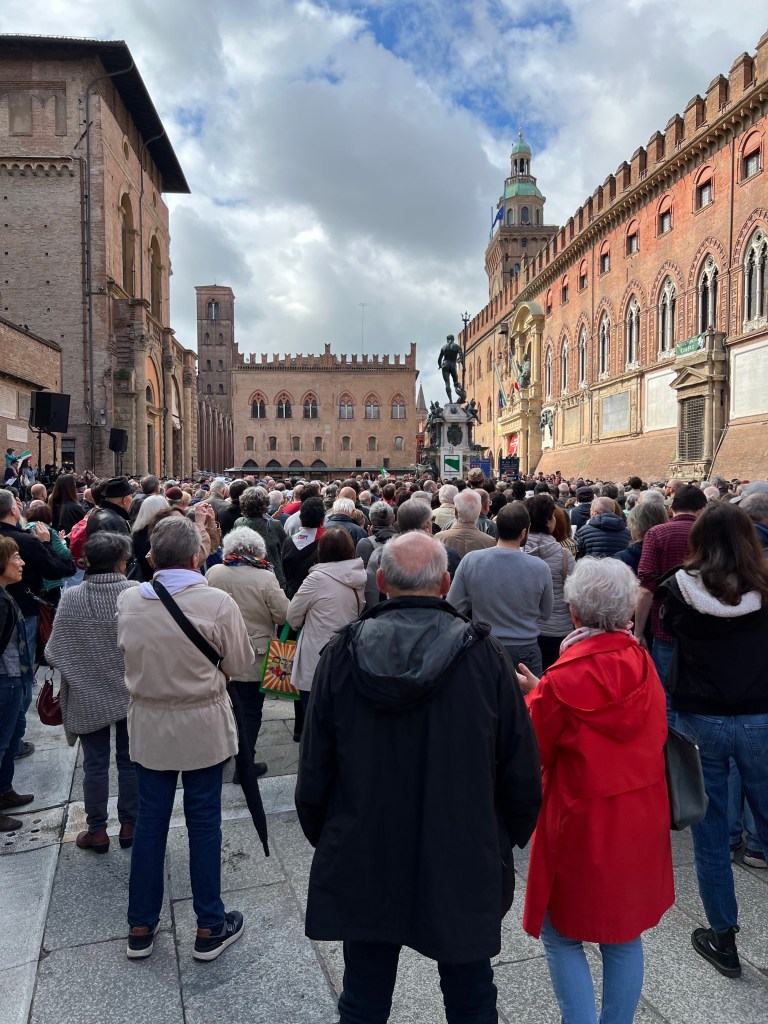
This day devoted to anti-fascism and honoring the fallen partigiani is celebrated here by serious speechifying and laying of wreaths, and a huge outdoor music festival at Monte Sole nearby.
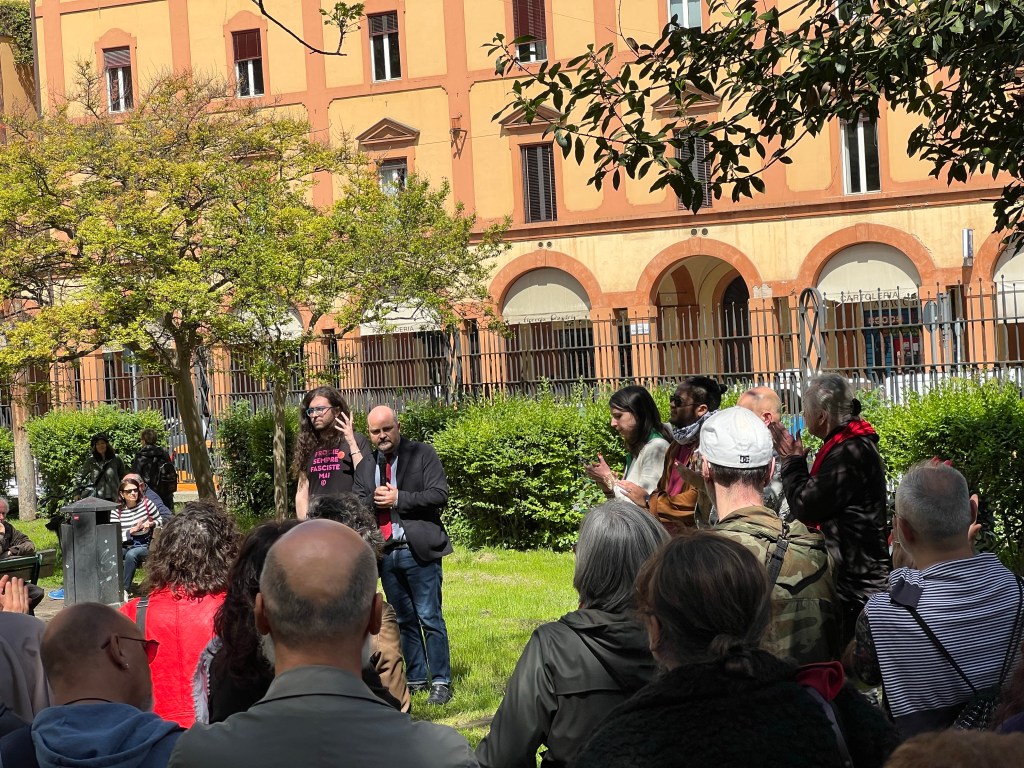
Within the city, Via del Pratello, a gathering place for the young, famously marks the day with music, food, and political activists promoting their organizations and causes.
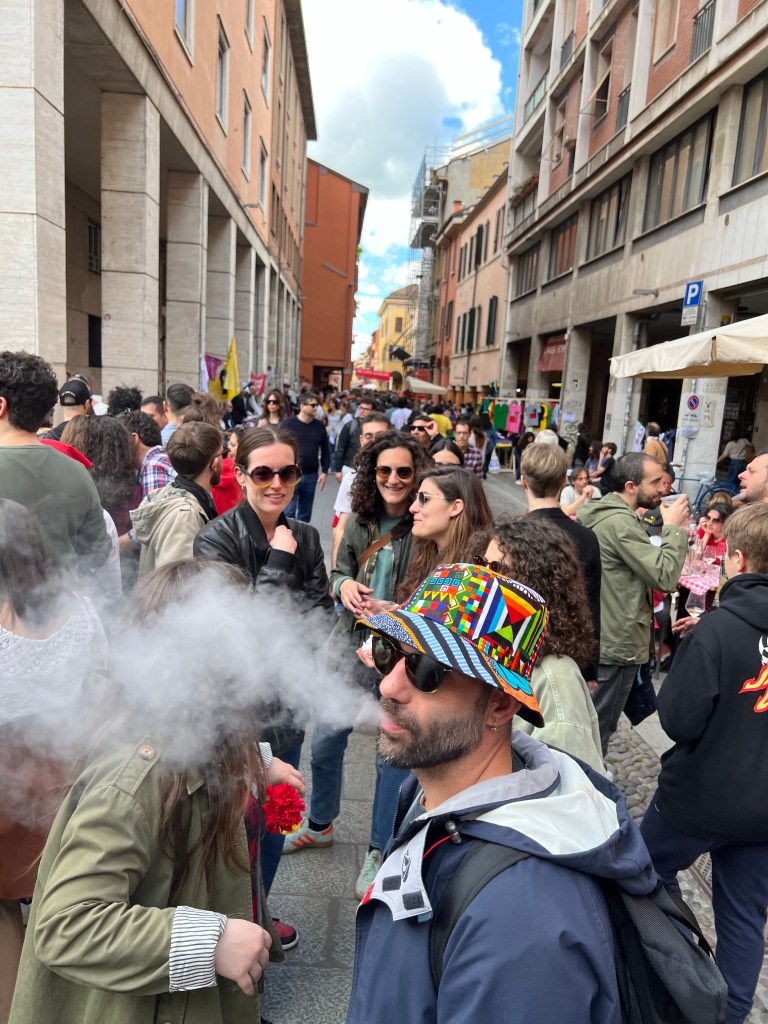
In my Italian class, I asked how people here square their anti-Fascist celebration with the fact that Italy had been a Fascist state for twenty years and was allied with Hitler at the beginning of the war. It turns out, shockingly, there is not universal recognition of this day as worthy of celebration. Prime Minister Giorgia Meloni, whose right-wing political party, Brothers of Italy, rose from the old party of Mussolini, has proposed changing the national holiday to November, when World War I ended. This year, she decreed the mourning period for Pope Francisco to extend an unprecedented five days instead of the usual one or two, and then said that 25 Aprile celebrations should be cancelled as a gesture of respect. As with our Martin Luther King Day, when holidays are linked to events in recent memory, they can be far more controversial than those that honor men with tri-corner hats and muskets. But from what I could observe, Meloni was not able to make a dent in a full-throated embrace of the day.
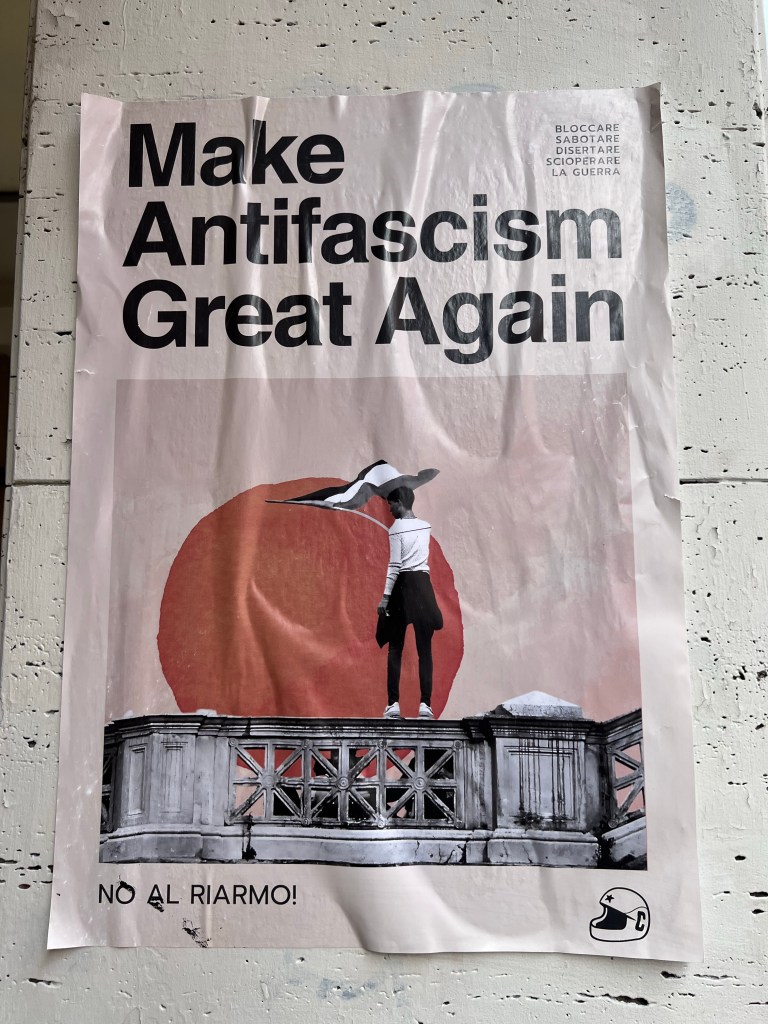
Bologna is known as the “Red City,” not only for its red brick buildings but for its leftist political leanings. I was surprised, though, at the extent to which explicitly Communist imagery was proudly on display, something I have never seen in the US.

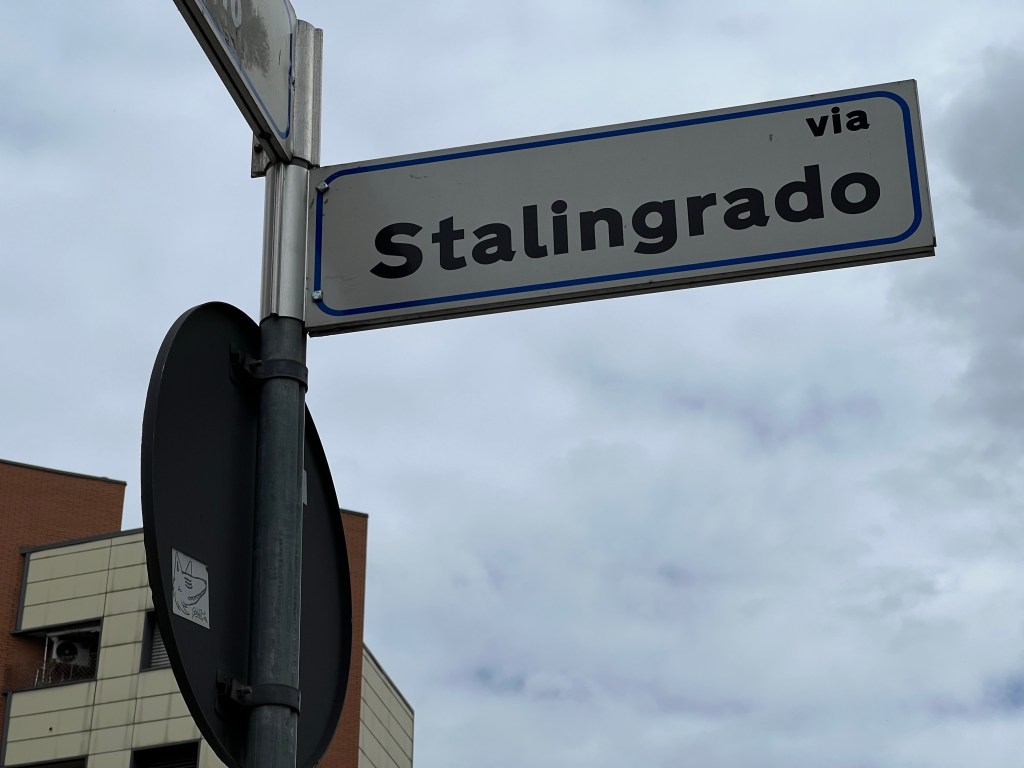
I suppose I shouldn’t be surprised, given that my apartment here is on Via Stalingrado, named after a city in Russia that even there no longer bears that name.
The heart of the festivities is the singing of Bella Ciao, or “Beautiful Goodbye,” the song of the partigiani willing to give their life for the liberation of Italy, and considered by some to be the unofficial national anthem. Here are some of the lyrics, translated:
And if I die as a partigiani then you must bury me
Under the shade of a beautiful flower
And the people who shall pass will tell me “What a beautiful flower.”
This is the flower of the partigiani who died for freedom.
 Gigi's Italia
Loved this post, learned so much and also found it moving…thanks Gigi!
LikeLike
Nice snapshot of all the elements of this day, Gigi. You may remember that you and Ben stayed near where Mussolini and his mistress Clara Petacci were captured and executed by partigiani when you visited with us on Lago di Como. I think you met my late cousin Walter, an ex-partigiano. Now neofascisti gather yearly in nearby Dongo, not without opposition: https://youtu.be/Y24E_5htxOM?si=HEZefYbFV7e50NXn
>
LikeLike