

I am an enthusiastic, if mediocre, cook, with not surprisingly, a special interest in Italian cuisine. So the first minute after Swarthmore College, my workplace, announced a session on pasta-making as part of its Summer of Learning program of fun activities, I signed up. I have tried to make fresh pasta several times over the years, but have always ended up with an inedible, gummy mess, headed straight to the trash. My friend Nanette always says that there are certain things one should just give up on making yourself, and I figured fresh pasta was one of those. But hope springs eternal.
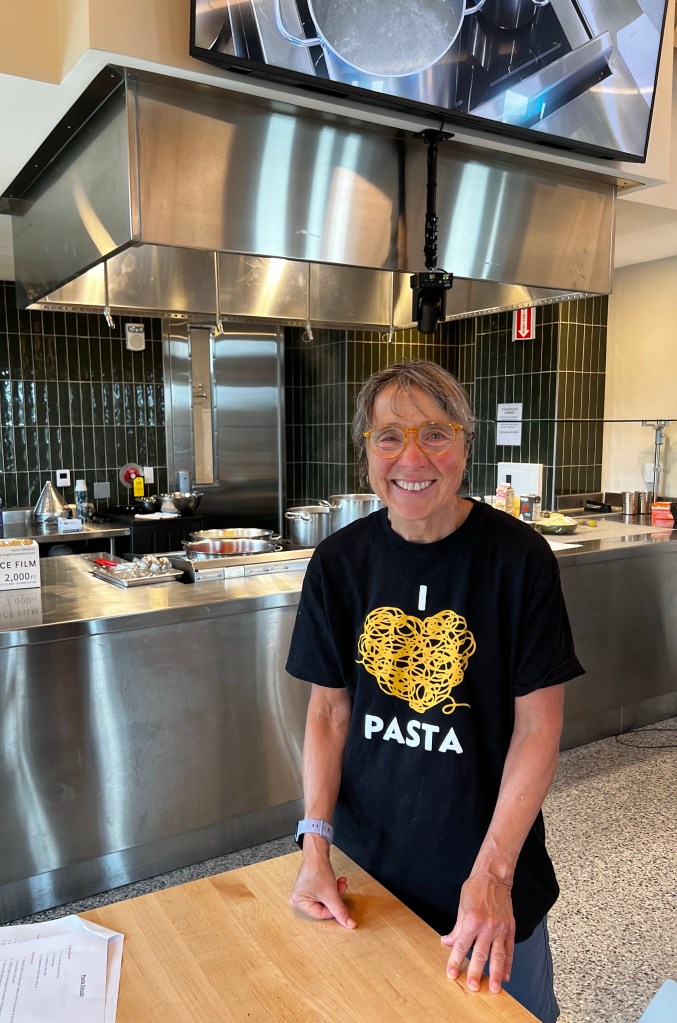
The class was held in Swarthmore’s spanking new Teaching Kitchen in its spanking new dining commons, conducted by its executive chef Tom Ramsey and sous chef Lauren White, both excellent instructors.

They set us up with flour, eggs, olive oil, salt, and a big bowl for mixing. We put the liquid in a well of flour, mixed it all up with a fork, kneaded it, formed it into a ball, and wrapped it tightly in Saran Wrap to set for a half hour. I think not letting it “set” may have been my downfall in my previous attempts.

While we waited, Chef Ramsey demonstrated making his own favorite versions of marinara and Alfredo sauce.
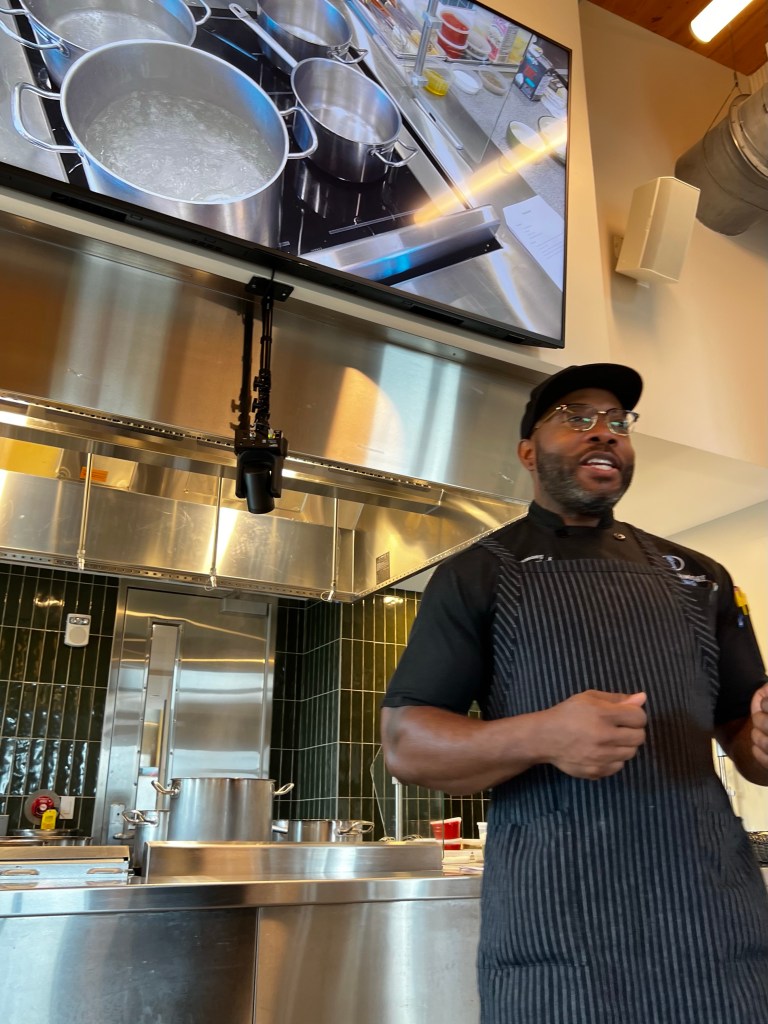
While he did that, both chefs offered suggestions and advice, such as:
-Use white pepper instead of black for Alfredo sauce. It looks better.
-For marinara sauce, just fry the garlic a tiny bit to unleash the flavor. Roasted garlic gives richer flavor. Make it by wrapping olive oil-soaked peeled cloves in tin foil and roasting at very low heat, like 200 degrees, for at least an hour. Store the cloves in the olive oil packet. Cook onions only until they’re soft; don’t brown or caramelize them.
-Fresh pasta should be cooked the day it’s made. If not, you can freeze it, but make sure to cook frozen pasta in an extra large amount of boiling water, so it doesn’t heat the water too much and make the end result soggy.
-It’s fine to use regular all-purpose flour. No need to use the more expensive and harder-to-find “00” from Italy. If you’re making whole wheat pasta, don’t use more than half whole wheat flour.
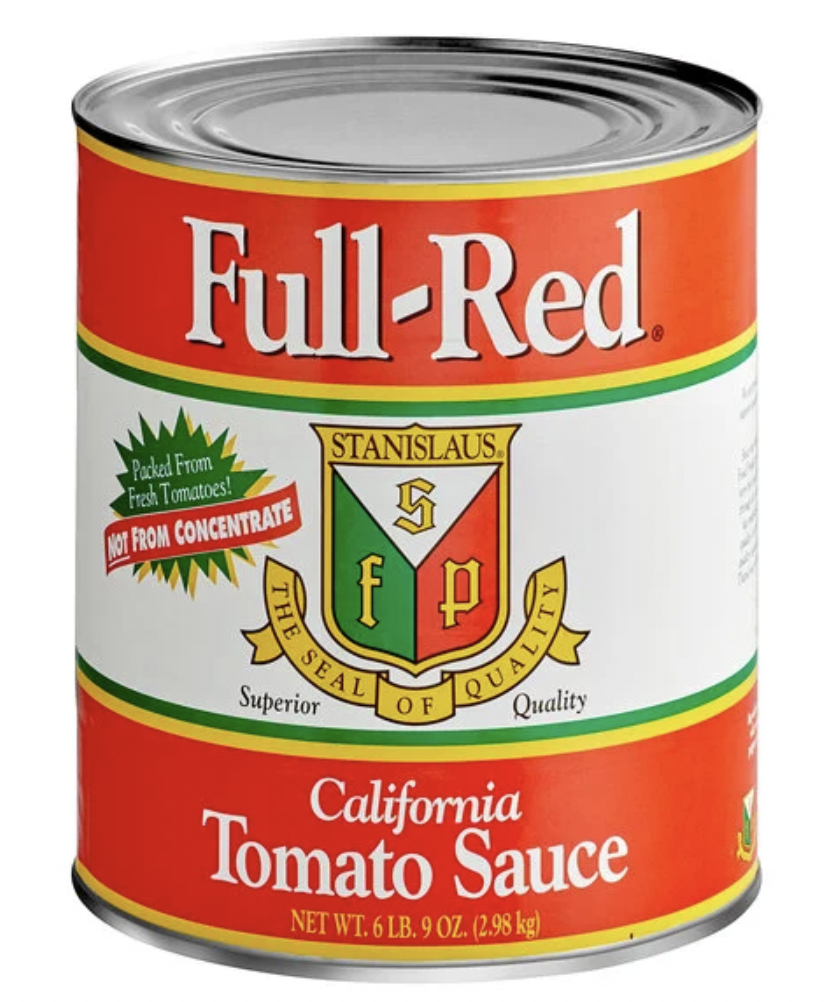
-The best canned tomato products are the unlikely-named Stanislaus brand, from Modesto, CA. Both chefs have ample opportunity to taste-test all manner of products, and both swore that this is the most flavorful. As you may suspect, I haunt the Italian food sections of markets ranging from Lidl and Aldi to high-end ones like DeBruno’s in Philadelphia and Eataly in New York, Chicago, and throughout Italy, and I’ve never heard of it. So I plan to make it my business to find it and try it, even though I will have to mail-order it.
At this point, we were ready to get physical with our rested dough. First we rolled it out as thin as possible with a mattarello, or rolling pin. Then we repeatedly fed wide strips of it through a pasta-making device, adjusting it to decreasing thickness.
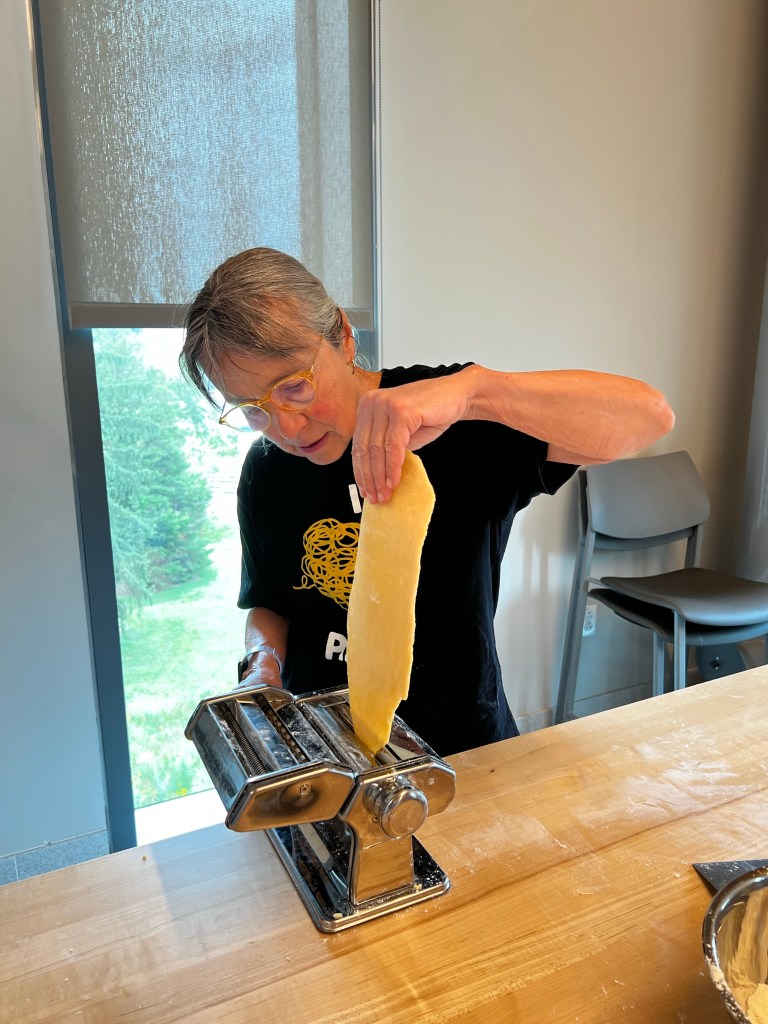
Finally, when the dough strip was paper-thin, we fed it through the pasta-cutting end of the device, at either spaghetti or fettuccine widths. It was a little tricky to get to go through just right, but we worked in pairs and helped each other, and everyone, including me, had an end result we were pleased with.
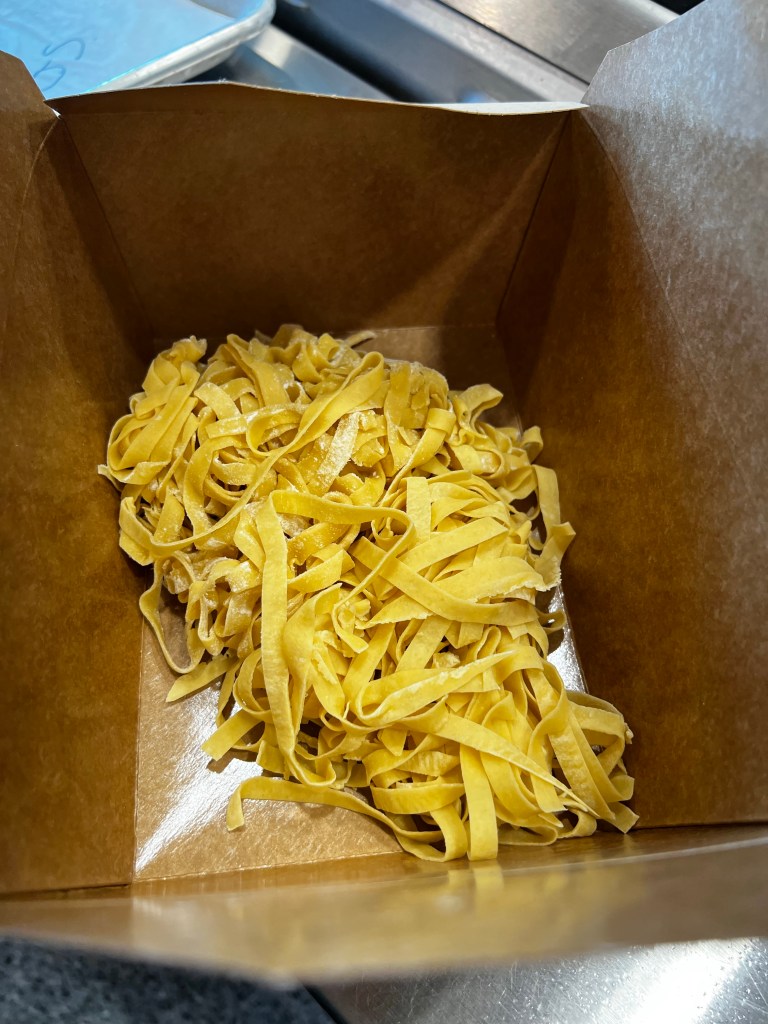
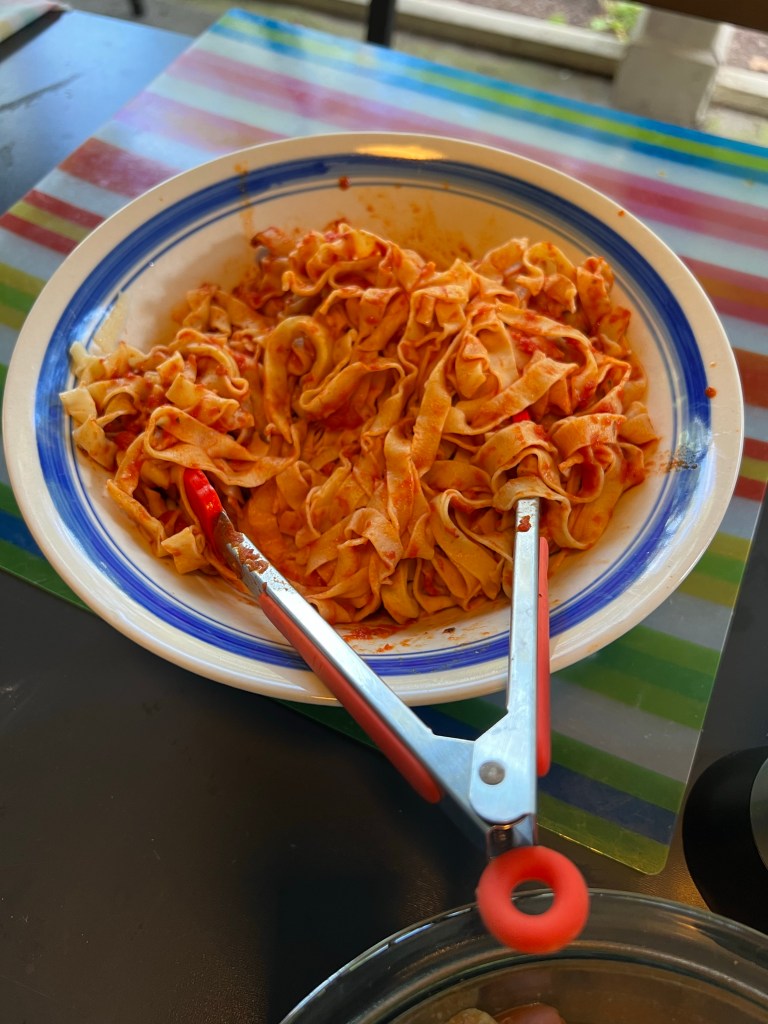
I took mine home, with a portion of Chef Ramsey’s marinara sauce, and it was great. My plan is to make pasta once a week until I really get the hang of it.
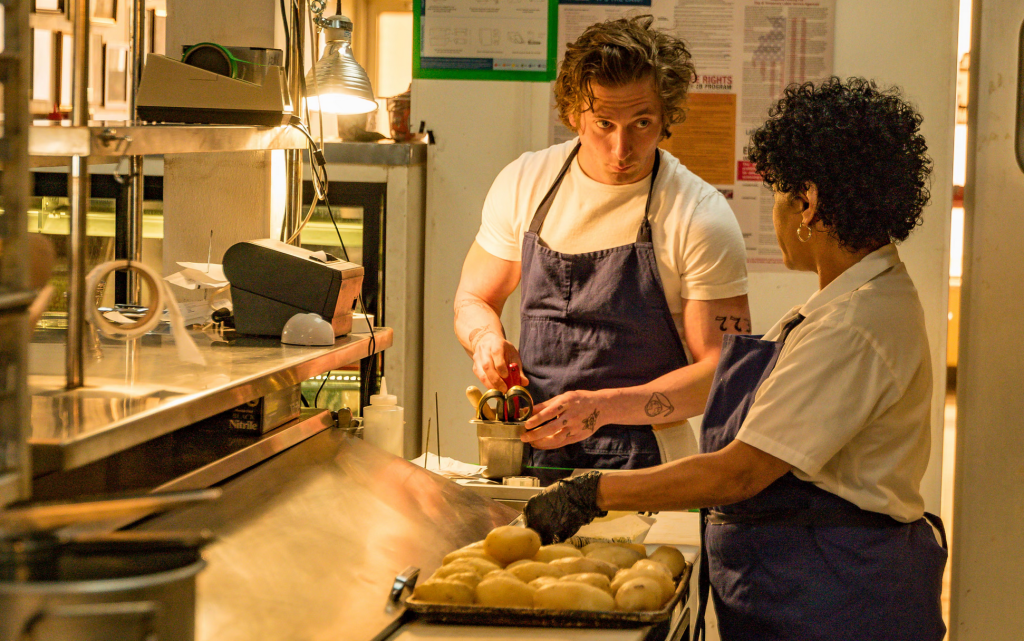
In addition to spending an enjoyable two hours and (maybe) learning a new skill, I also got the answer to a question I’ve had. Our instructors actually called each other “Chef,” just like they do on The Bear. I had always wondered about that. So, I was excited to learn that it’s a real thing that real chefs do.
 Gigi's Italia
This looks like so much fun!!
LikeLike