

I was chatting with a student in my office at Swarthmore College when she casually mentioned that she was taking a course in fresco painting. I managed to not leap across the room, but I’m sure I startled her with my over-the-top expression of interest and enthusiasm. I asked if I could see her work sometime. She did me one better, and asked her professor if I could visit the class.
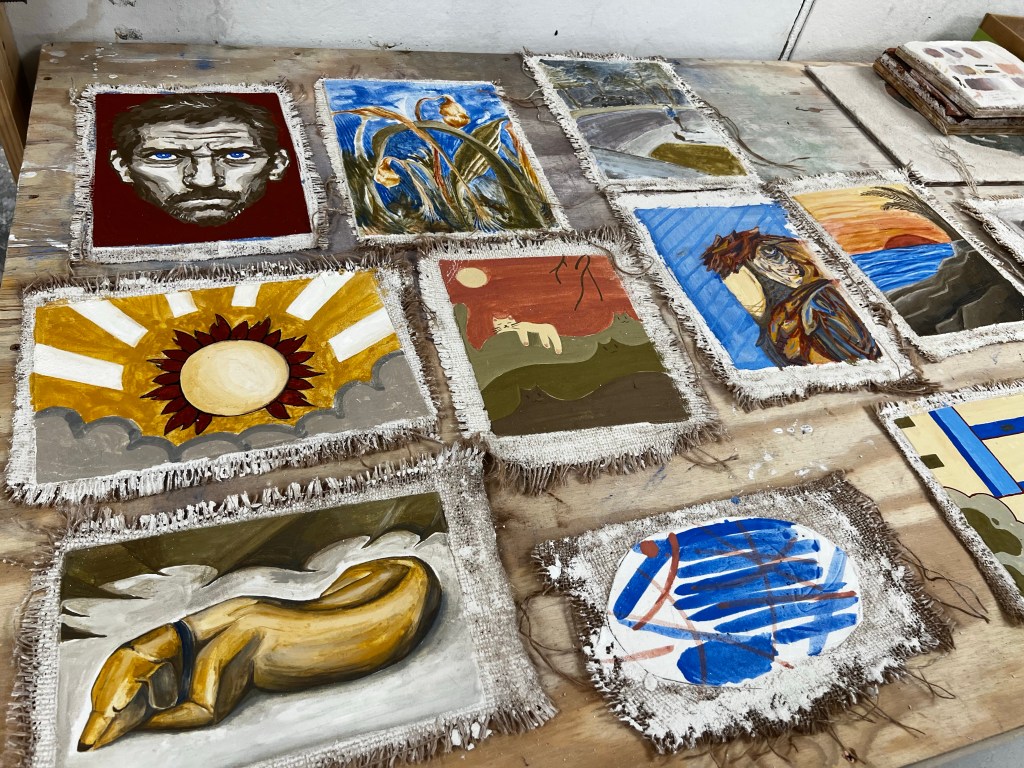
Fresco painting, traced back to ancient times, is a process through which layers of wet plaster are applied to a wall, and then water-based pigments are applied to form the image. The trick is that it has to be done super-quickly, within a giornata, before the plaster dries. Once it dries, it is extremely durable, as shown by the ancient Roman frescos visible at Pompeii that are more than 2000 years old, Giotto’s 13th-century Arena Chapel in Padua, and most famously, Michelangelo’s Sistine Chapel ceiling, completed in 1512.

On the day of my class visit, Professor Mariel Capanna was instructing the students on preparing their rough arriccio surface, a necessary step before applying the paint.
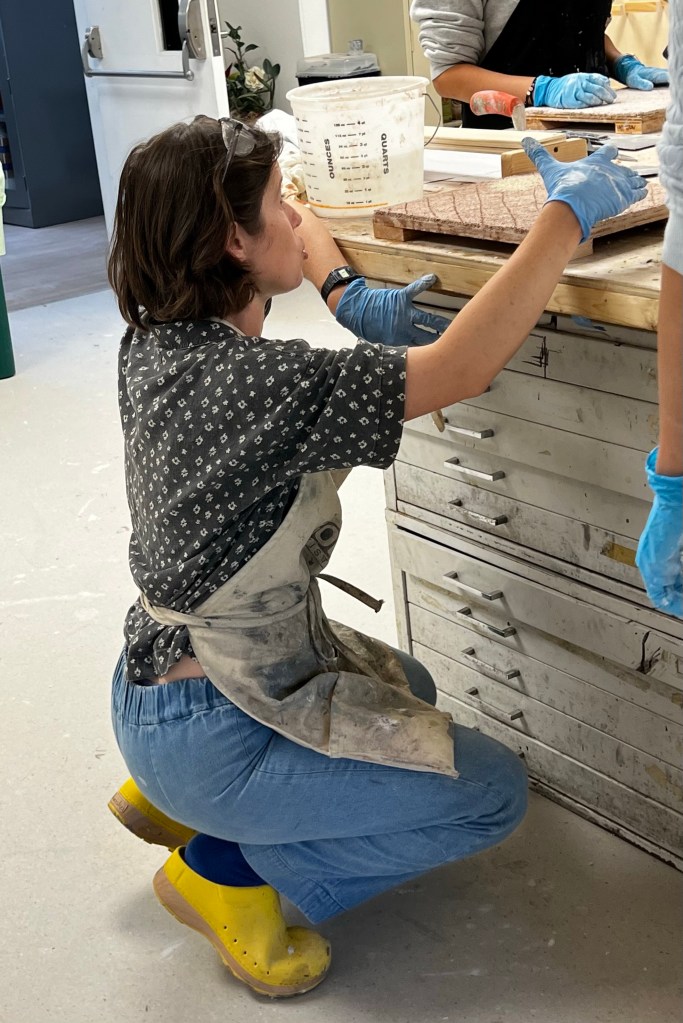
Watching the students hard at work learning an art form dating back thousands of years actually gave me goosebumps.
I’ve had my own experience with frescoes. In 2018, I participated in the Messors Art Conservation Course in Puglia, the province that makes up the heel of the Italian boot. The Alta Murgia plateau there is known for its hundreds of cave dwellings, including cave churches dating back as far as 1100 CE, with frescoes that are now decaying from the mineral deposits that cover them.
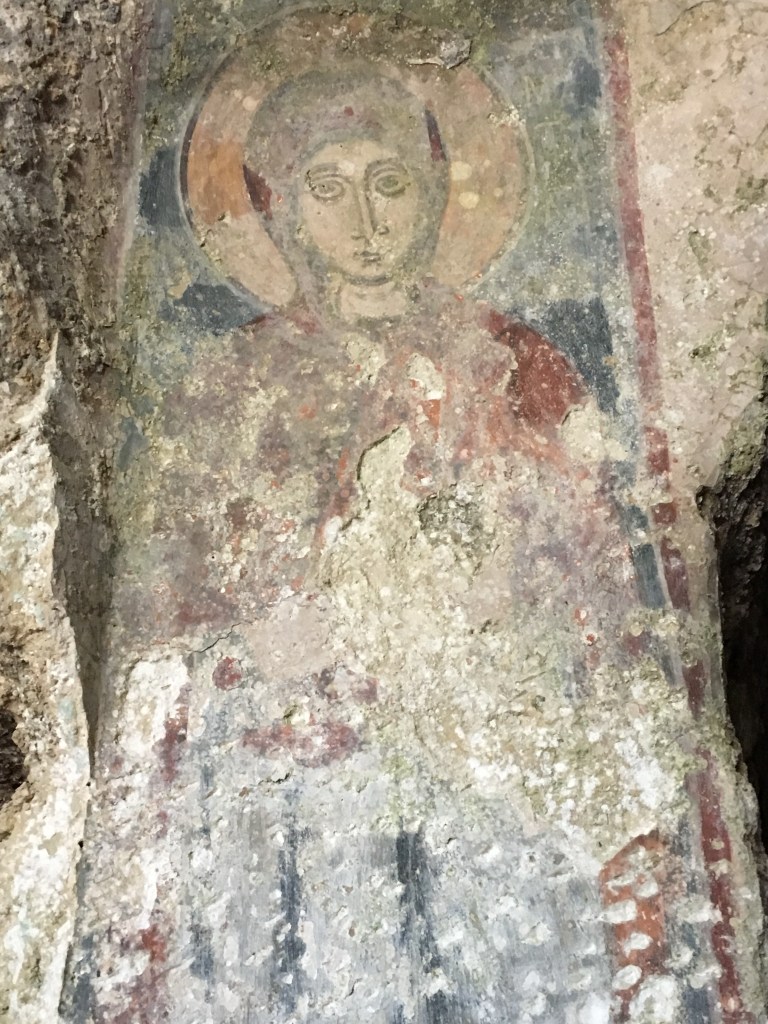
One of our tasks in the course was to scrape away these sediments with surgical scalpels to reveal the frescoes underneath. When one managed to liberate a bit of this art after centuries of being buried, never to be seen again if not for our efforts, it was thrilling.
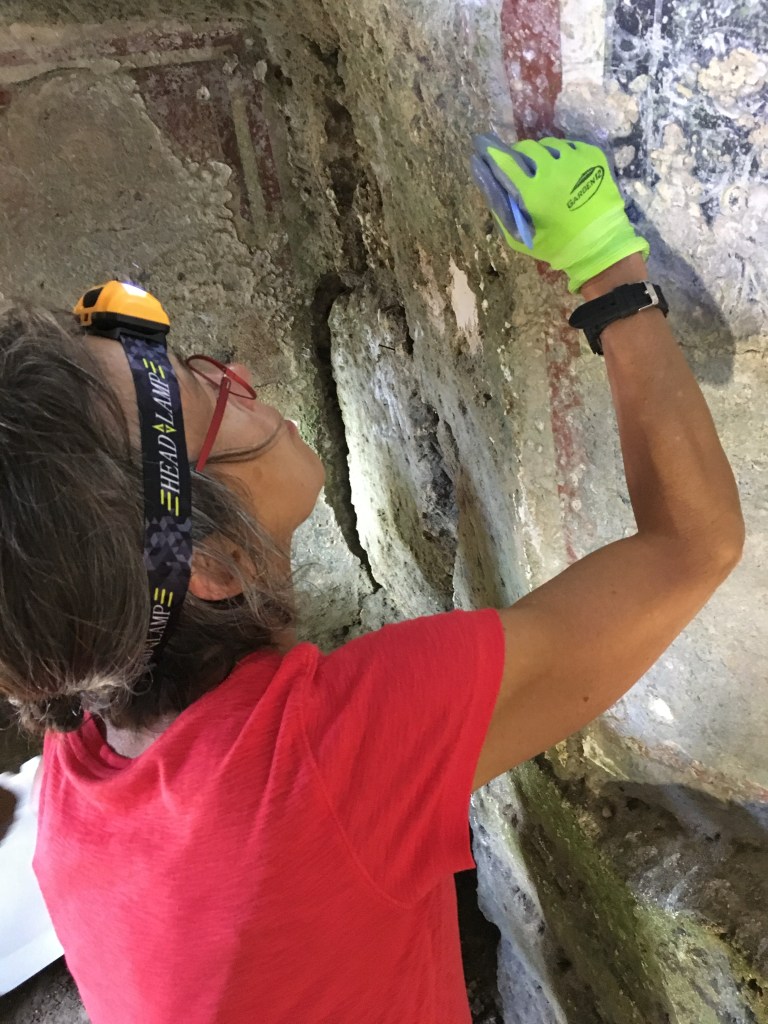
As part of the program, we spent a day going through the steps of making our own frescoes, to increase our appreciation of the art form. Somehow, I wouldn’t say mine gives the Sistine Chapel a run for its money.
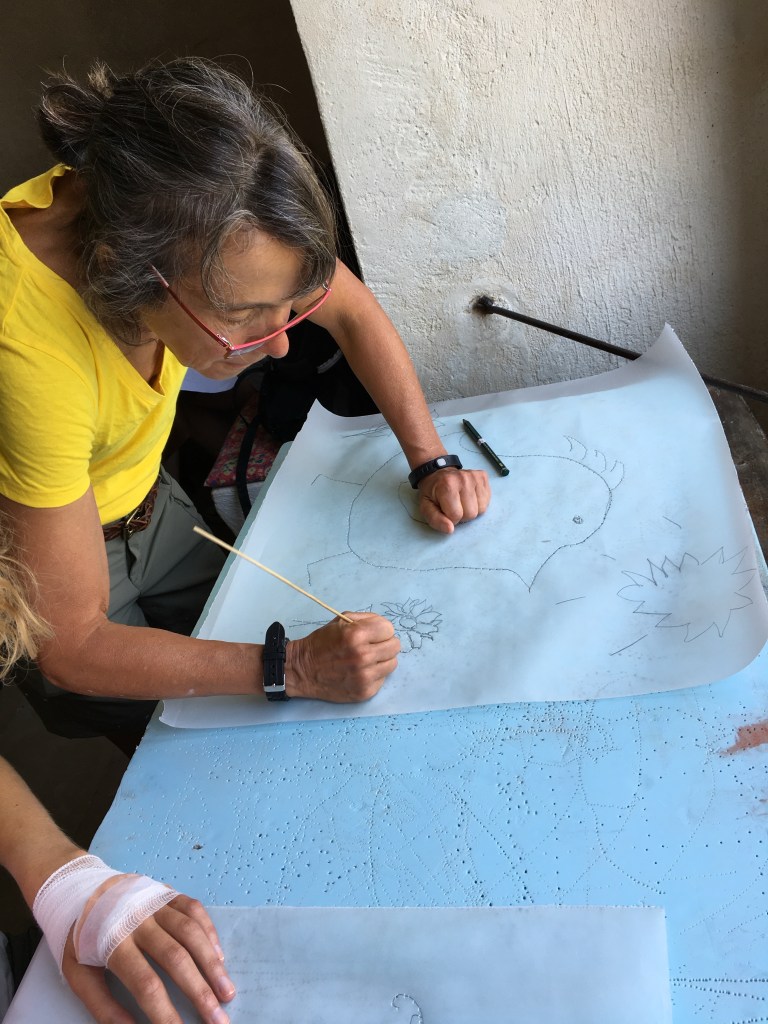
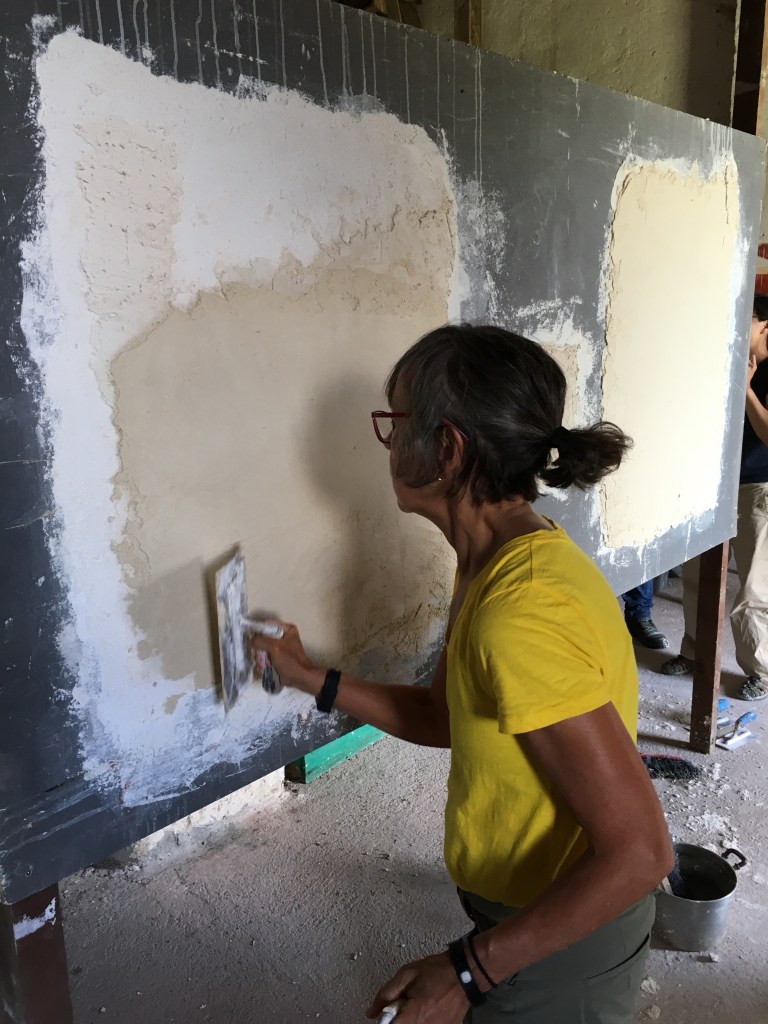

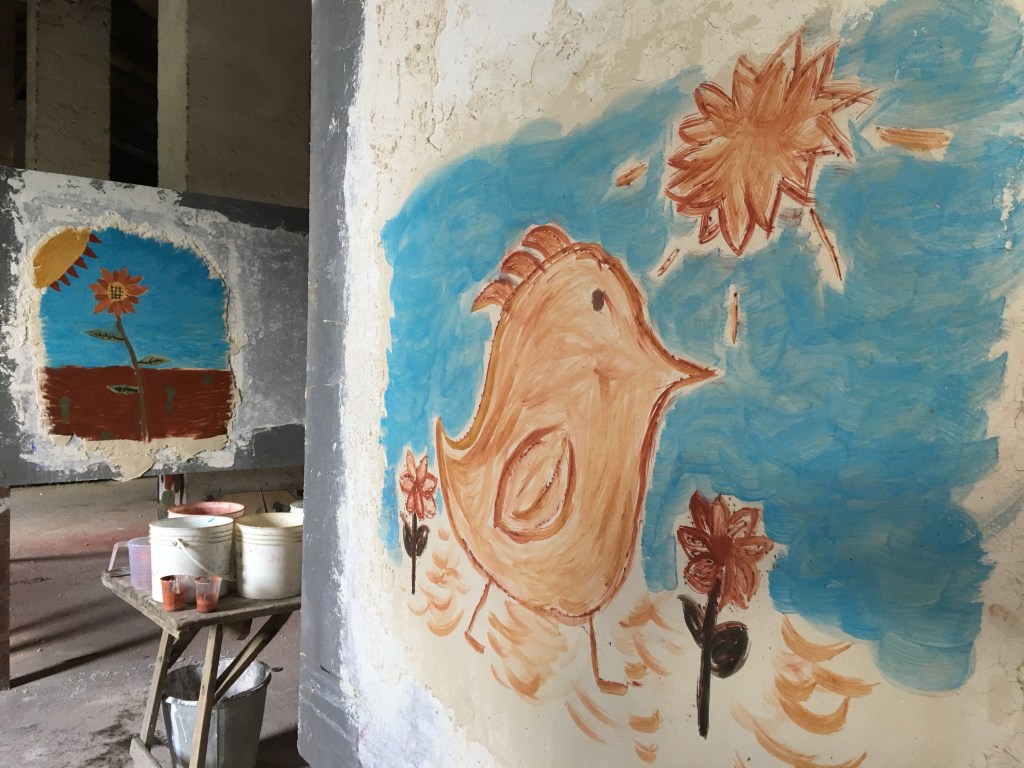
Professor Capanna invited me to pop in again later in the semester, to see the students’ work. I will definitely take her up on the offer. Who knows? There may be a future Michelangelo in our midst.
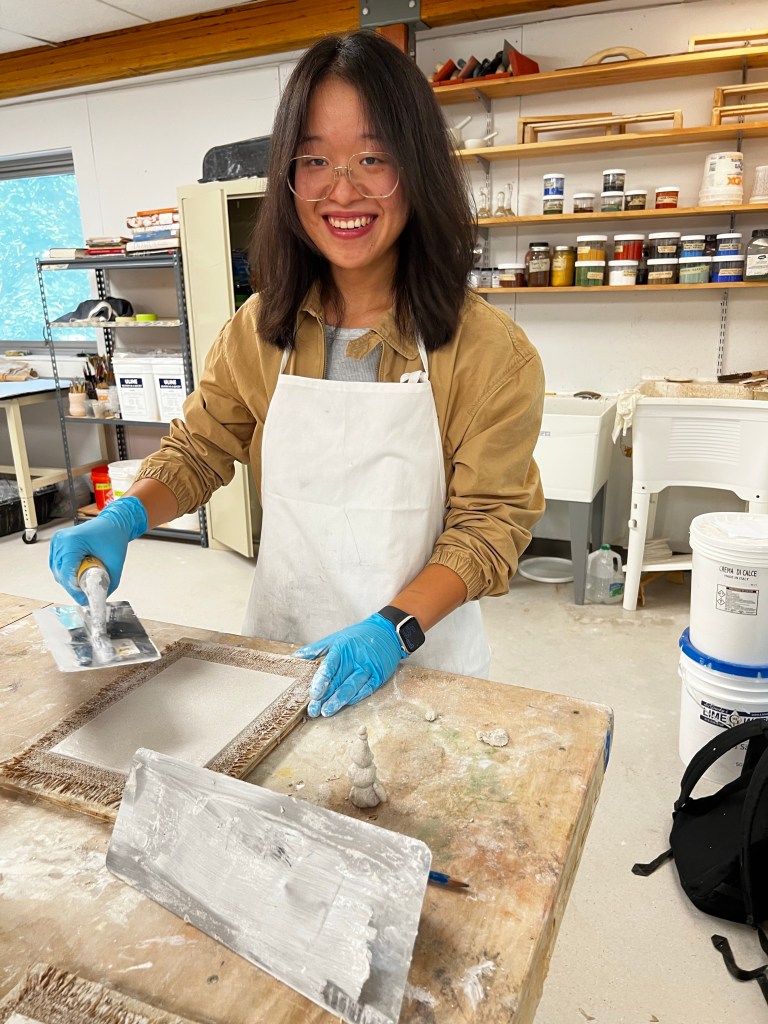


Mariel used to show at my gallery!
LikeLike