

Readers of a certain age will remember the biography shelf in the libraries of their youth. In the Pottersville branch of the Somerset Public Library in my hometown, I remember that the books were hardcover and orange. I’m sure I read them all, especially those that were about ladies — the term we would have used — of achievement. Amelia Earhart, Annie Oakley, Eleanor Roosevelt: even though I was unlikely to follow in their footsteps to the skies or the rodeo or the White House, I was hungry to know the details of their lives.
One biography that particularly resonated with me was of Jane Addams, the founder of Hull House, the settlement house in Chicago that served the poor, immigrant population at the turn of the last century. Perhaps I was especially drawn to it because Jane Addams was a hero to my mother, whose first two decades in Chicago overlapped with Addams’ final ones. While my mother’s parents were both Italian immigrants, her own upbringing was more middle class, so while she didn’t benefit directly from Hull House’s services, she revered Jane Addams nonetheless.
On a recent trip to Chicago to visit my daughter, we had an afternoon to kill. Hull House, a National Historic Landmark, was open for visitors and had an afternoon tour, so off we went.
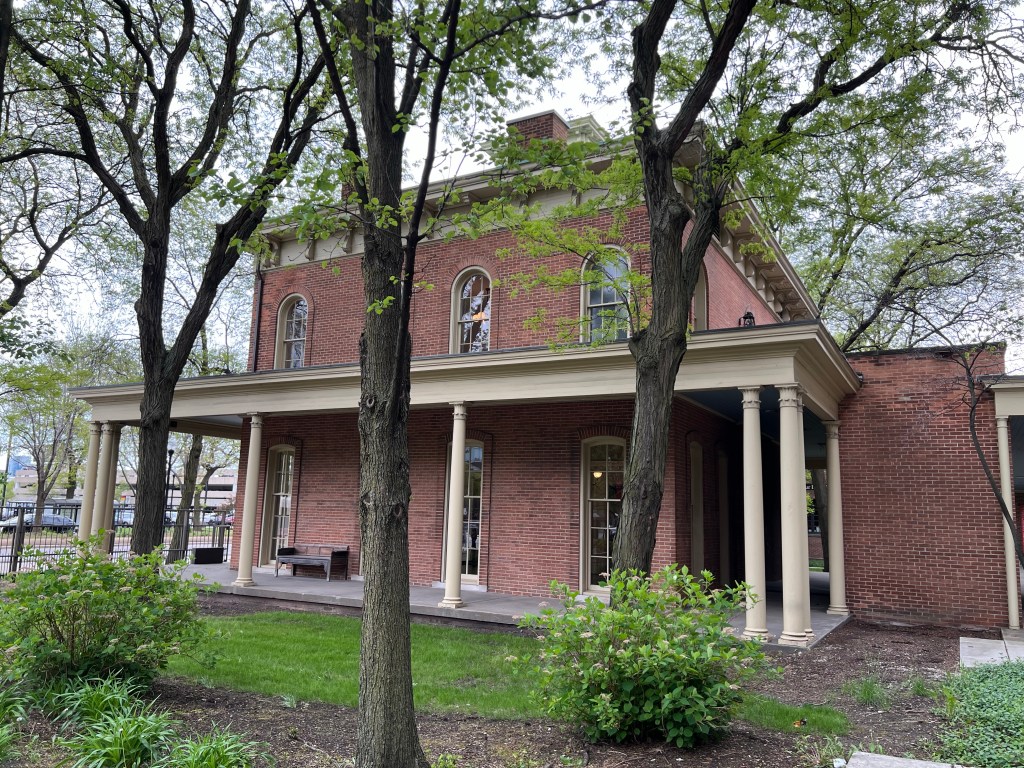
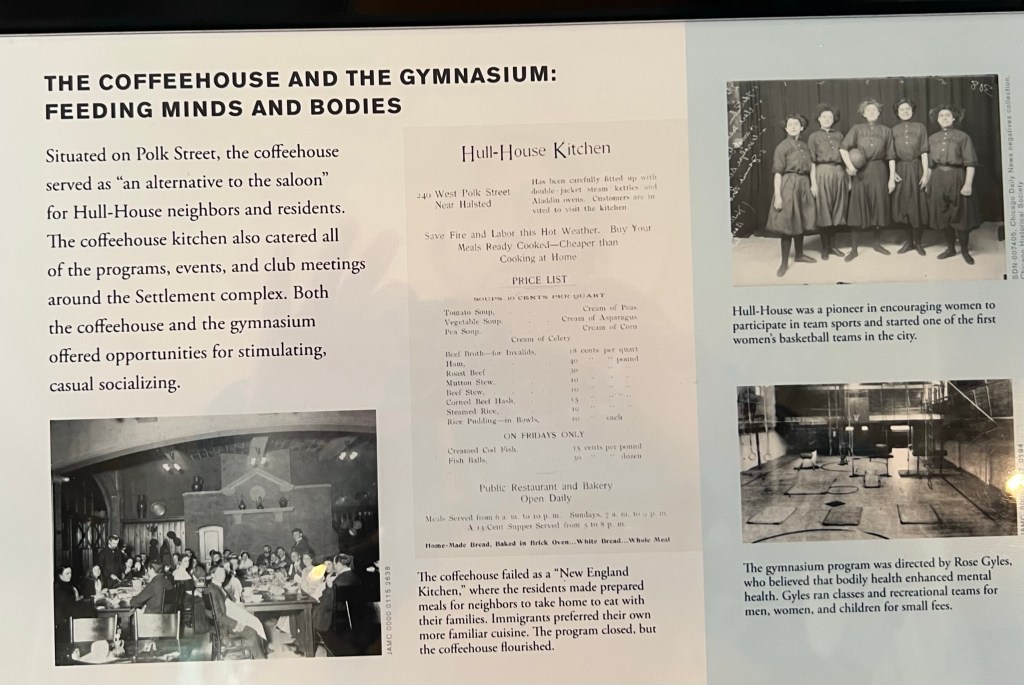
When Hull House was established in 1889, it was in the middle of a neighborhood populated primarily by poor Italian immigrants. Hull House provided a huge swath of social services — food banks, day care, community kitchens, citizenship and English courses, job training, early childhood education, as well as advocacy for worker’s rights, women’s suffrage, improved working conditions, and child labor laws. It held theatrical productions, and had a gym and an art gallery. It built the city’s first playground, which our guide told us the children were so eager to use that they formed a line around the block on opening day, and some even tried to dig their way under the fence to get in early.
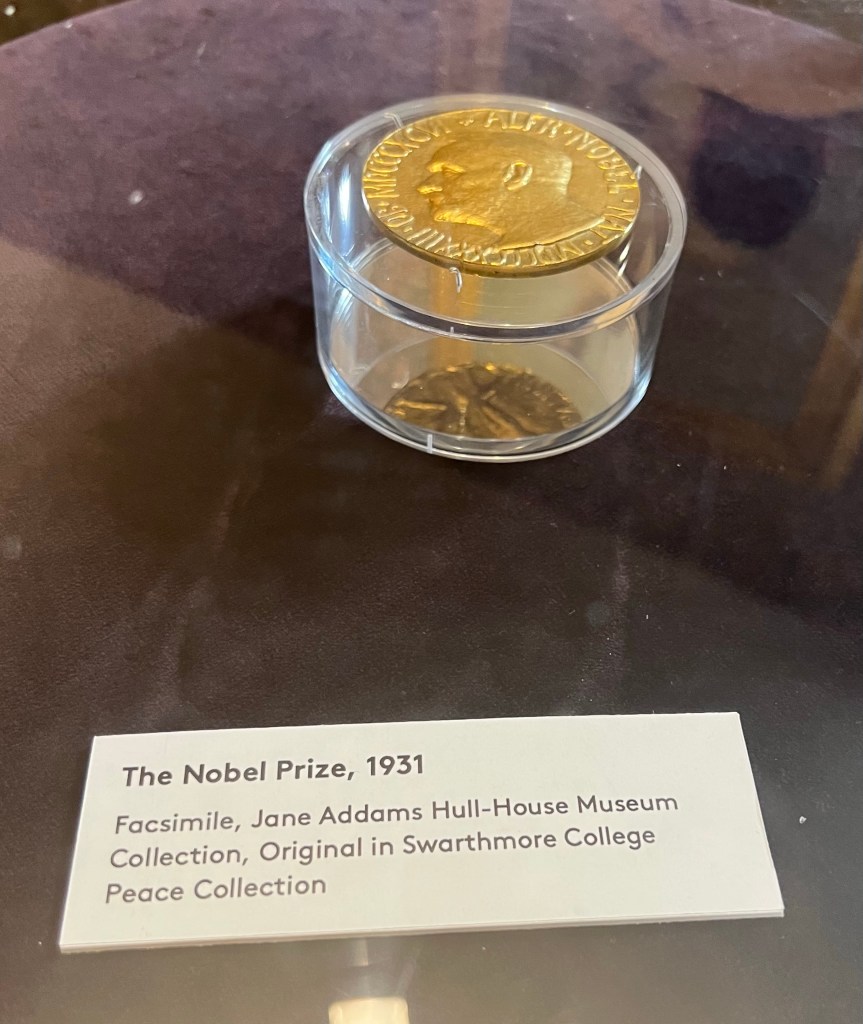
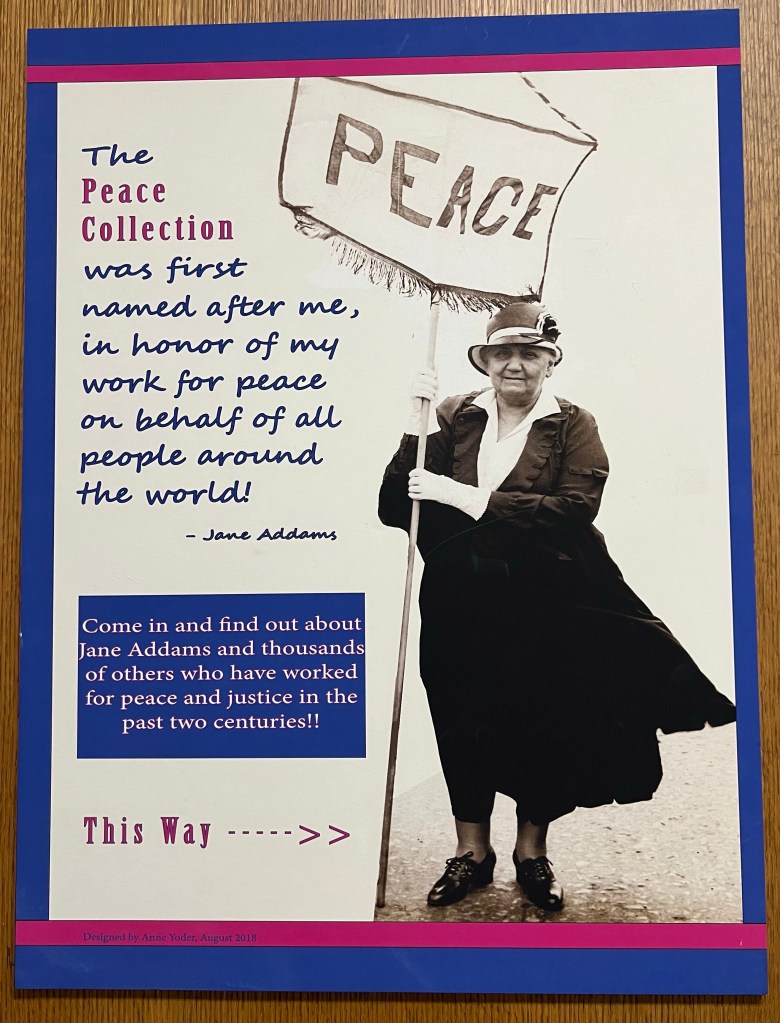
At the end of the tour, the guide called our attention to a replica of Jane Addams’ Nobel Peace Prize. The actual medal, she told us, along with all her papers, are held at Swarthmore College’s Peace Collection, in McCabe Library.
Wait, what?? For the past thirty years, I have worked at Swarthmore College, about a hundred feet away from all of this incredible material. And I had no idea.
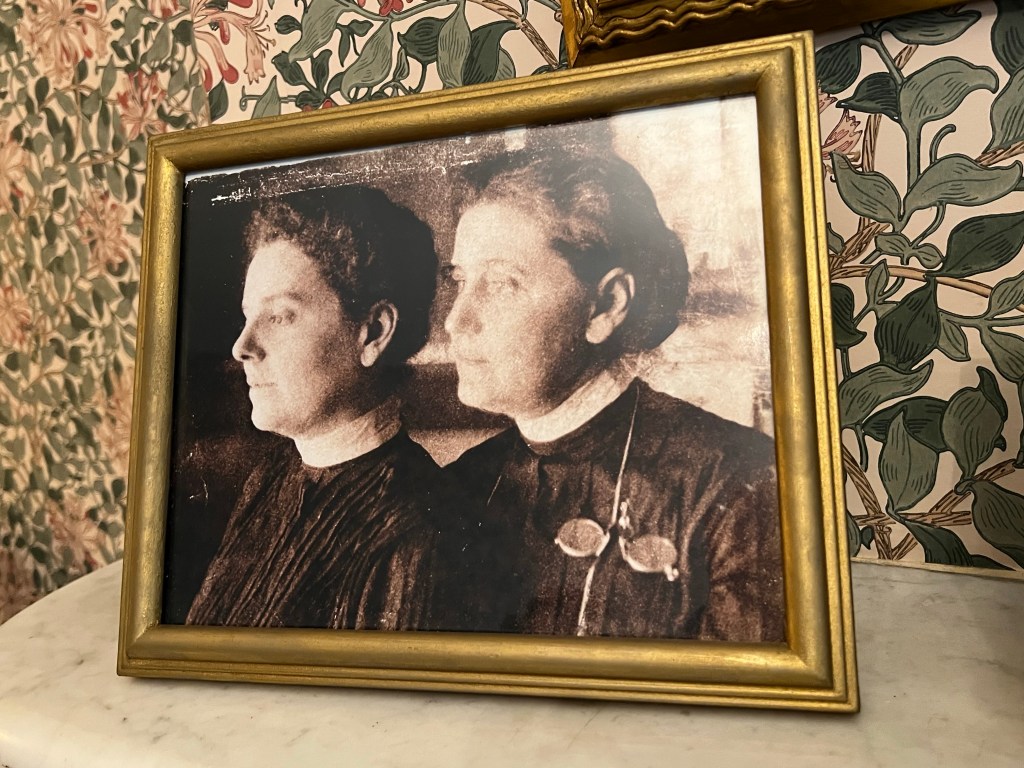
It turns out that when Addams’ life partner, Mary Rozet Smith, died in 1929, she attempted to burn all of their papers and correspondence. Lucy Biddle Lewis, a member of the Swarthmore Board of Managers, happened upon her doing this, and persuaded her to donate everything to the Peace Collection for safe-keeping. Addams was a pacifist, and therefore Swarthmore, with its Quaker roots, made sense.
As soon as I got back to campus, I contacted the Peace Collection, and asked how I could go about seeing this treasure. Much of the material is held off-campus, but I was able to read the Jane Addams Papers on microfilm, and spent a morning digging into “The Italians in Chicago, 1895-97,” a study done for the Hull-House Association. Here is some of what I found.
On the living conditions of Italians:
“In most cases where one apartment contains Italian or Jews, the whole tenement is given over to them; for the arrival of either one is followed by the prompt departure of all tenants of other nationalities who can manage to get quarters elsewhere. It is rare that one will find Italians and Jews in the same house.” The study goes on to describe the distain and contempt these groups felt for each other, using ethnic slurs for both I don’t feel comfortable repeating here. Due to these these insular communities, the report goes on to describe the Italian neighborhood as being “a town within a town,” with its residents seeking all their professional services from within, such as doctors, lawyers, priests, cobblers, and undertakers.
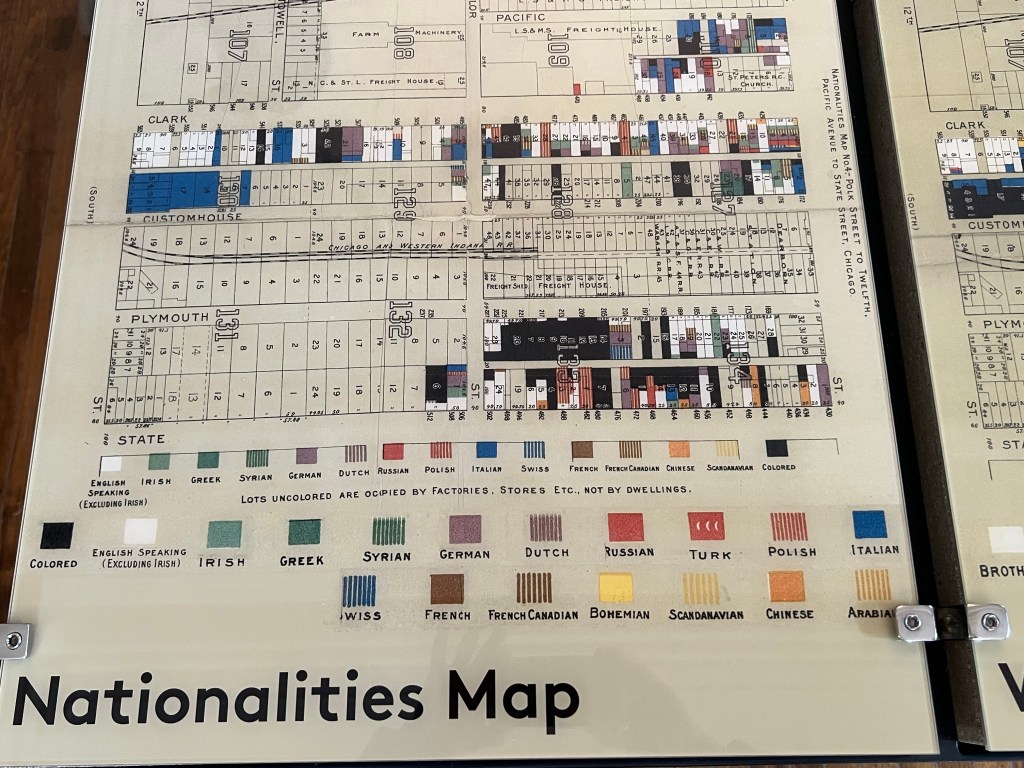
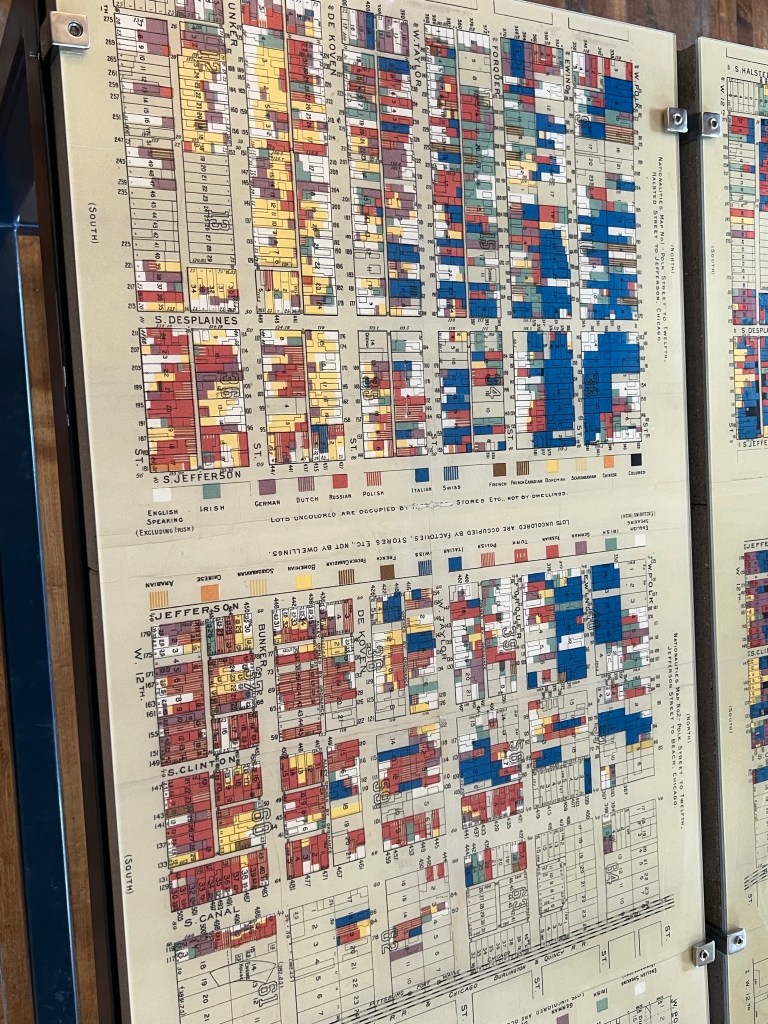
On the work that Italian men are likely to do:
The papers explain that Italian men are called Dagos because their primary occupation was digging for the railroads. Why don’t they work on farms like they did in their native country?, asks the report, as if these men had the agency to choose and acquire a preferred livelihood. The report notes the Italian “instinct for picking” as the reason they were seen picking through garbage and trash, not starvation and necessity. Manifesting the age-old North-South prejudice, it states that the majority of the immigrants came from the South, and “They do not, for the most part, form an intelligent class… The children are no better than the parents.”
On the work that Italian women were likely to do:
The Italian women and girls tended to be garment finishers in the “Sweating System,” generally working seven days a week at home or in horrific spaces like basements or sheds with bad lighting and fumes from gasoline and charcoal stoves. The report notes “the charge of filthism” is made against Italians, which it blames on the “greed of gain” that causes women to work sewing clothing rather than cleaning. Unmentioned is the substandard housing they were forced to live in. My mother, the world’s neatest and cleanest person, used to get upset with me, the world’s slobbiest, saying that people would call me “a filthy Italian.” I thought she was bonkers; now I understand.
On the future dreams of the Italians:
Italian immigrants were distinctive in that many came with the hope and expectation of returning to Italy, once they had earned a sufficient amount of money. In many cases, the men came alone to work, leaving wife and children behind. As the report states, “Italians do not come to America to find a home. They leave the mother country with a firm intention of going back to it as soon as their scarsellas shall sound with plenty of quibus” — a playful Italian expression of the time meaning their purses filled with cash. I am sure, as things turned out, many were not able to fulfill that dream, or ended up preferring to stay here, but nonetheless, it is a distinctive feature of Italian immigration. At the turn of the century, 30%-50% of these immigrants, known as ritornati, went back to Italy.
Looking through today’s eyes, it is hard to imagine that with these attitudes, Hull House was an organization that was rightly revered for the enormous contributions it made to improving the lives of the Italian immigrants, both systematically and individually. But of course, it’s not fair to look at things through today’s eyes. More important, we can see the exact same prejudices and victim-blaming in the current attitudes and policies on immigration, sometimes even coming from the descendants of the very same people in the crosshairs just a few generations back. Barely a hundred years in, one would be hard pressed to even identify an Italian neighborhood, or to make negative generalizations about them, The Sopranos notwithstanding.
Will we ever learn?


Per usual, Gigi, well written, sharply observed and thought provoking.
I learned a lot.
LikeLike