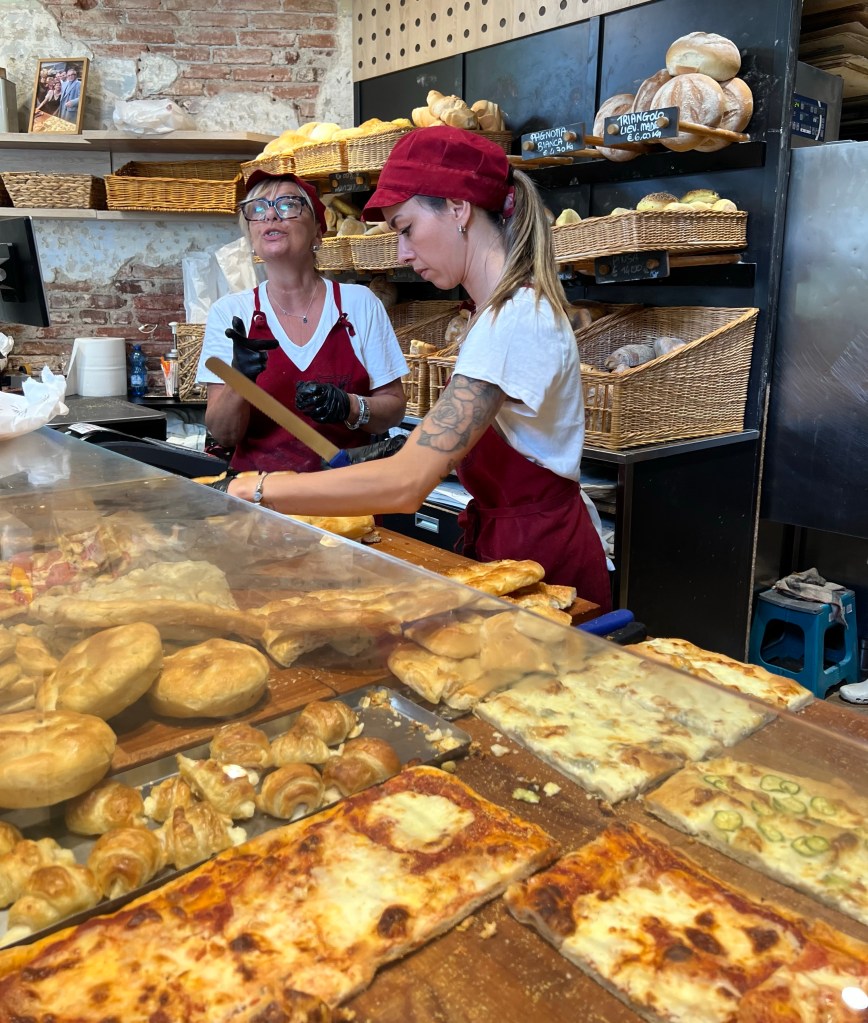
I fell in love with Genoa. And I even forgot to try the salami.
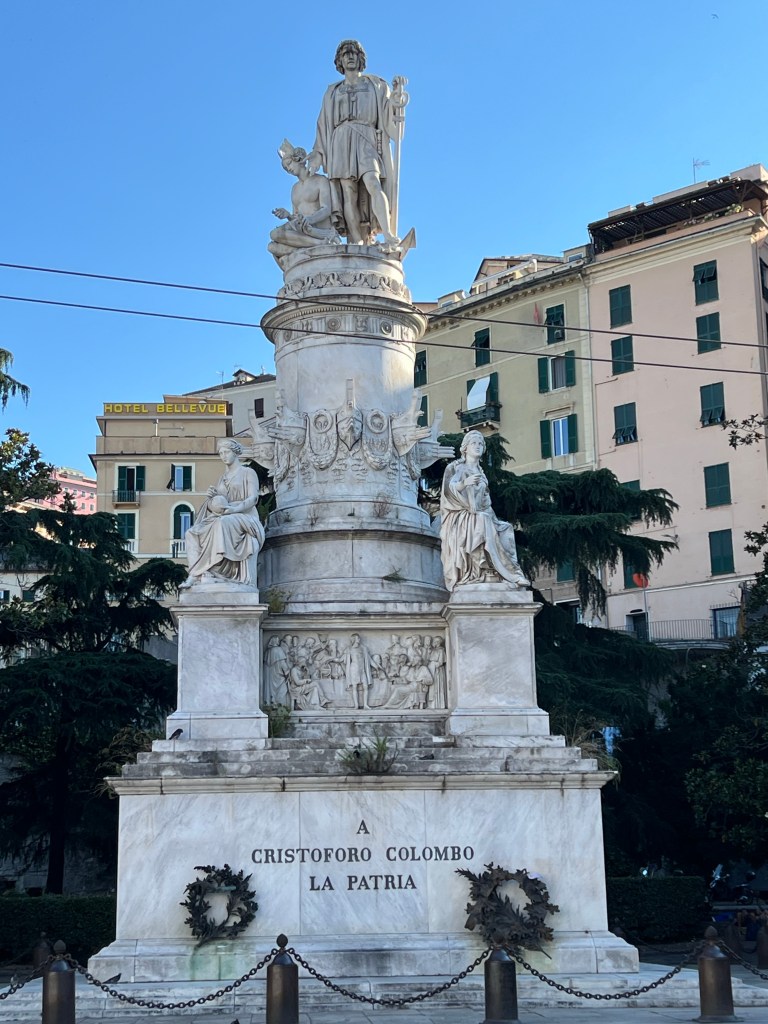
On this trip, we’ve been ping-ponging from city to mountains to seashore to city and then to mountains again, with one more city coming up. I made an effort in the planning to at least stay more or less in the north of Italy, but even so, every leg involved at least two different conveyances, and sometimes as many as five. I am getting to the point when perhaps I should ask whether running down the binari to catch my train connection, wearing heavy hiking boots and dragging a suitcase with a twenty-pound pack on my back is exactly the way I should be traveling at my advanced stage in life, but I’m not ready yet to give it up.
At any rate, I planned a few days in Genoa, as it was in the general vicinity of where we’d be. Although cruise ships do stop there, it is not a place filled with tourists, and I would not recommend it to someone who is likely to do only one or two trips to Italy over a lifetime. Those folks should do the must-see cities and places like the Amalfi Coast. But Genoa would be a perfect stop for someone who wanted to get a glimpse of real Italian life.
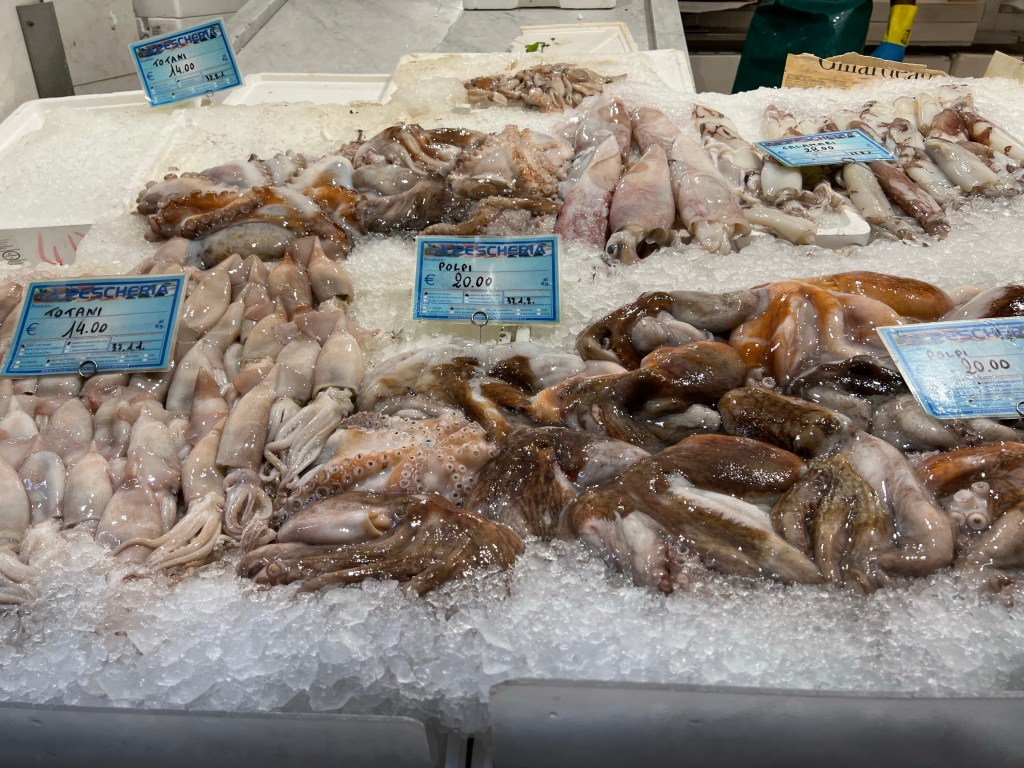
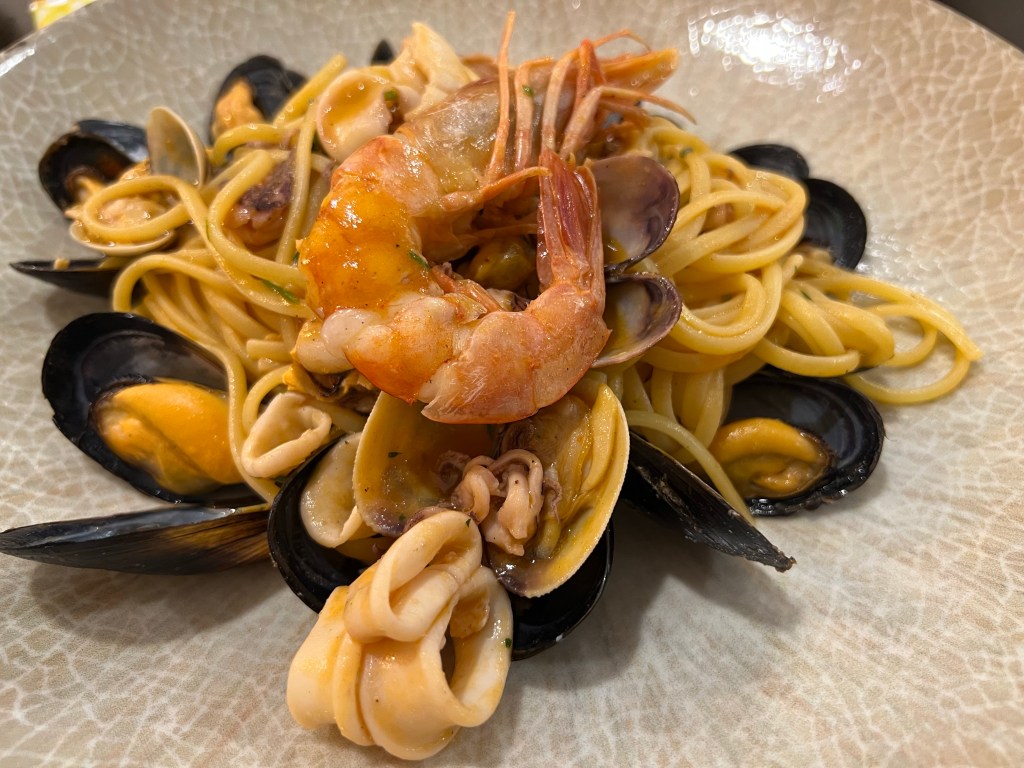
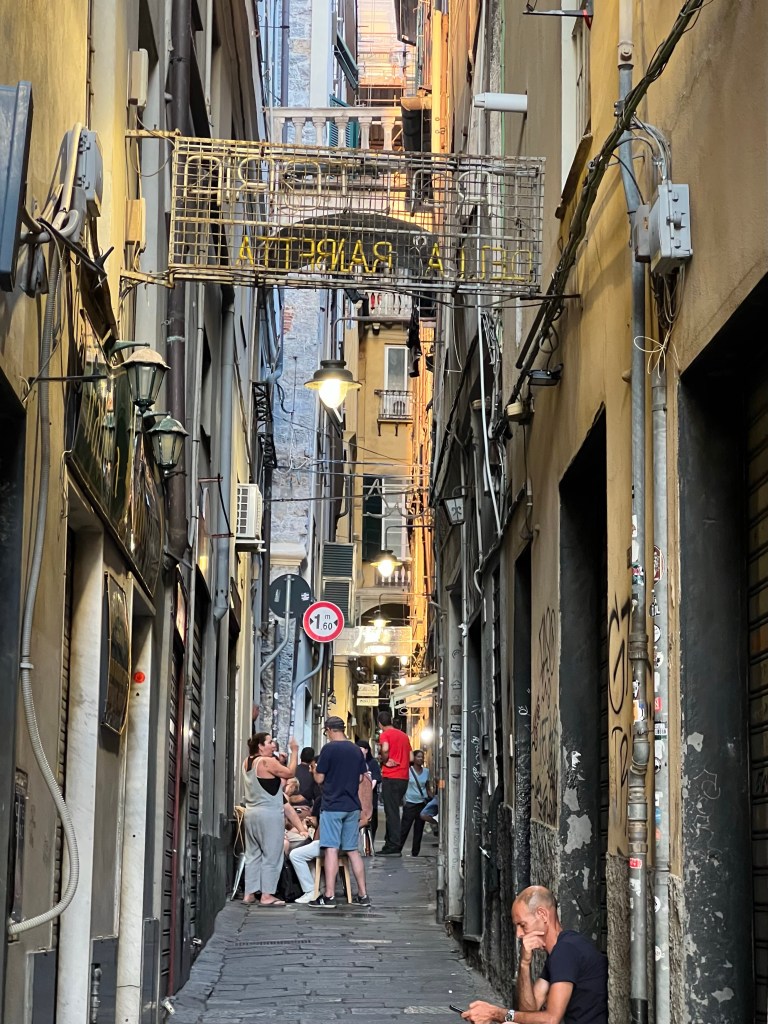
I loved the activity on the streets, the narrow dark alleys that opened to bright piazzas, the diversity of the population, the slight scuzziness of being a port town.
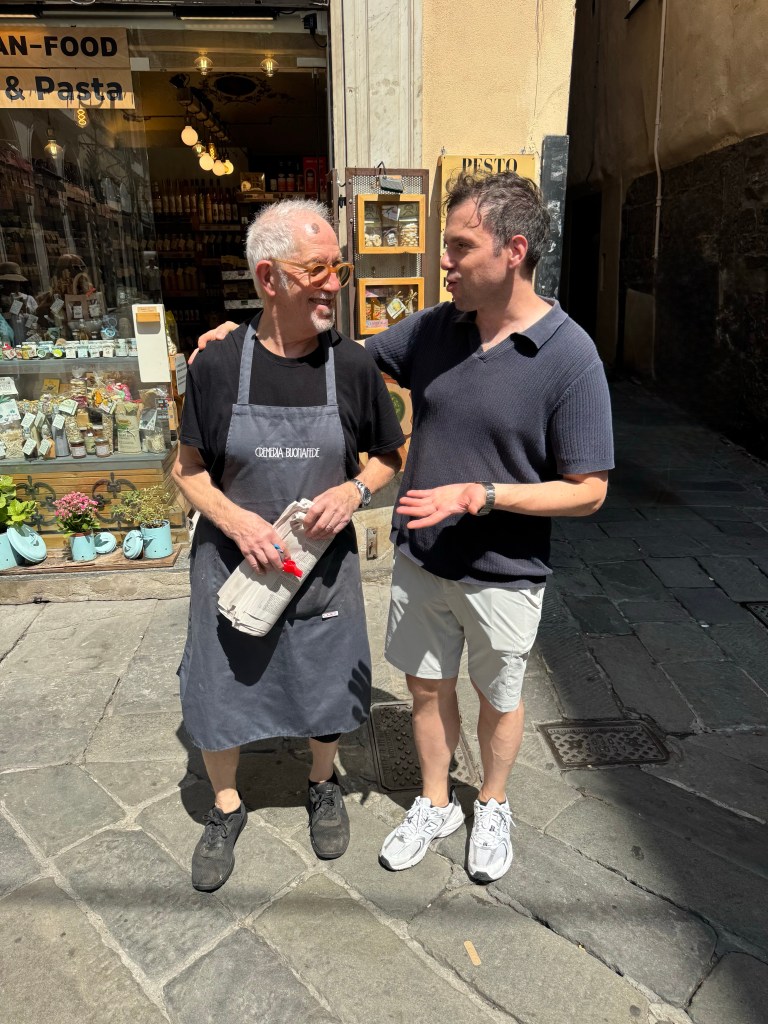
We often do food tours when we travel to new cities. We like them because you get a light dose of history and culture, and the chance to try little sampling of local specialties. The guides are always highly educated and eager to share their enthusiasm about their hometowns, and typically, there are only two or three others in the group, English-speaking but not necessarily American. (This time, however, we were with 18 Americans from a cruise ship, and one charming young Russian. Don’t get me started on the Americans…) Our guide, Lorenzo, an economist who got bored with banking and started giving food tours, brought us to his favorite places.
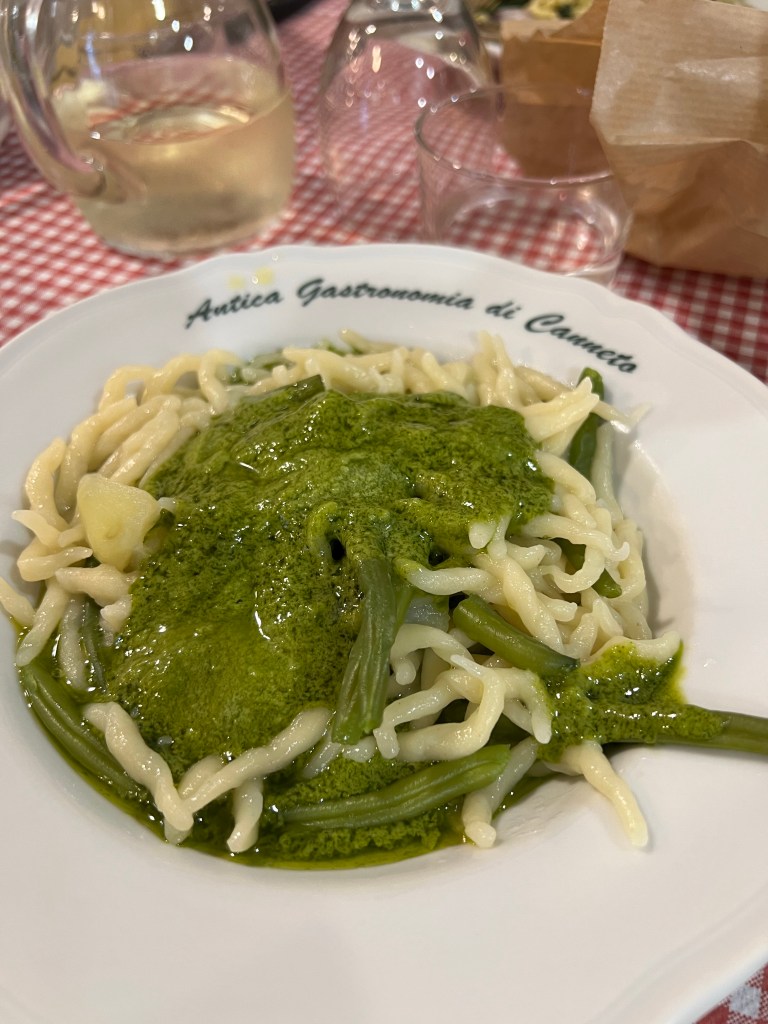
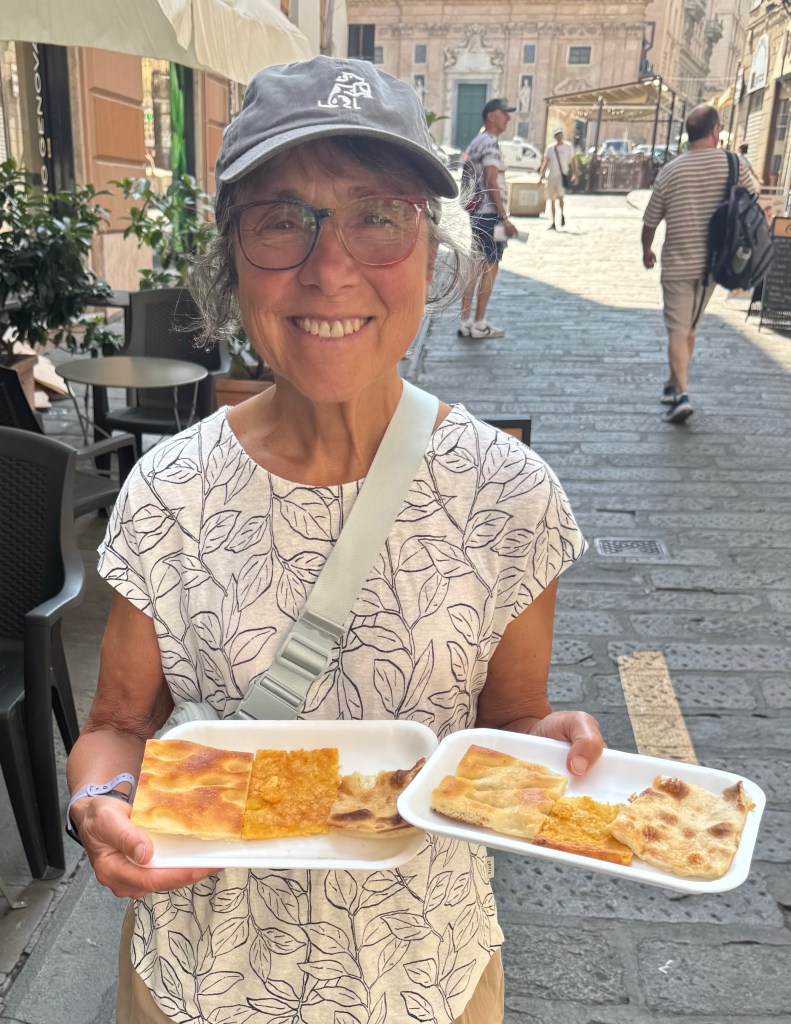
Genoa is a great food town and thus a great place to do a tour, as it brought the world, besides its eponymous salami, two famous dishes: pesto and focaccia. Both are done a little differently here than what we normally see in the U.S. The traditional preparation of pesto with pasta always includes potatoes and string beans.
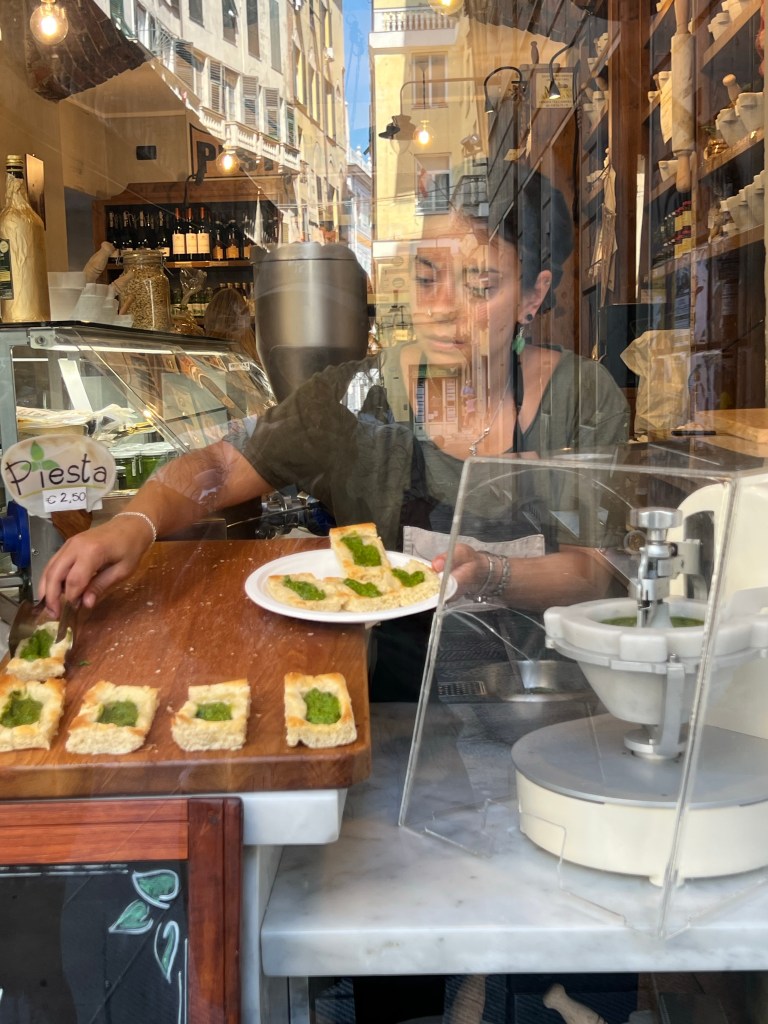
And while there are many varieties of focaccia here, the most traditional version is very thin and covered with only olive oil and salt, not the inch-high version with toppings we’re used to, although they have that here, too.
I told Lorenzo that Genoa reminded me of Naples, for its vibrancy, authenticity, grittiness and location on the sea. He begged to differ. “Oh no,” he said. “The people of Napoli are happy. The people of Genoa are greedy like bears.”
I would actually say that neither is true. Neapolitans are famous for loudly voicing their grievances, large and small. As far as I could see, the people of Genoa were warm and welcoming, not only to moneybag tourists, but to each other, and there was not a bear in sight.