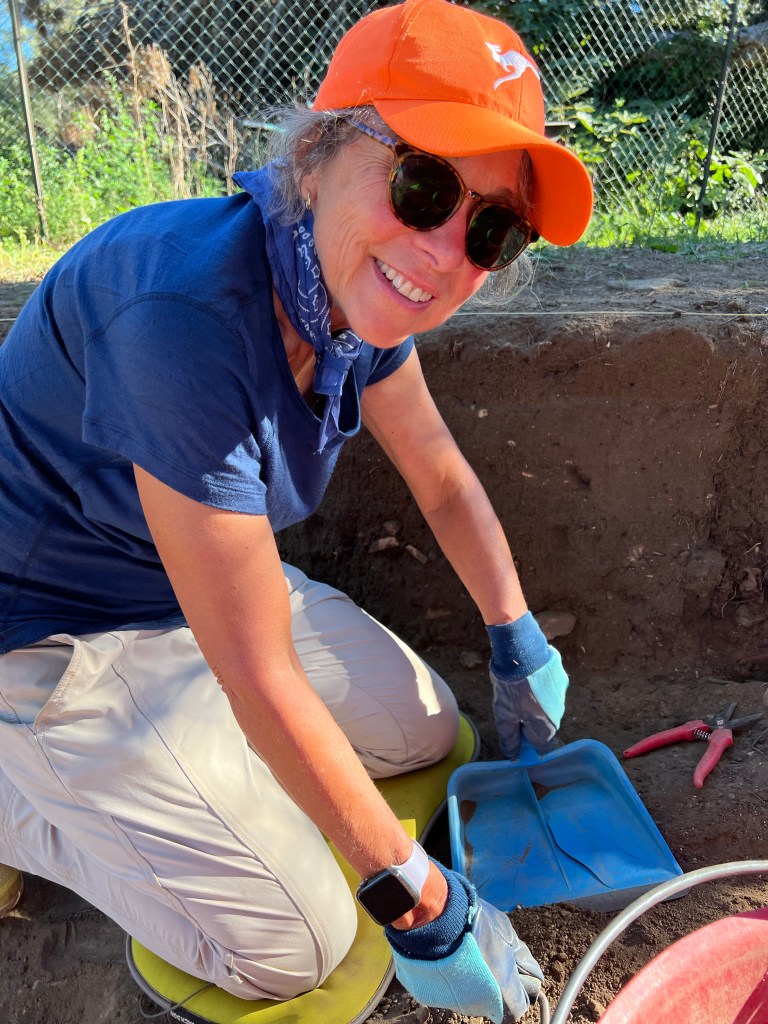
When I was bellyaching about retiring this fall, my daughter Lizy proposed that we do an Earthwatch program that had always interested her: an archeological dig in Tuscany, in the hopes that it would distract me from the academic year starting up without me.
So even though I delayed my retirement until January, we find ourselves on the Tuscan coast, at Poggio del Molina with a team of Italian archeologists, students, and volunteers. We are working on a site that dates back to the shift from BCE to CE, give or take a few centuries in both directions.
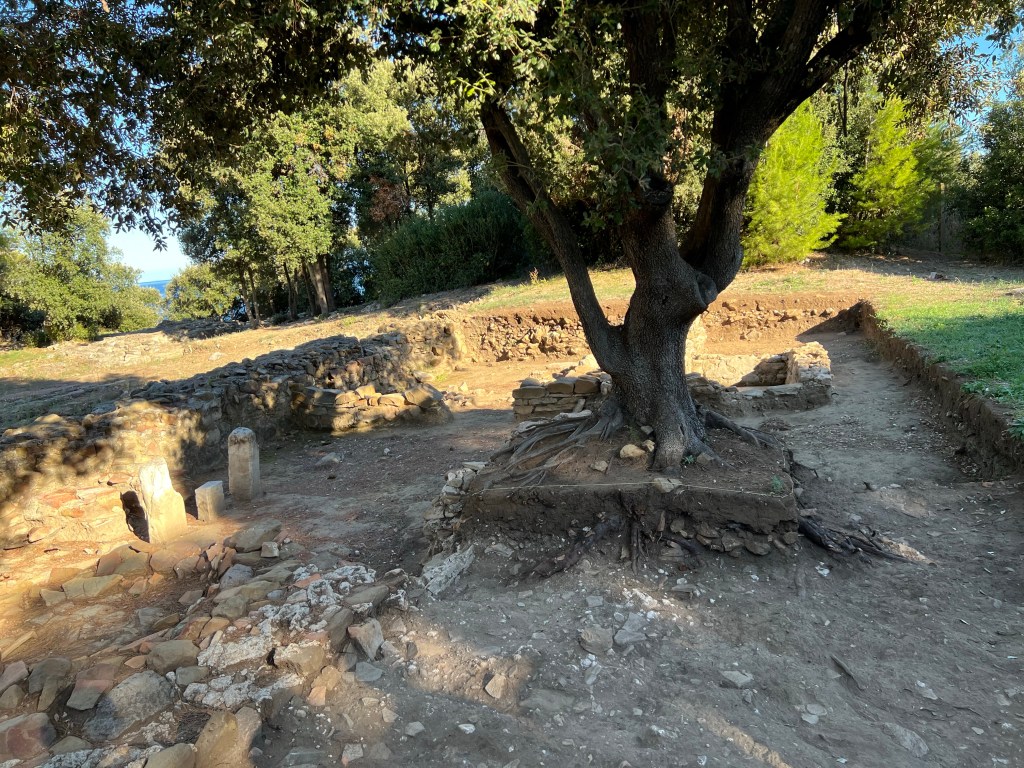
It is thought to have first been a fortress to protect against the pirates that once ran rampant in the eastern Mediterranean, then a fish-sauce production facility, and finally, a villa, which may have housed members of an early Christian cult.
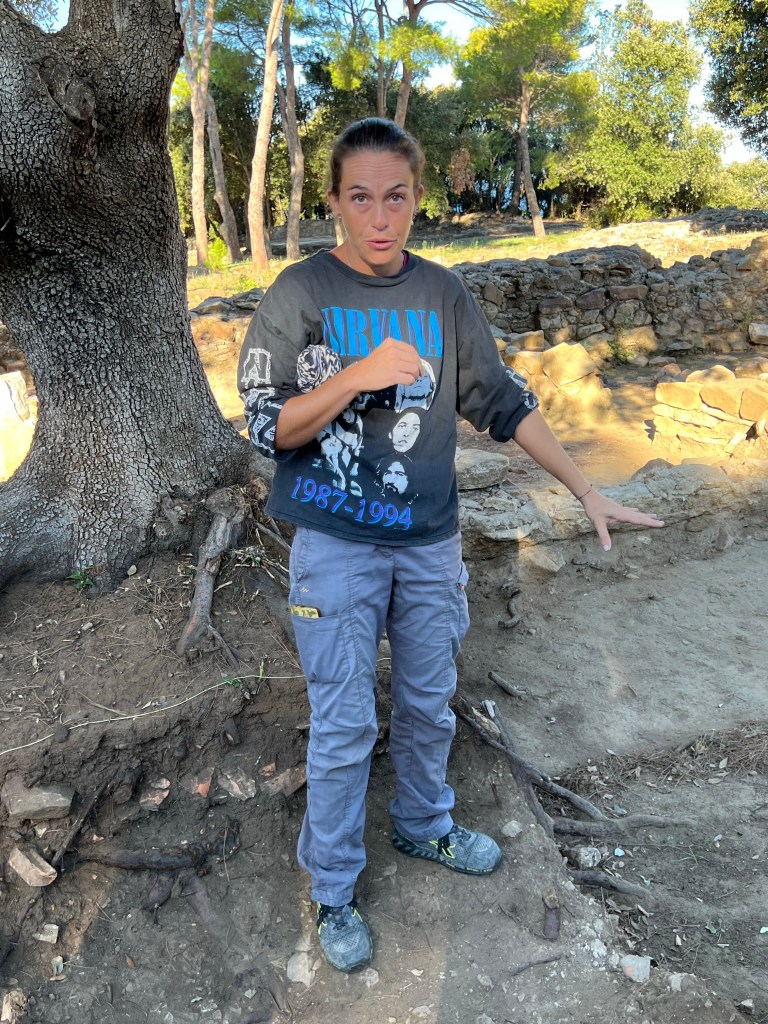
Allora, our group of ten volunteers–nine American and one Australian, mostly of retirement age but including one young woman here with her grandpa as a college graduation celebration–is spending from 9 to 4:30 every day for a week, doing exactly as instructed by our team of archeologists and graduate students. We get a half-hour coffee break at 10:30 and a lunch break from 1:00 to 2:00, the precision of which makes me suspect it’s Italian law.
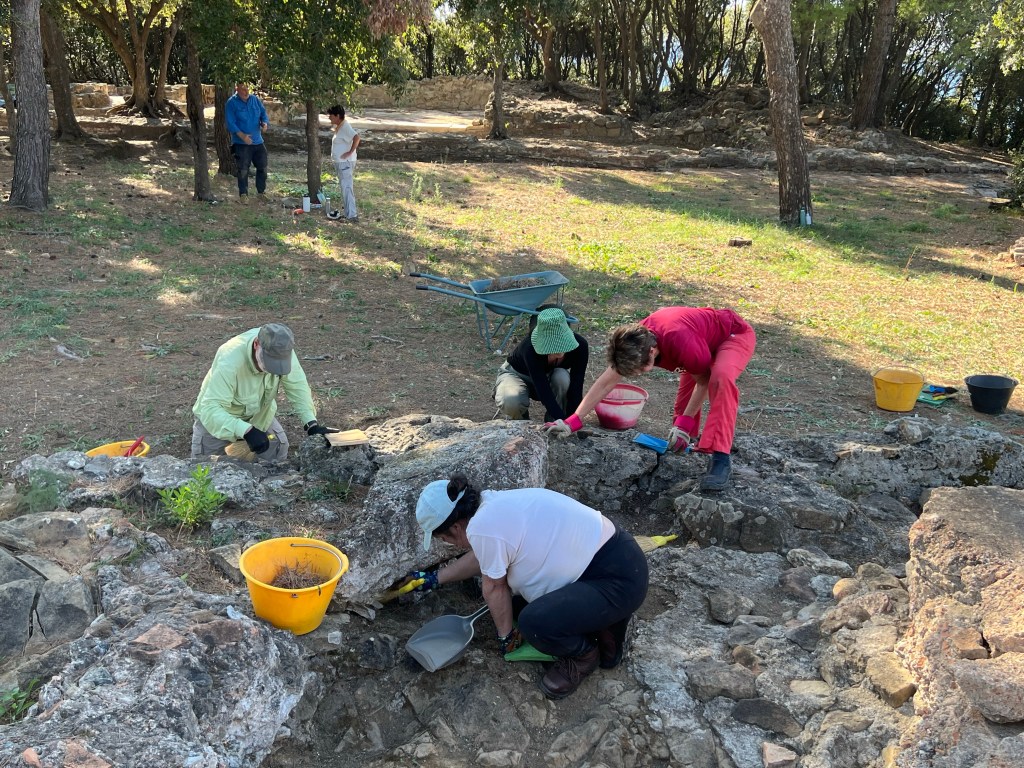
My tasks have included spending three hours on my knees “cleaning” a small dirt portion of the site with a little broom (which means sweeping up pine needles and loose dirt), pushing multiple wheelbarrows of the aforementioned dirt up a hill and disposing of it, repairing mosaics, building walls, cleaning pottery shards, and actually digging with a trowel to see what can be found.
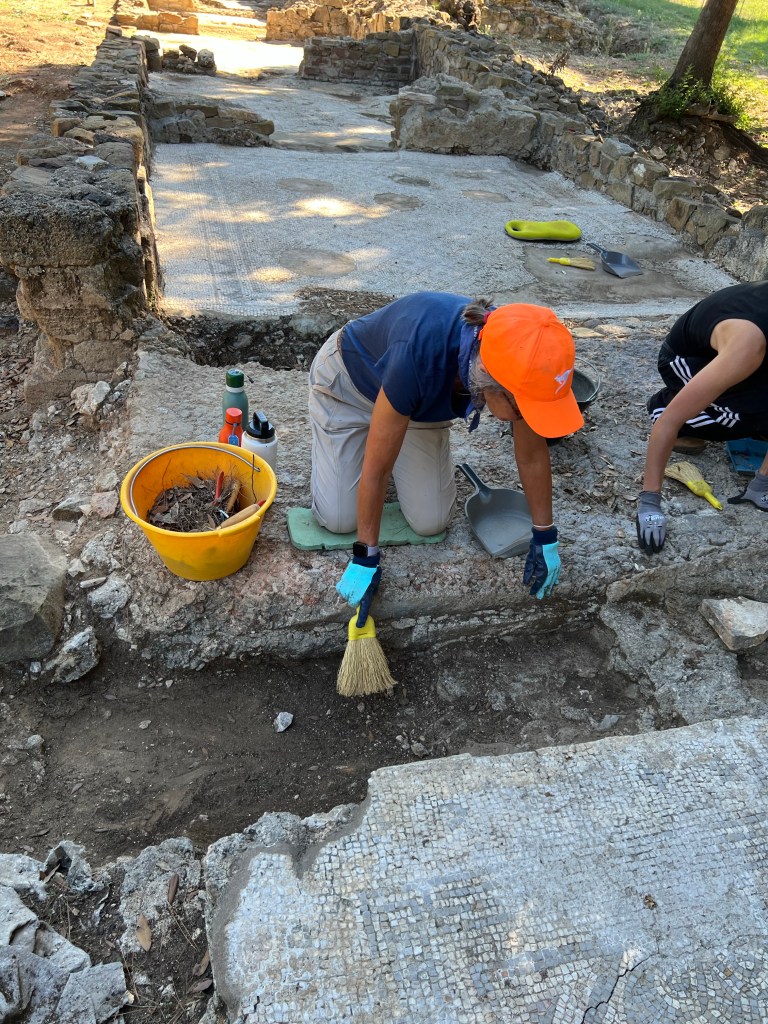
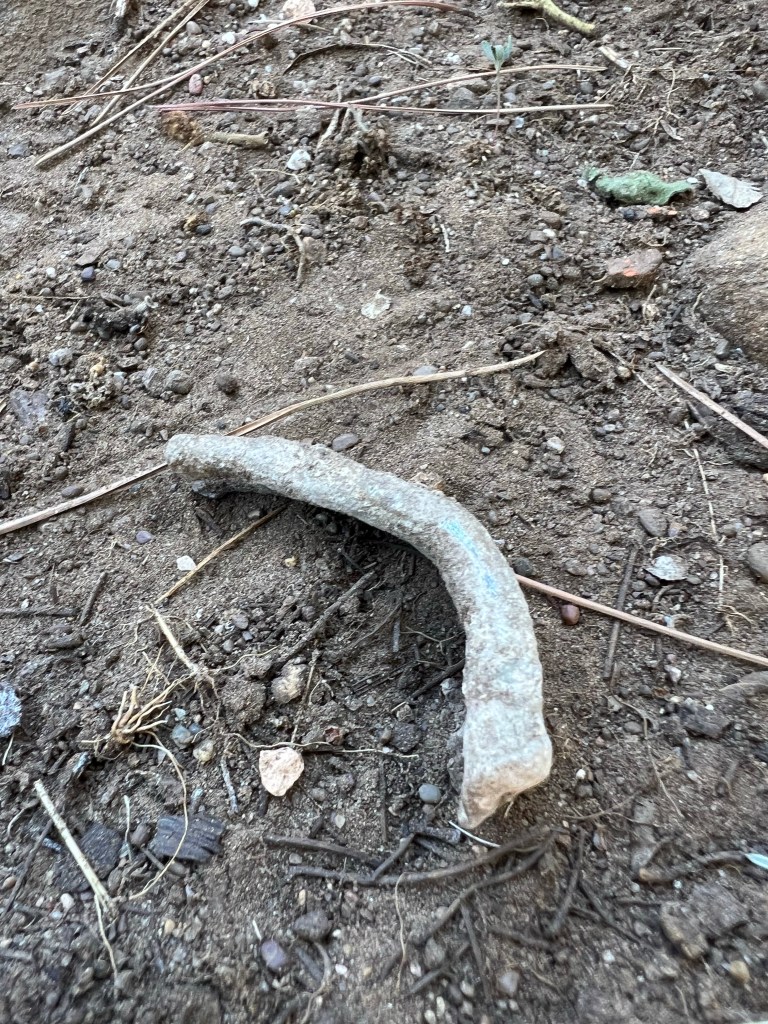
And what finds we have made! Mostly, at the layer we have been working on, it’s been roof tiles. But someone unearthed a coin, and we’ve found pieces of ceramic pots.
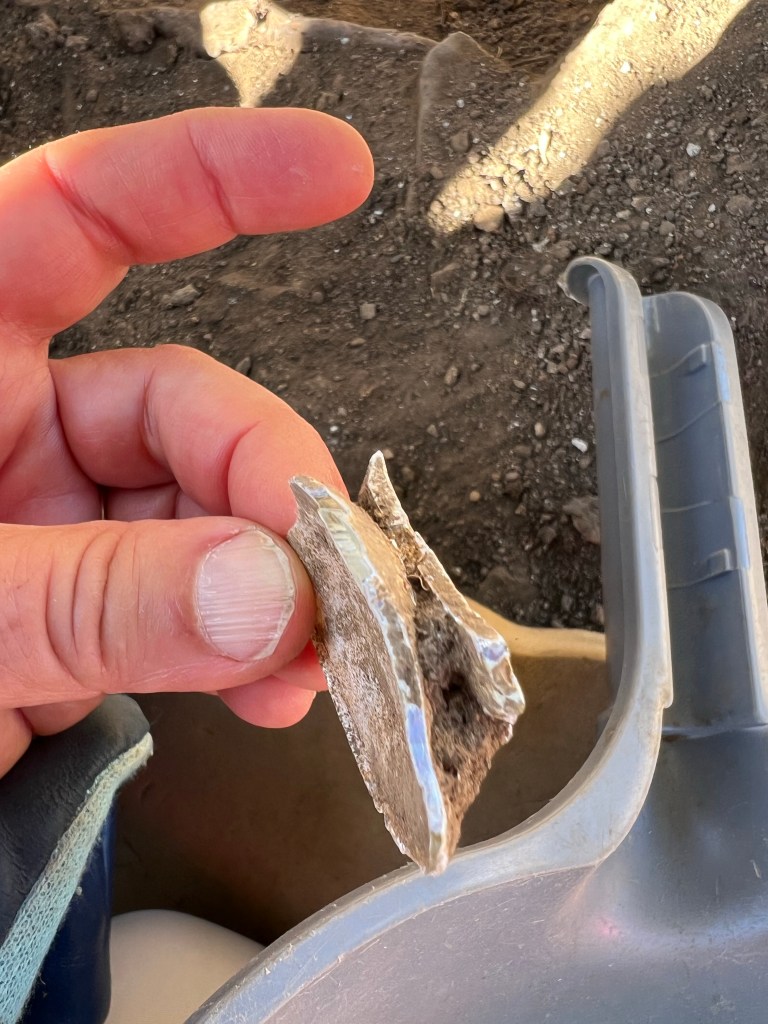
I’ve found an animal jaw, which along with charred bones suggests that that spot was a kitchen, and my favorite, a maledicta, a rolled-up piece of lead paper with a curse written on the inside.
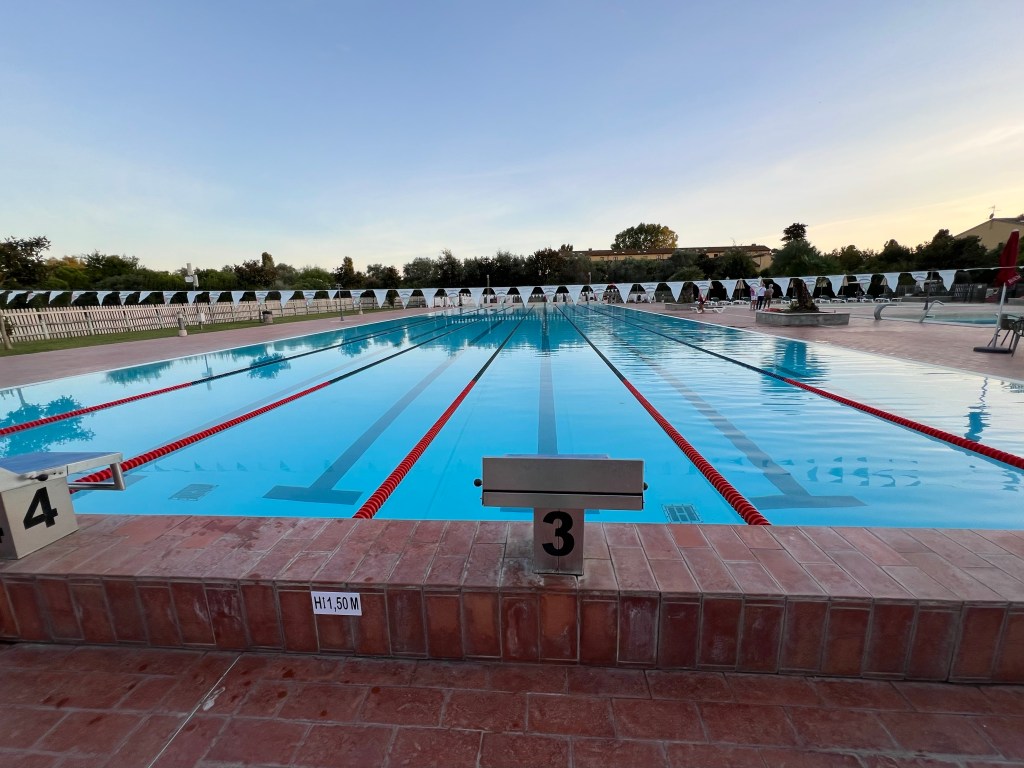
It is strenuous, hard work in the hot sun, although what it was like for teams working through the summer heat is unimaginable. We are staying at a nice “resort,” really a no-frills conference center, with an Olympic-size swimming pool which I am taking full advantage of after a long, sweaty day of work. And good food, of course. Even though I am the second-oldest one here (yes, I asked), I feel I am holding my own, even though I basically do everything wrong and am constantly being corrected, kindly of course, for one thing or another.
The Poggio del Molina project has been going since 2010. Over the years, it has been aided by several hundred volunteers: 80% American, 69% female, and 31% over age 65, along with countless students and professionals. Sadly, after many years of affiliation, Earthwatch is dropping it to focus more on ecological projects, so Poggio del Molina is looking for a new program to affiliate with. They have only scratched the surface of learning about the past at that site; it would be a tragedy if they couldn’t continue. My contribution has been at the lowest possible level, but I am proud to have been a part of it.