

Now that I spent six full days working on a dig, I consider myself an authority, and will now tell you all about how it’s done. (Is this what it feels like to be male?) But actually, it was a complex and fascinating procedure, each step done with care and precision, and I feel lucky to have gained a new appreciation of archeology through my very brief and superficial exposure.
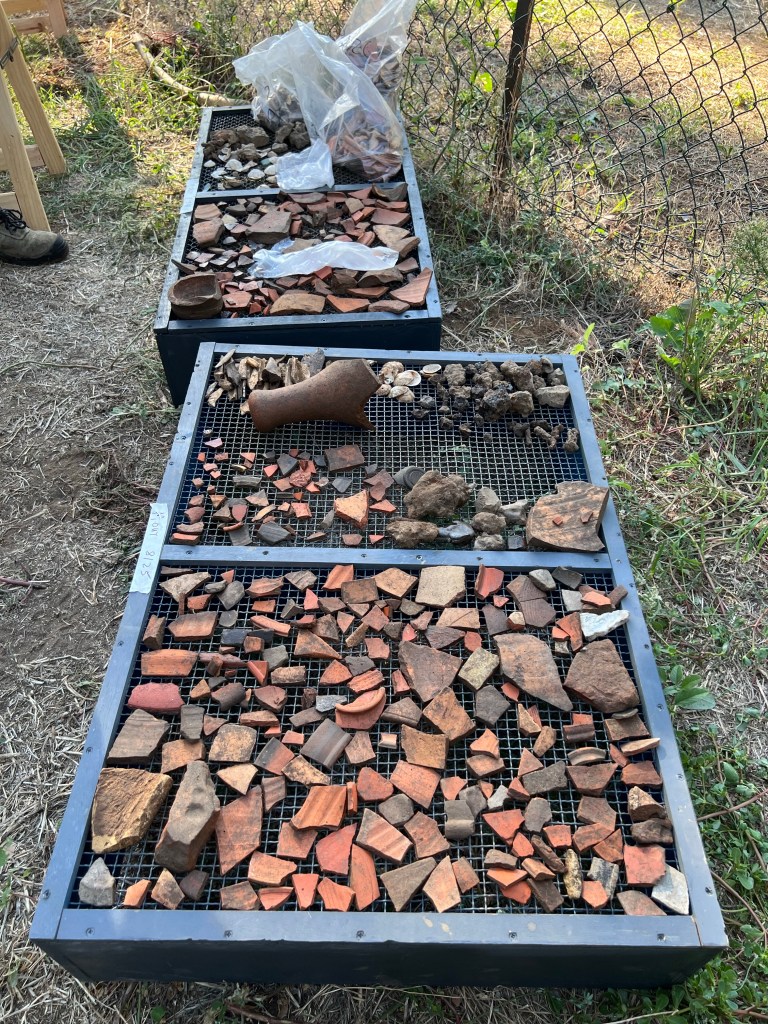
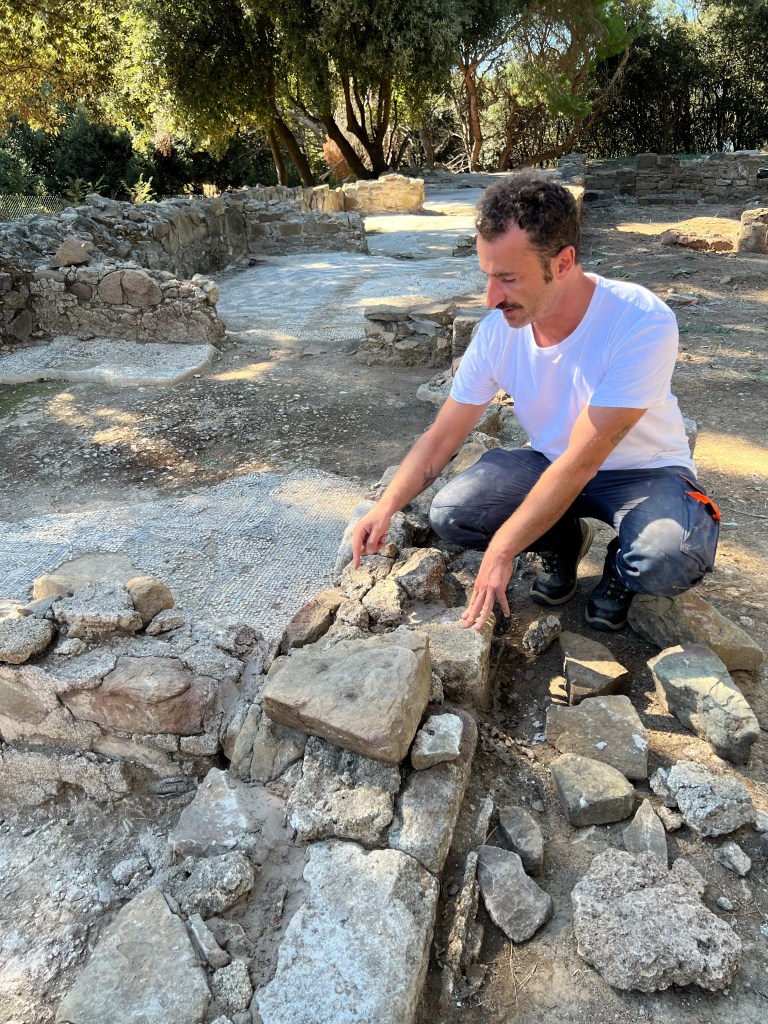
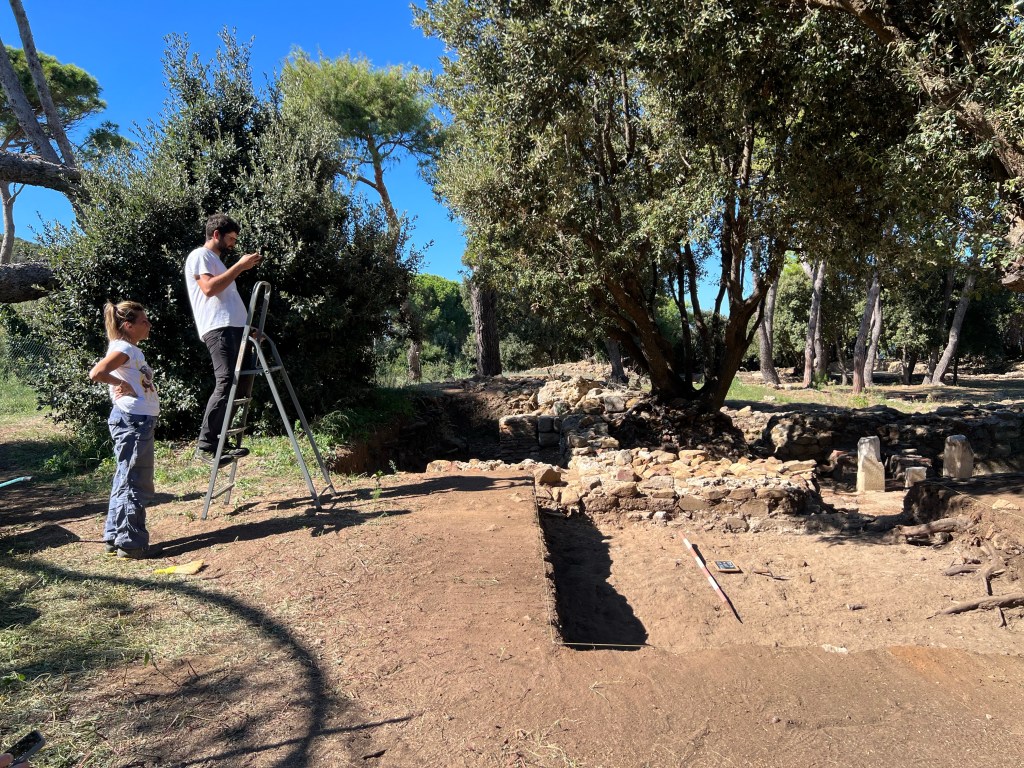
Poggio del Molino, the site where we were working, seems to have two different projects happening. In the newer section, which is believed to have been a villa, dating back to perhaps the 2nd century CE, there are some intact mosaic floors, and the team is attempting to restore the floors and recreate the walls, using rocks found nearby, to get a sense of its structure and design.
In the older section, the pit, they are carefully excavating layer by layer, using stratigraphic methodology, to see what different artifacts they can find in each one. We were working at about 18 inches below ground level; I have no idea how deep they will go.
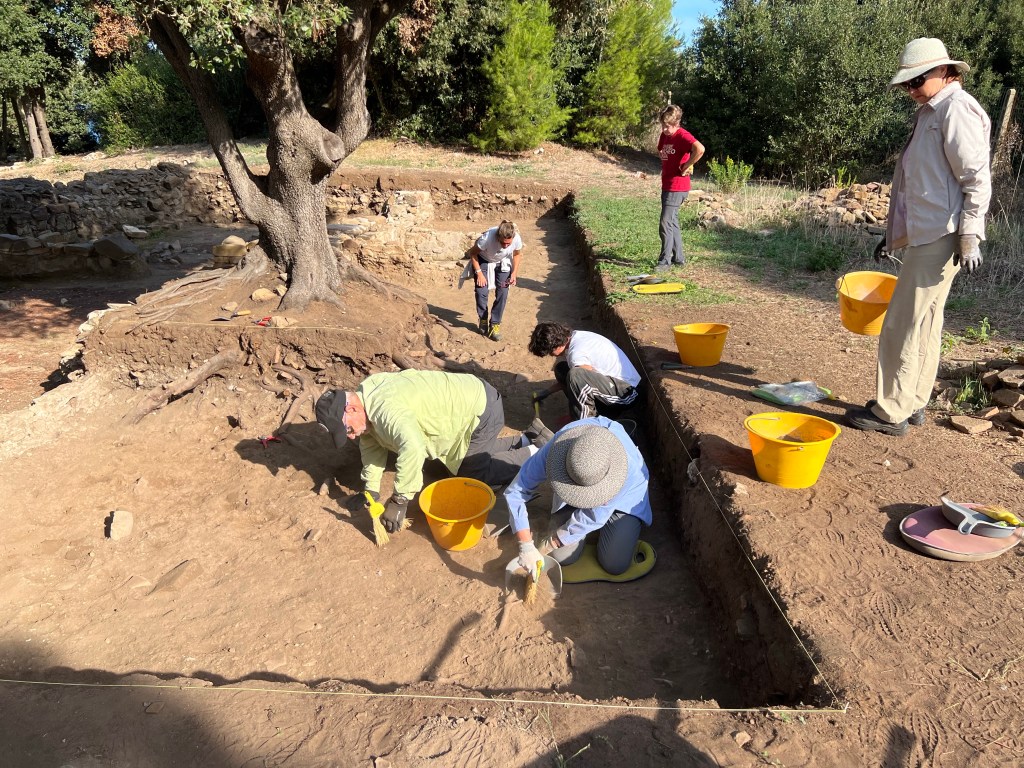
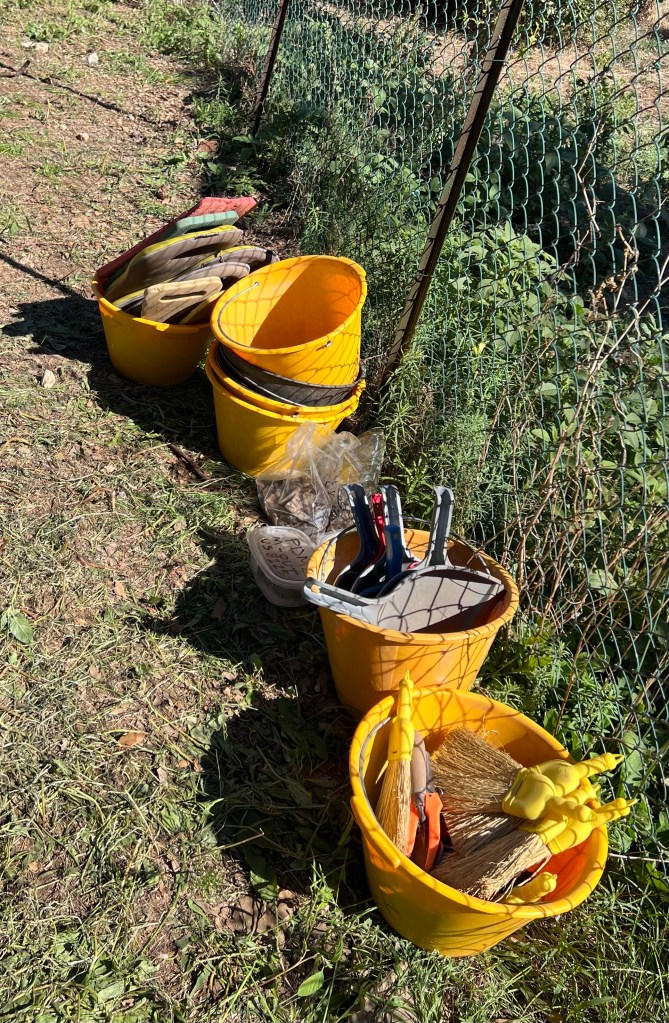
Our little band of ten amateurs was typically split into two groups, and assigned to tasks in either the pit or the villa, switching after lunch. I always volunteered for the dreaded wheelbarrow duty, to remove the dirt the team had whisk-broomed away, because even though it was hard, I felt it was where I could do the least damage. It’s amazing that there’s a right and wrong way to whisk-broom. (Massimo, the very sweet graduate student on the project, would come up to me as I was working with the whisk-broom and quietly say, “Gigi, may I make a suggestion?” so as not to embarrass me.)
After we finished one layer, Martina II (there were two archeologists named Martina) took a photo of the “cleaned” floor for the record, and then immediately took a pick-ax to it to begin work on the next layer down.
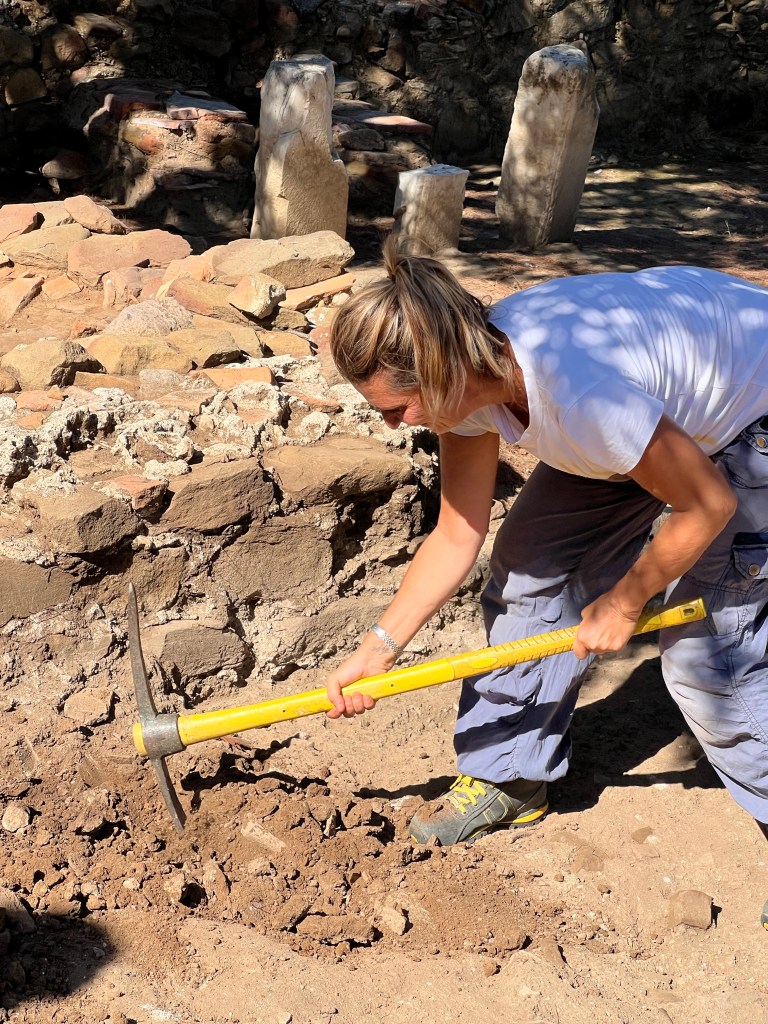
Meanwhile, we washed, labeled and packed up all the artifacts we had found.
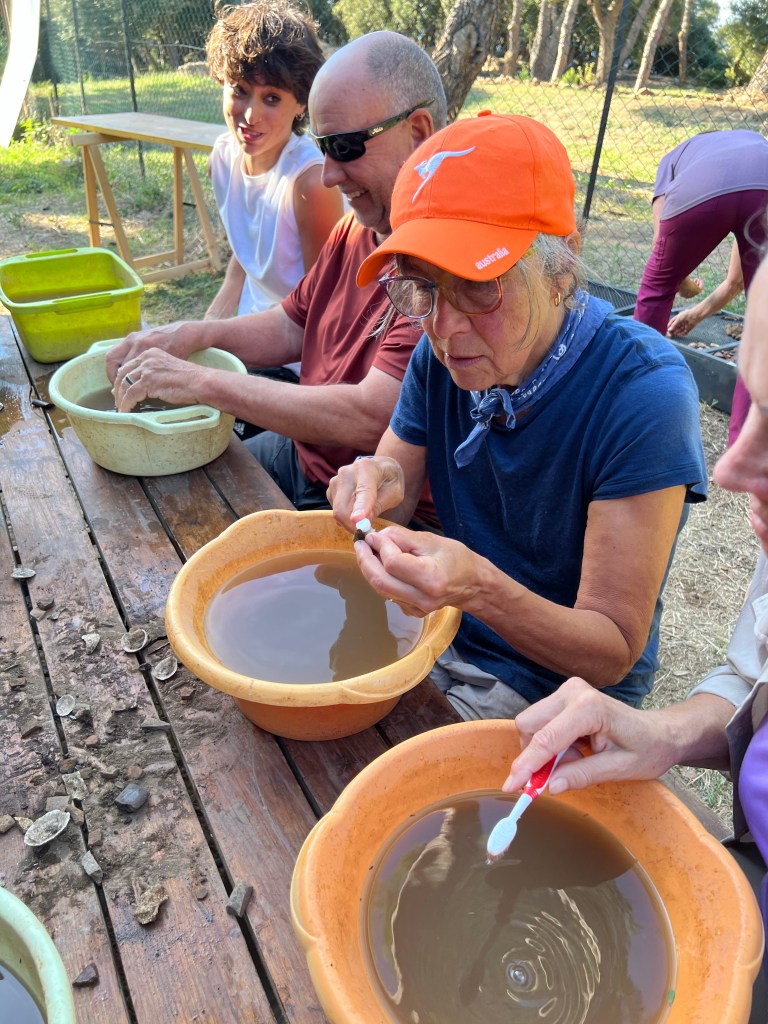
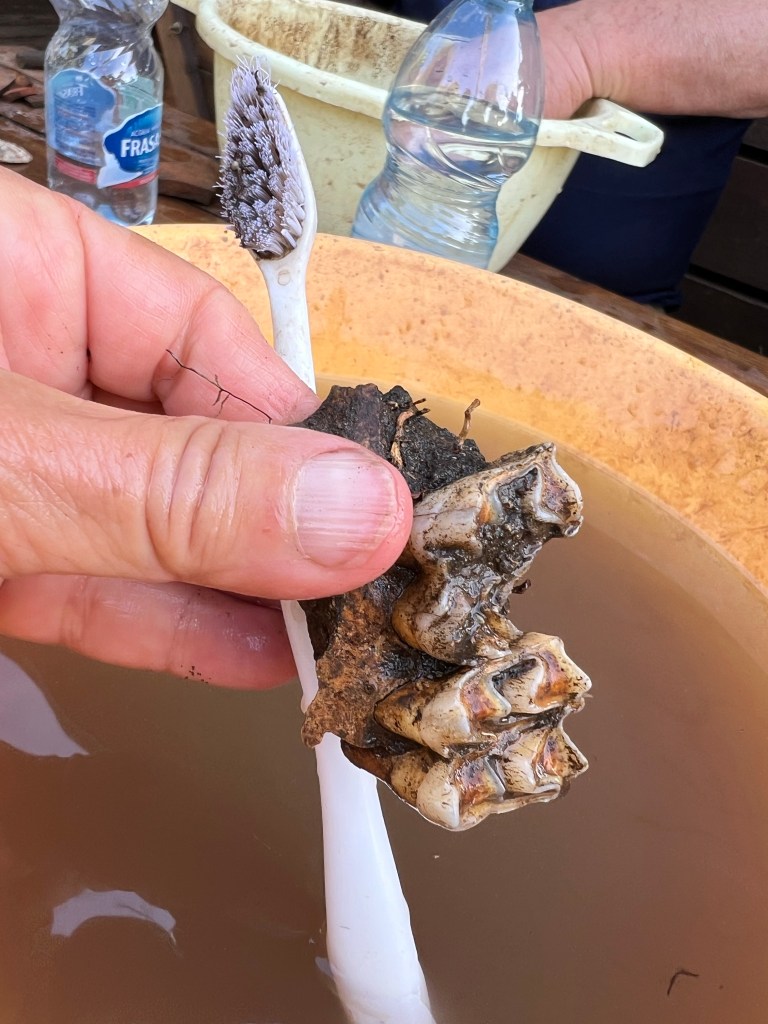
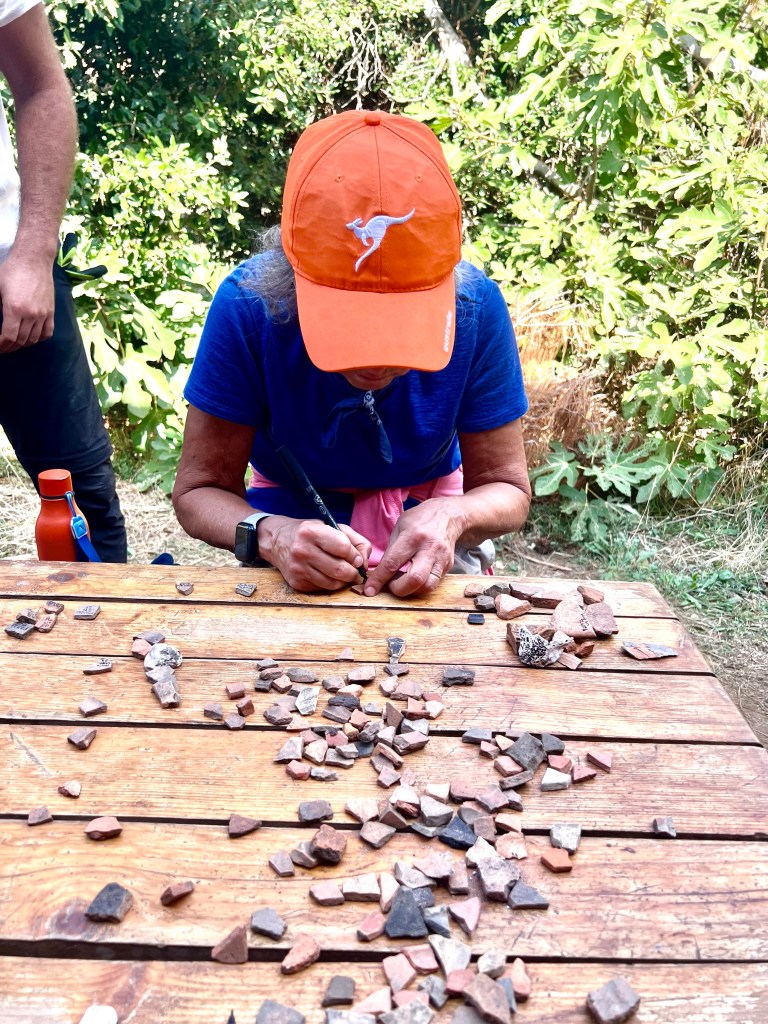
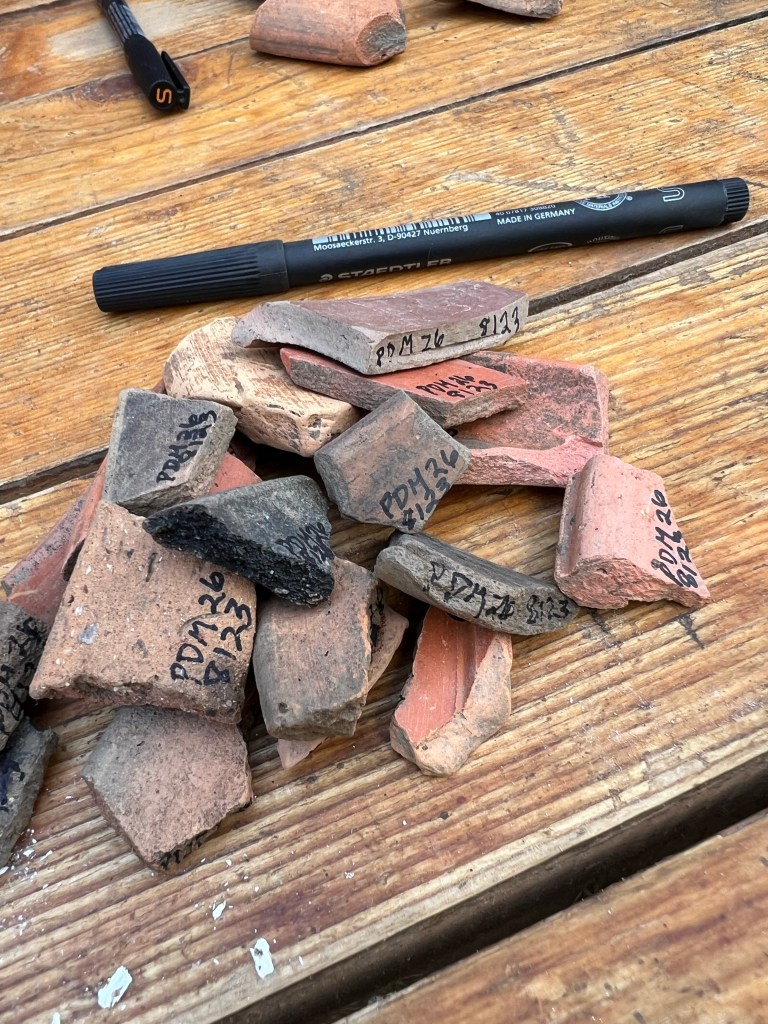
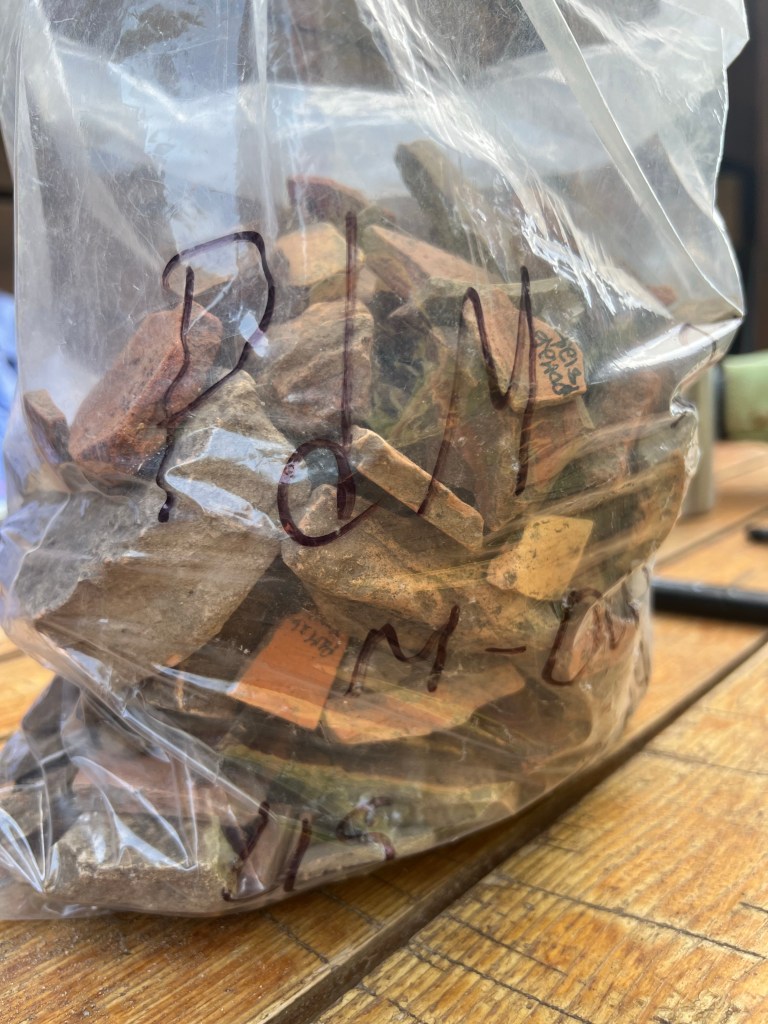
We were there in Year 16, and I have no idea how long it’s anticipated the project will go to completion, if that ever comes. They are surprised by finds all the time, and need to change their theories and conclusions accordingly.
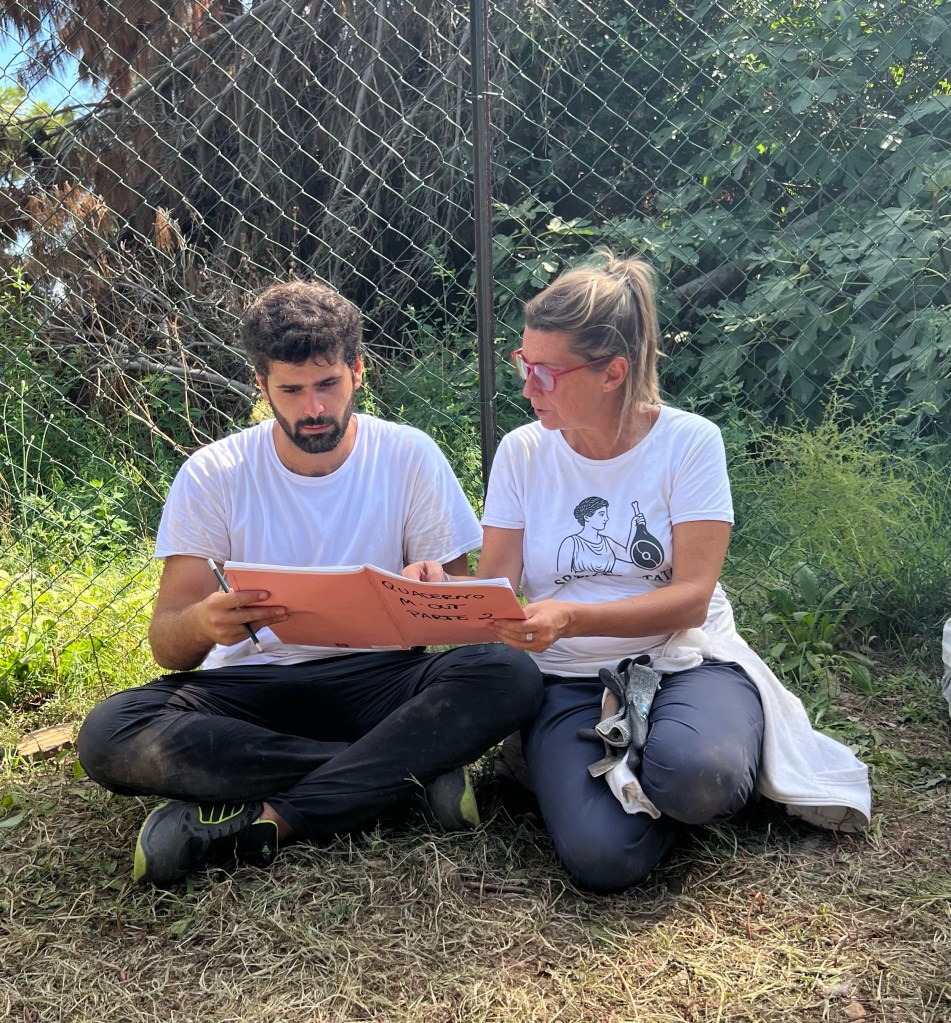
After all, archeologists are still excavating Pompeii, a task that was begun in the 18th century. While I am unlikely to be around three centuries hence, I would like in the nearer future to be kept informed of what the teams at Poggio del Molino have discovered, knowing they couldn’t have done it without my top-notch wheelbarrowing.


that is certainly a practice in patience!!!!! good job
>
LikeLike